
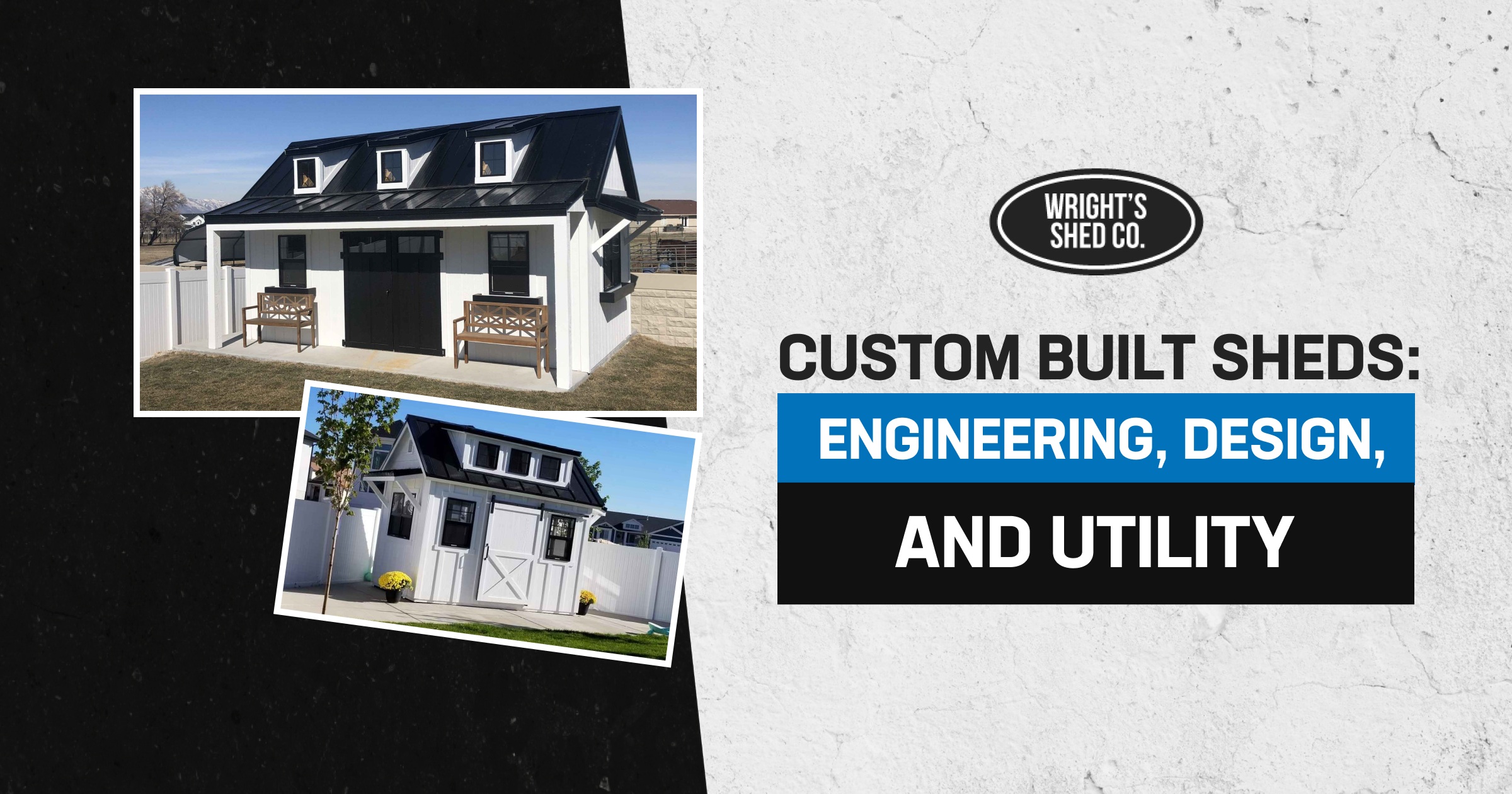
The Engineering and Utility of Custom Built Sheds
Custom built sheds represent a significant shift from generic storage solutions to site-specific engineering. Unlike mass-produced, prefabricated units found at big-box retailers, a custom structure is designed to address the unique variables of a property, including soil composition, local wind loads, and specific spatial constraints. This educational guide explores the technical requirements, material standards, and planning phases necessary to integrate a high-quality outbuilding into a residential or commercial landscape.
In regions like the Intermountain West (Utah, Idaho) and the Midwest (Nebraska, Iowa), environmental factors play a critical role in structural longevity. Onsite construction is often the most viable method for these areas, as it allows builders to navigate obstacles such as established landscaping, narrow side yards, and existing utility lines that would otherwise prohibit the delivery of a fully assembled building.
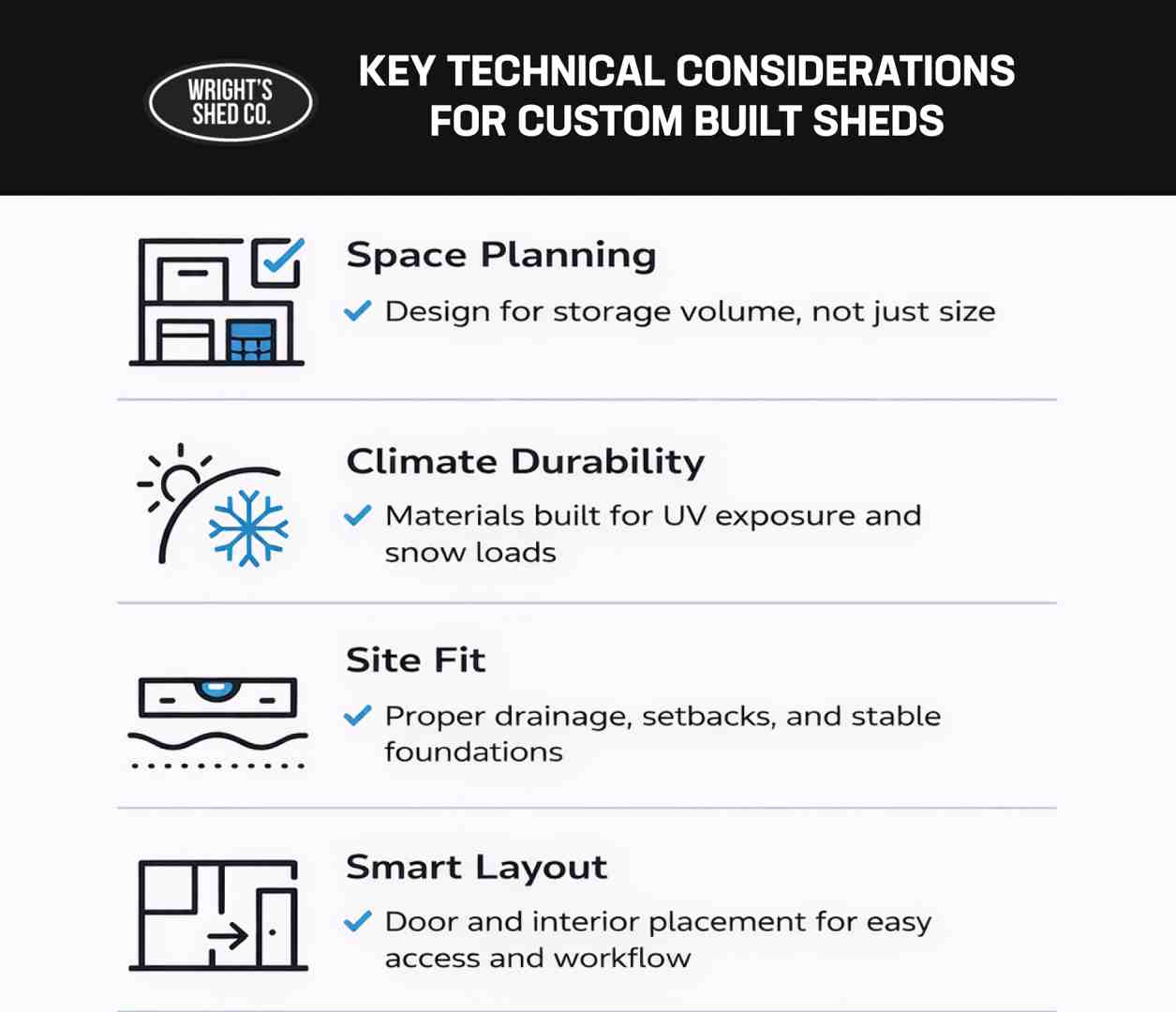
Key Technical Considerations:
- Spatial Optimization: Determining the footprint based on volumetric storage needs rather than just square footage.
- Climate Resilience: Selecting materials capable of withstanding high-altitude UV exposure and heavy snow loads.
- Site Integration: Planning for drainage, setbacks, and foundation stability to prevent structural shifting over time.
- Functional Ergonomics: Designing door placements and interior layouts that facilitate efficient workflow and equipment access.
Understanding the distinction between a temporary storage unit and a permanent accessory structure is essential for property owners. A custom-built approach ensures that the shed functions as a seamless extension of the primary residence, adhering to the same architectural and structural standards.
Design Specifications and Material Science
Effective shed design is rooted in the intended utility of the space. A structure intended for heavy machinery storage requires different floor loading capacities than one designed as a climate-controlled home office. Utilizing a 3D shed builder allows for the precise calculation of dimensions and the visualization of architectural features before construction begins.
Material Selection for Longevity
The durability of custom built sheds is determined by their component parts. In the varied climates of the Western and Central United States, materials must be chosen for their resistance to thermal expansion, moisture intrusion, and pest activity.
| Component | Industry Standard Material | Technical Advantage |
|---|---|---|
| Siding | LP SmartSide Engineered Wood | Treated with SmartGuard to resist fungal decay and termites; high impact resistance. |
| Roofing | Architectural Asphalt Shingles | Rated for higher wind speeds (up to 130 mph) compared to standard 3-tab shingles. |
| Framing | Kiln-Dried 2×4 Lumber | 16-inch on-center spacing provides superior structural integrity for shelving and lofts. |
| Floor Decking | Tongue-and-Groove Plywood | Creates a rigid, seamless surface that prevents moisture from rising through the floor. |
| Foundation | Pressure-Treated 4×4 Skids | Rated for ground contact to prevent rot while elevating the shed for airflow. |
Sizing and Spatial Planning
Selecting the correct dimensions is a balance between current needs and future utility. The following table outlines common sizing benchmarks used by professional designers:
| Shed Size | Common Applications | Recommended Foundation |
|---|---|---|
| 8′ x 10′ | Push mowers, garden tools, seasonal storage | Compacted Gravel Pad |
| 10′ x 16′ | Riding mowers, ATVs, small workshop space | Gravel Pad or Concrete Piers |
| 12′ x 24′ | Vehicle storage, large hobby shop, home office | Reinforced Concrete Slab |
Advanced Customization Features

Beyond basic dimensions, technical upgrades can significantly enhance the utility of the structure:
- Passive Ventilation: Ridge vents and soffit vents work together to reduce heat buildup and prevent condensation, which is vital for protecting metal tools from rust.
- Natural Lighting: Transom windows placed high on the walls provide security while allowing ambient light to reach the interior without sacrificing wall storage space.
- Thermal Envelope: For sheds intended as workspaces, adding radiant barrier roof decking and high-R-value insulation allows for efficient climate control in extreme temperatures.
Site Logistics, Foundations, and Regulatory Compliance
The successful installation of a custom built shed depends heavily on the preparation of the site. Professional custom shed builders emphasize that the foundation is the most critical component for preventing door misalignment and structural sagging over time.
Foundation Engineering
There are three primary foundation types used for custom outbuildings, each suited to different soil conditions and shed weights:
- Compacted Gravel Pads: This is the preferred method for most residential sheds. A 4-to-6-inch deep bed of crushed stone (typically 3/4″ minus) provides excellent drainage and a stable, level surface that resists frost heave.
- Concrete Piers: In areas with significant slopes, concrete piers can be sunk below the frost line (which varies from 30 inches in parts of Utah to over 42 inches in Nebraska) to provide a level platform without the need for massive excavation.
- Monolithic Concrete Slabs: For structures housing heavy equipment or vehicles, a reinforced concrete slab distributes the weight evenly and provides a permanent, easy-to-clean floor.
Navigating Zoning and Building Codes
Compliance with local regulations is mandatory. Most municipalities have specific “setback” requirements, which dictate how far a structure must be from property lines, fences, or the primary residence.
- Permit Thresholds: In many jurisdictions, sheds under 200 square feet do not require a building permit, but they must still adhere to zoning laws. Larger structures often require a formal permit process, including a review of the structural plans.
- HOA Constraints: Homeowners Associations frequently regulate the aesthetic aspects of a shed, such as the roof pitch, siding color, and even the type of roofing material allowed. It is standard practice to match the shed’s aesthetics to the primary home to maintain neighborhood property values.
The Onsite Construction Advantage
Building onsite is a technical solution to logistical problems. It allows for the use of full-sized lumber and high-grade materials that might be too heavy or fragile for transport as a pre-assembled unit. Furthermore, onsite building ensures that the structure is perfectly leveled to the specific nuances of the prepared pad, a process that is difficult to replicate with a pre-built unit dropped from a trailer.
Long-Term Value and Asset Management
A custom built shed should be viewed as a capital improvement rather than a temporary purchase. When constructed with industrial-grade materials like LP SmartSide and architectural shingles, these structures offer a lifespan that often exceeds 30 years with minimal maintenance. This longevity is a primary driver of property value; according to data from the National Association of Home Builders, high-quality accessory structures are highly sought after by modern homebuyers who prioritize organized storage and flexible-use spaces.
By focusing on engineering, material science, and proper site preparation, property owners can ensure their investment provides functional utility for decades. Whether the goal is specialized equipment storage or the creation of a dedicated workspace, the custom-built approach provides the precision necessary to meet those demands.
For those ready to transition from conceptual planning to execution, exploring custom built storage sheds provides a framework for designing a structure that meets both aesthetic and structural requirements.
#
Frequently Asked Questions About Custom Built Sheds
How do I know what size custom built shed I need?
Start by listing what you plan to store or how you will use the space. Measure large equipment and allow room for movement and shelving. Planning for future needs helps prevent outgrowing the structure too quickly.
Do custom built sheds require a permit?
Many areas require permits for sheds over 200 square feet. Even smaller structures must follow zoning setback rules. Always confirm with your local building department before construction begins.
What foundation is best for custom built sheds?
Compacted gravel pads work well for most residential uses. Concrete piers are suited for sloped lots, while reinforced slabs support heavy equipment or vehicles. The best option depends on soil conditions and load requirements.
How long do custom built sheds typically last?
When built with engineered siding, architectural shingles, and proper framing, custom built sheds can last 30 years or more. Longevity depends on climate exposure, foundation stability, and routine maintenance.
Can custom built sheds match my home’s design?
Yes, materials, roof pitch, siding color, and window placement can be selected to align with your home’s exterior. Matching architectural details helps maintain visual consistency and neighborhood compliance.
Why Custom Built Sheds Offer Long-Term Structural Value
Custom built sheds provide more than storage—they deliver engineered durability, site-specific design, and long-term functionality. When built with the right foundation, climate-rated materials, and proper planning, they perform as permanent accessory structures rather than temporary add-ons.
If you are ready to move from concept to construction, review your site conditions, storage needs, and local code requirements first. Consult with a professional builder to evaluate sizing, materials, and foundation options before finalizing plans. Request a detailed quote today and start designing a shed that fits your property and long-term goals.