
Building Sheds: 7 Simple Steps for DIY Success
Why Building Sheds Is a Practical Investment for Your Property
Building sheds is a proven way to add functional storage, protect valuable equipment, and increase overall property value. Whether the goal is to house garden tools, lawn machinery, or a dedicated hobby workshop, a well-constructed shed delivers lasting utility and enhanced curb appeal. Professional construction requires guiding homeowners through every critical phase, from initial site selection to the final weatherproofing details.
Quick Overview: Building Sheds in 7 Key Steps
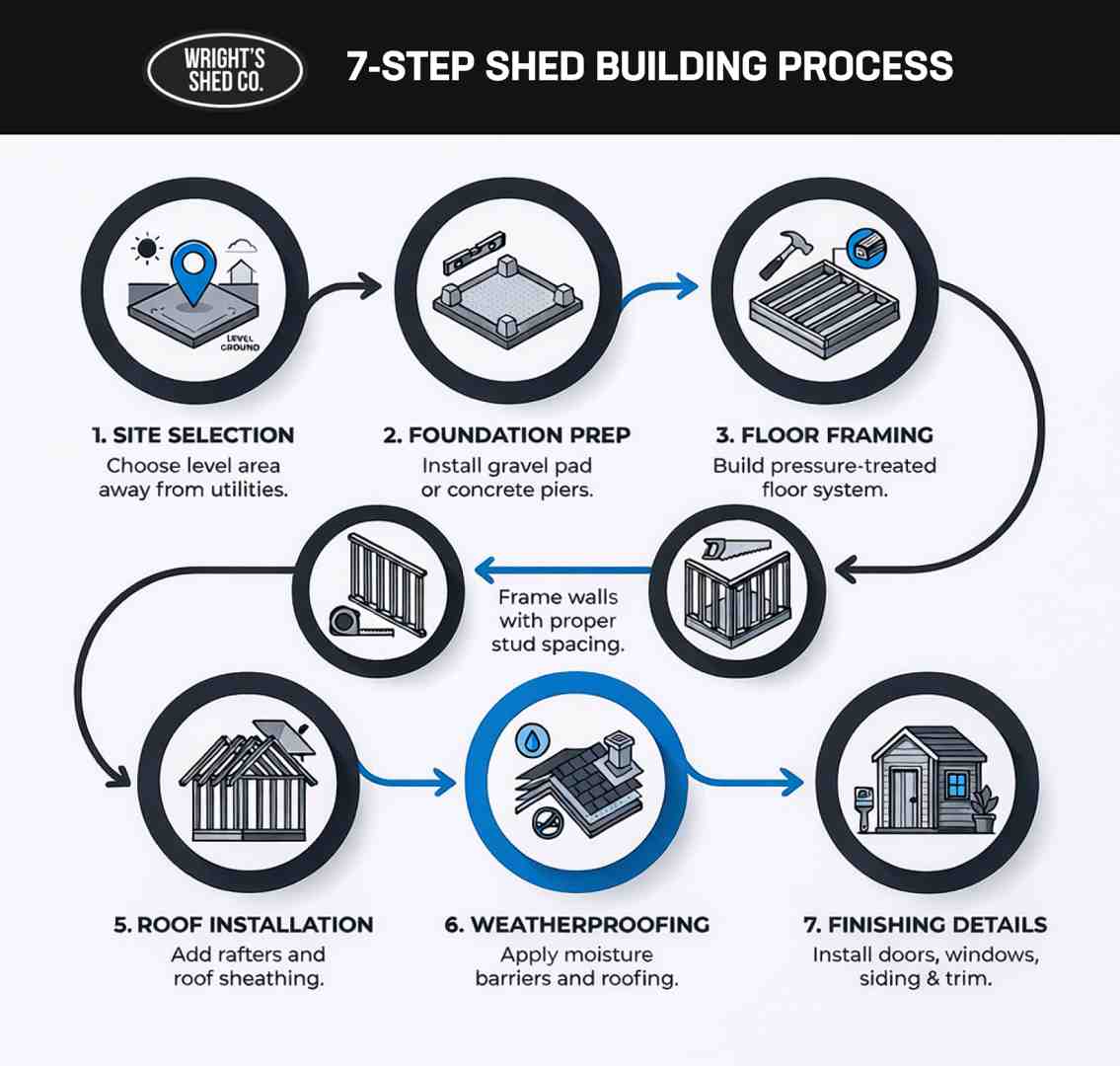
- Select your site – Choose level ground with proper drainage, away from property lines and underground utilities.
- Check permits – Verify local municipal requirements, especially for structures exceeding 150-200 square feet.
- Prepare the foundation – Install gravel pads, concrete piers, or frost-proof footings based on local climate.
- Frame the floor – Utilize pressure-treated lumber with appropriate joist spacing for weight distribution.
- Build walls and roof – Frame studs at 16-24 inches on-center and install rafters with precise birdsmouth cuts.
- Install roofing and weatherproofing – Apply high-quality shingles, flashing, and moisture barriers to prevent rot.
- Add finishing touches – Install durable siding, windows, doors, and exterior trim for a polished look.
In this guide, you will learn how to approach building sheds with technical confidence. We cover foundation types, framing methods, weatherproofing strategies, and cost considerations based on decades of industry experience.
Key Steps for Building Sheds: A Technical Overview
The process of building sheds requires a clear understanding of each construction phase. Careful preparation and adherence to structural standards allow for the creation of a durable and functional storage solution. A successful build starts with a solid plan and a focus on long-term stability.
Before any timber is cut, site selection and foundation preparation are paramount. The location of a shed impacts its longevity and compliance with local regulations. A level, well-drained spot is ideal, situated away from property lines and critical utility lines to avoid future legal or maintenance issues.
| Foundation Type | Description | Pros | Cons |
|---|---|---|---|
| On-grade | A foundation laid directly on the ground, often using concrete blocks or gravel. | Cost-effective and easier to build for DIY projects. | Susceptible to shifting in freeze-thaw cycles. |
| Frost-proof | Involves digging below the frost line and setting posts in concrete. | Highly stable and resistant to ground movement. | More labor-intensive and requires more materials. |
Planning, Permits, and Local Guidelines
The first step in building sheds is often the most critical: thorough planning and understanding local regulations. Before purchasing materials, contact the local planning department. Each county and city has specific rules regarding accessory structures.
Researching zoning laws, property lines, and setback rules is essential. A common threshold for requiring a building permit is often for sheds exceeding 150 or 200 square feet. In many regions, sheds under this size may not require a permit, but this is not universal. Even if a permit is not required based on size, one may be necessary if the shed includes electricity, heating, or a permanent concrete foundation.
It is also crucial to identify underground utility lines before digging. Calling 811 before you dig can prevent costly damage and dangerous accidents. If the property is within a Homeowners’ Association (HOA), their specific architectural guidelines must also be reviewed.
Choosing the Right Foundation and Floor Framing
A shed is only as durable as its foundation. A proper base prevents sinking, shifting, and moisture damage. Investing in a sturdy foundation from the start saves significant time and money in future repairs.
For smaller sheds, an on-grade base can be suitable. This typically involves preparing a level area with gravel pads or using pre-cast concrete piers. Gravel pads are a popular choice for building sheds without concrete, offering excellent support and drainage.
For larger sheds in regions prone to frost heave, a frost-proof foundation is highly recommended. This involves digging footings below the local frost-line depth and setting posts in concrete to anchor the structure securely.
Once the foundation is established, the next step is building the floor frame. Floor frames should use pressure-treated lumber, typically 2x8s or 2x6s. For 2×6 joists, a 16-inch on-center spacing is recommended to ensure a robust floor. The frame is then sheathed with durable OSB (Oriented Strand Board) or exterior-grade plywood.
Wall Framing and Roof Construction
Wall framing involves assembling studs, top plates, and bottom plates. For custom builds, wall studs are typically spaced 16 inches apart. This spacing ensures optimal structural support and simplifies the installation of standard-sized siding and insulation.
When framing for windows and doors, rough openings must be created with sturdy headers. These headers transfer the weight from the roof around the openings to the floor. Once individual wall sections are framed, they are raised onto the floor deck and securely fastened.
The roof provides the primary protection from the elements. Popular styles include Apex roofs for classic headroom and Pent roofs for a modern, low-profile look. Barn-style roofs, or gambrel designs, maximize interior storage space. Regardless of style, roof construction involves framing with rafters that extend to a central ridge beam. Rafters require birdsmouth cuts where they rest on the wall’s top plate to ensure a secure connection.
Finishing Touches and Common Shed Building Mistakes
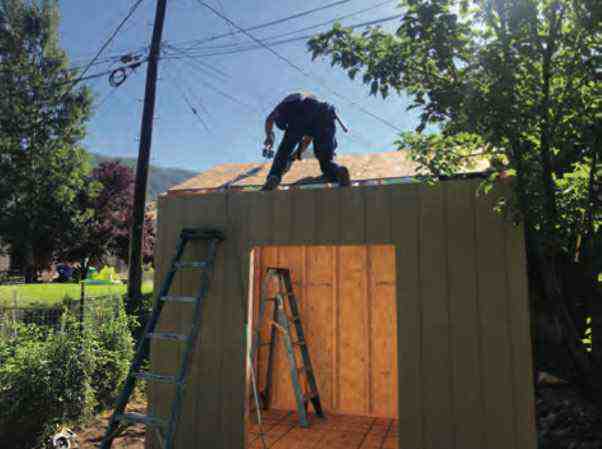
Finishing a shed involves weatherproofing, installing windows and doors, and applying exterior finishes. Proper execution at this stage ensures the structure remains dry and functional for decades.
One of the most critical aspects of weatherproofing is the roof. After the roof frame is complete, it is sheathed with OSB or plywood. A layer of roofing felt or synthetic underlayment is then applied, starting from the bottom edge and overlapping upwards. Finally, the chosen roofing material, such as asphalt shingles or corrugated metal, is installed to shed water effectively.
Professional builders pay close attention to sealing all exterior penetrations. This includes flashing around windows and doors and using high-quality silicone sealant. Exterior trim pieces are added around windows, doors, and corners to protect vulnerable edges from wind and rain. Applying a quality exterior-grade paint or wood stain is essential to protect the wood from UV rays and rot.
Installing Windows and Doors for Functionality
Windows and doors contribute to the functionality and security of the shed. Precision is key to ensure smooth operation and a watertight seal. Rough openings in the wall framing must be correctly sized for the chosen units.
Whether installing pre-hung doors or individual window units, they must be perfectly plumb and square. This is achieved by shimming the frames to eliminate gaps. For doors, heavy-duty hinges are necessary to support the weight and ensure long-term use.
Proper flashing is essential around all openings to prevent water intrusion. This typically involves applying adhesive flashing tape or metal drip caps above the openings. Once installed, all gaps should be sealed with exterior-grade silicone caulking. Strategic placement of windows also provides natural lighting and necessary ventilation.
Exterior Cladding and Weatherproofing
The exterior cladding is the first line of defense against the elements. High-quality materials ensure the shed is both aesthetically pleasing and durable. Popular options include panel siding, lap siding, and cedar shingles. Modern panel siding is often preferred for its strength and ease of maintenance, frequently coming with long-term factory warranties.
Beyond the main siding, components like corner trim and soffit vents contribute to weatherproofing. Soffit vents allow for airflow within the roof structure, preventing heat and moisture buildup that can lead to mold. Rot prevention begins with the selection of treated lumber for any component in contact with the ground.
Shed Building Costs and Value Considerations
Understanding the cost of building sheds is a key part of the planning process. The national average for building a shed typically ranges from $17 to $24 per square foot. For example, a 10′ x 10′ shed might cost approximately $2,200 in materials, while a larger 12′ x 20′ shed could be around $5,200.
These figures primarily reflect material costs for DIY projects. Building a shed personally offers substantial labor savings, though it requires factoring in tool rentals or purchases. Choosing a professionally custom-built shed provides value through upgraded features and expert craftsmanship. While the initial investment for a professionally built system may be higher than a basic DIY kit, the long-term durability and warranties on high-quality siding often make it more cost-effective over time.
Frequently Asked Questions about Building Sheds
How do I know if I need a permit for my shed?
Most municipalities require a permit for sheds exceeding 150-200 square feet. It is essential to check with the local building department or HOA before beginning construction to ensure compliance with local codes.
What foundation is best for a permanent shed?
A level concrete slab offers the highest level of stability and moisture protection for permanent structures. For smaller, non-permanent sheds, a well-prepared gravel pad with pressure-treated timber framing is a durable and cost-effective alternative.
How can I prevent a shed from rotting?
Use pressure-treated lumber for all components in contact with the ground and apply high-quality exterior paint or stain. Proper roof installation, including drip edges and shingles, will effectively direct water away from the wooden structure.
Who should build the foundation?
While many shed companies specialize in the structure itself, foundations are often handled by concrete contractors or the homeowner. It is important to seek expert advice on the best foundation for specific site conditions.
What does a typical siding warranty cover?
High-quality panel siding often comes with a 50-year factory warranty. This typically covers structural integrity and resistance to delamination or fungal decay, providing long-term peace of mind for the homeowner.
Building Sheds: A Practical Long-Term Investment
Building sheds adds organized storage, protects your equipment, and increases usable space on your property. A properly built shed prevents moisture damage, reduces indoor clutter, and improves backyard functionality. When constructed with the right foundation and weatherproofing, it can last for decades with minimal maintenance.
The key to successfully building sheds is careful planning, strong framing, and durable exterior finishes. Skipping steps like proper drainage or sealing can lead to shifting, rot, or costly repairs later. Taking the time to build it right protects both your structure and your investment.
If you are considering building sheds for storage or a custom workspace, start with a clear plan and expert guidance. Speak with a professional builder to review your site conditions and design goals before construction begins. Request a detailed quote today and build with confidence.