
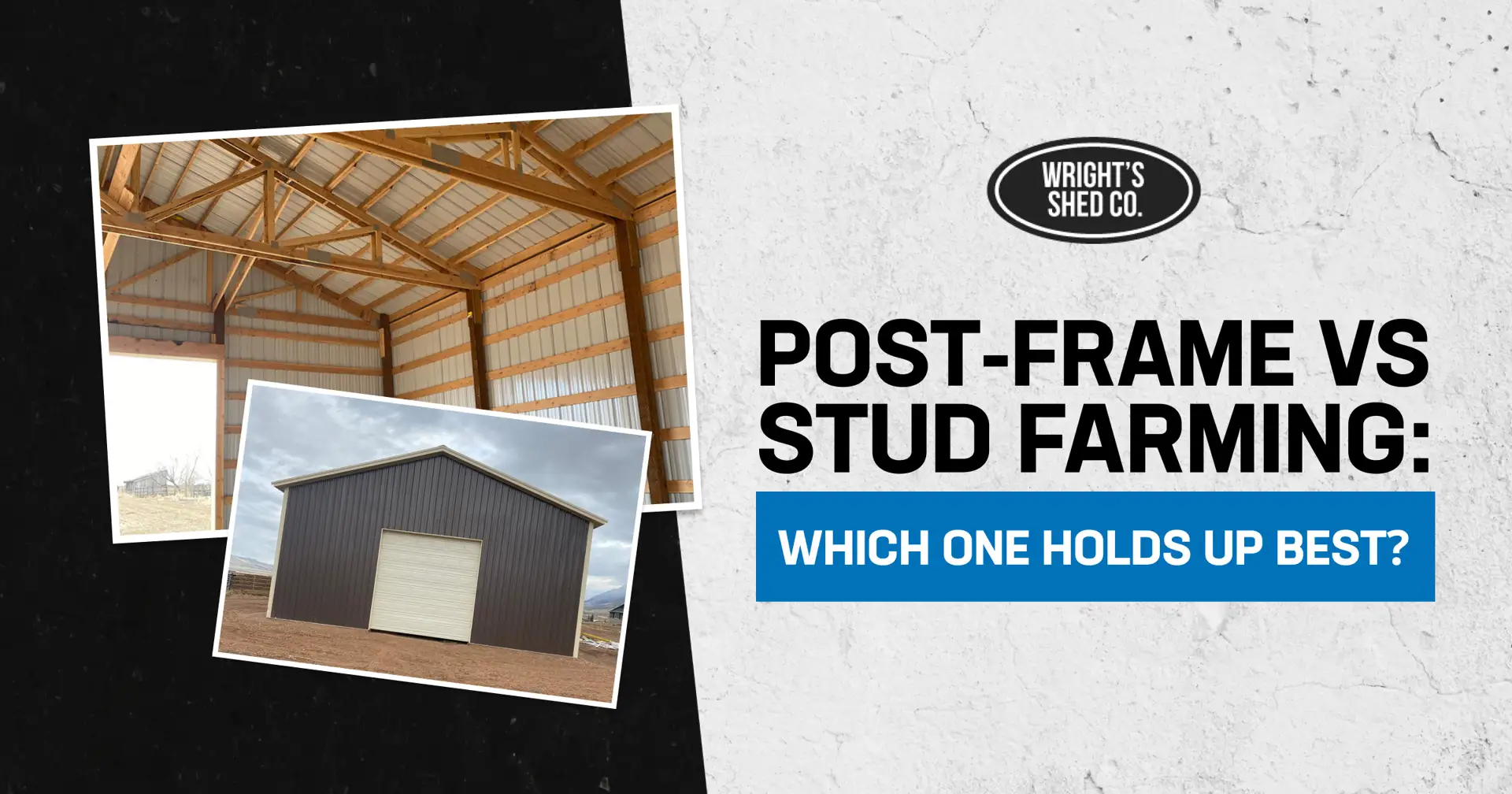
Post-Frame vs Stud Framing: Which One Holds Up Best?
What Post-Frame Buildings Actually Are (and Why It Matters)
Post-frame buildings represent a highly engineered wood-frame construction system that uses large, widely spaced vertical columns to transfer structural loads directly to the ground. This method eliminates the need for interior load-bearing walls and continuous concrete foundations, providing a versatile solution for agricultural, commercial, and residential projects across the United States. Unlike traditional light-frame construction, post-frame engineering focuses on efficiency and structural integrity through a simplified but robust skeletal design.
Here is a quick breakdown of what makes post-frame construction distinct:
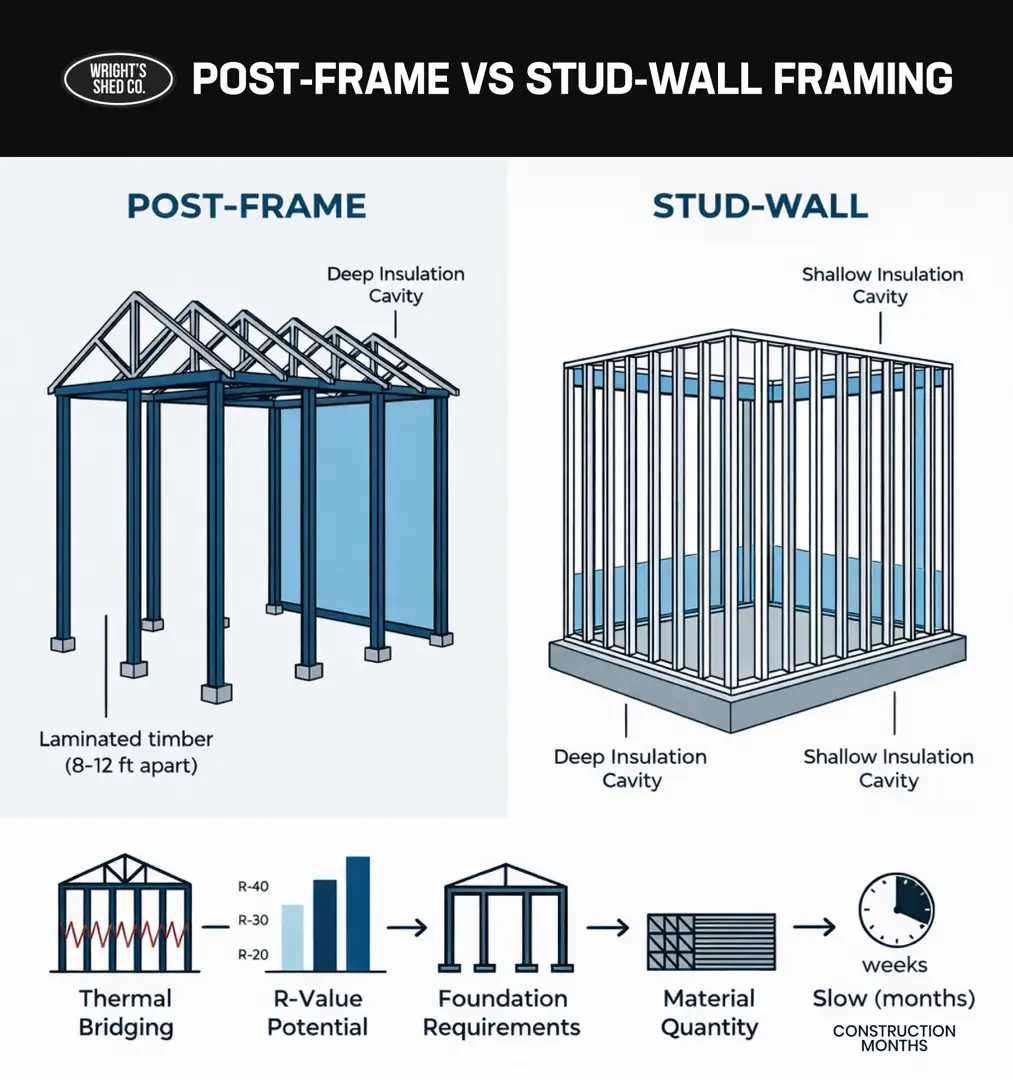
- Structural system: Large laminated or solid-sawn posts spaced 8 to 12 feet apart, rather than studs placed every 16 to 24 inches.
- Clear-span capability: Open interior spans of up to nearly 100 feet with no interior columns blocking usable space.
- Foundation flexibility: Posts can be embedded directly in the ground, set on concrete piers, or anchored to a monolithic slab.
- Speed and cost: Fewer framing components mean faster builds and material savings that many owners report at 20 to 30% compared to traditional methods.
- Versatility: Used across agricultural, residential, commercial, and industrial applications.
- Durability: Well-constructed post-frame structures can last 50 years or more with proper maintenance.
- Energy efficiency: Wider post spacing creates deeper wall cavities, allowing for better insulation and reduced thermal bridging.
Post-frame construction has roots going back to the 1930s. American farmers needed larger, cheaper buildings to store engine-powered equipment as agriculture shifted away from horse-drawn tools. What started as a practical solution for rural barns has evolved into one of the most efficient and adaptable low-rise building systems available today. The core principle has stayed the same: let the posts do the heavy lifting so the rest of the structure can stay lean, open, and cost-effective.
At Wright’s Shed Co., we have spent decades working hands-on with post-frame buildings across Utah, Idaho, Nebraska, and Iowa. Understanding the engineering behind these structures is essential for any property owner looking for long-term value.
Structural Engineering and Design of Post-Frame Buildings
The secret to why post-frame buildings are so strong lies in their skeletal structure. Instead of relying on dozens of small 2×4 or 2×6 studs to carry a load, the system utilizes massive vertical columns. These columns are usually triple-laminated timbers or solid-sawn posts that are hydraulically compressed for maximum strength and stability.
These posts are the backbone of the entire system. Because they are spaced 8 to 12 feet apart, they can handle significantly larger weight loads than traditional stud-wall construction. These posts are connected with horizontal members called girts on the walls and purlins on the roof.
This creates an interlocking frame that works as a single unit to resist wind and snow. Another critical piece of the engineering puzzle is diaphragm action. This happens when the exterior cladding, like steel panels, is securely fastened to the purlins and girts, allowing the skin of the building to help the frame stay rigid.
You can find more technical details on these standards through the National Frame Builders Association.
Comparing Post-Frame Buildings to Traditional Stud Framing
When evaluating agricultural storage buildings versus traditional stick-built structures, the differences in foundation and load distribution are significant. Stick framing requires a continuous concrete footer and foundation wall to support the weight of the studs. Post-frame skips this requirement because the load is concentrated on the posts, which transfer the weight directly to the ground or specific piers.
| Feature | Post-Frame Construction | Traditional Stud Framing |
|---|---|---|
| Primary Support | Large columns (8-12′ apart) | Small studs (16-24″ apart) |
| Foundation | Concrete piers or slab | Continuous concrete footer |
| Interior Space | Clear-span (no load-bearing walls) | Restricted by load-bearing walls |
| Insulation | Deeper cavities, less thermal bridging | Shallower cavities, more bridging |
| Build Speed | Very fast (fewer components) | Slower (labor intensive) |
One of the primary advantages observed in the field is the reduction in thermal bridging. In a stud-framed wall, a piece of wood every 16 inches conducts heat from the inside to the outside. In post-frame, those bridges are much further apart, allowing for R-value optimization because thicker insulation can fit in those deep wall cavities.
For those interested in how these methods meet modern safety requirements, the DCA 5 Post Frame Buildings guide offers a deep dive into IBC compliance.
Common Applications for Modern Post-Frame Buildings
The days of post-frame being used only for pole barns are long gone. While they remain the gold standard for Pole Barns, they are increasingly used for high-end custom homes and commercial warehouses. The barndominium trend has expanded because the system allows for massive, open-concept floor plans. Because Post-frame buildings can achieve clear spans of up to nearly 100 feet, they are ideal for equestrian facilities and indoor riding arenas where interior support beams would be a hindrance.
Foundation Systems and Weather Resistance
Foundation choice is key to longevity, especially in varied climates. Options include embedded posts, concrete piers, or monolithic slabs. Each has its own benefits depending on the local frost line and soil composition.
For instance, in regions with high wind loads, uplift anchors are used to ensure the building remains secure during storms. For heavy snow loads, engineered trusses are designed to handle the weight without bowing. This regional adaptation is why post-frame is so trusted across the Western and Midwestern United States.
More information on site preparation can be found in this guide on questions before building.
Cost Efficiency and Construction Speed
One of the most attractive aspects of choosing Post-frame buildings is the financial efficiency. Many projects see 20% to 30% savings compared to traditional stick-built methods due to fewer materials and faster assembly. There are many reasons people choose pole barns, but the initial investment and rapid ROI are usually at the top of the list. Because the frame goes up so quickly, the building can be dried in much faster, protecting interior materials from the elements.
Maintenance and Long-Term Durability
Modern post-frame structures are engineered for longevity. A well-constructed building can easily have a 50-year lifespan. High-quality materials like 26-gauge or 29-gauge steel cladding are resistant to rust, pests, and fire.
In areas where the seasons are brutal, ensuring all wood in contact with the ground is pressure-treated prevents rot and maintains structural integrity. High-quality panel siding often carries a 50-year factory warranty, providing peace of mind that the investment is protected against the elements.
Frequently Asked Questions about Post-Frame Buildings
How long do post-frame buildings last?
When properly constructed with pressure-treated posts and high-quality steel cladding, these structures typically last 50 years or more. Regular maintenance of the exterior and ensuring proper drainage around the posts can further extend this lifespan.
Can I use post-frame construction for a residential home?
Yes, this method is increasingly popular for residential barndominiums due to its open floor plans and energy efficiency. The lack of interior load-bearing walls allows for complete customization of the living space.
Is a concrete slab required for post-frame buildings?
A continuous concrete slab is not strictly required, as the structural load is transferred through the posts. However, many owners choose to add a slab for use as a garage, workshop, or living space after the shell is completed.
How does post-frame handle heavy snow loads?
These buildings are highly engineered to meet local building codes for snow and wind. The use of heavy-duty trusses and wide-spaced columns allows the structure to support significant weight by transferring it directly to the ground.
Are post-frame buildings more energy-efficient than stud-framed buildings?
They often provide superior efficiency because the larger spacing between posts creates deeper insulation cavities. This reduces thermal bridging, which is the transfer of heat through the structural members themselves.
The Long-Term Value of Post-Frame Buildings
Choosing the right building method is a critical decision for any property owner. For those looking for strength, speed, and versatility, Post-frame buildings offer a superior alternative to traditional framing. By utilizing engineered columns and clear-span trusses, these structures provide unmatched interior flexibility and energy efficiency. Whether the goal is a functional agricultural space, a modern commercial facility, or a custom residential home, the post-frame method delivers a durable, cost-effective solution that stands the test of time.
Understanding the technical requirements and regional adaptations is the first step toward a successful build. For more information on custom designs and onsite construction, you can contact Wright’s Shed Co. to explore how these principles apply to your specific project needs.