
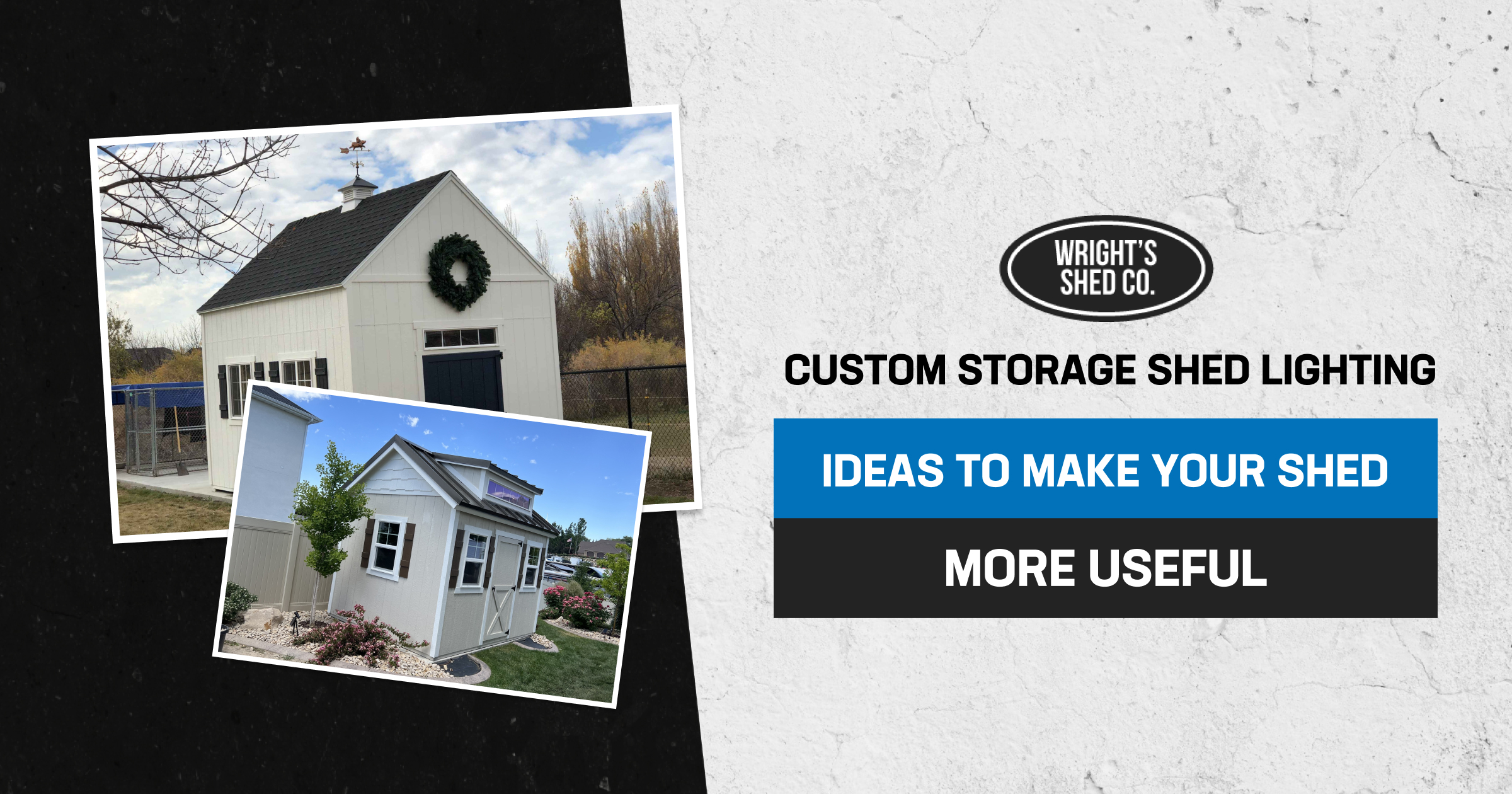
Custom Storage Shed Lighting Ideas for Better Functionality
Custom storage shed lighting ideas are the single most overlooked upgrade homeowners make after buying a shed. The difference between a shed you avoid after dark and one you actually use every day often comes down to a handful of well-placed lights. Whether you have a dedicated custom storage shed for tools and equipment or a multi-purpose backyard workspace, this guide walks you through every real option so you can stop guessing and start planning.
A dark shed is a frustrating shed. You walk in, trip over the lawn edger, spend five minutes hunting for a flashlight, and eventually give up. The fix is not expensive. Most shed lighting projects cost less than $100 to $300, depending on whether you already have power running to the structure. The bigger question is which lighting approach makes sense for how you actually use the space.

Do You Need Electricity in Your Shed?
The answer depends almost entirely on what you use the shed for. A pure storage shed holding seasonal decor and garden hoses can get by with solar or battery-powered lights. A workshop shed where you are cutting, assembling, or repairing things needs reliable hardwired power.
Here is a simple breakdown of the three main power approaches:
| Power Type | Best For | Upfront Cost | Reliability |
|---|---|---|---|
| Hardwired (subpanel) | Workshops, frequent use | $500 – $2,000+ | High |
| Solar panels + battery | Storage-only sheds, rural lots | $80 – $400 | Moderate |
| Rechargeable battery lights | Occasional use, renters | $20 – $100 | Low-Moderate |
If you are building a new shed, this decision is worth making before construction starts. Running conduit underground during the build costs far less than cutting into an existing slab or trench after the fact. Our detailed guide on how to bring power to your shed in Utah covers permitting, wiring approaches, and what to discuss with your electrician before the project begins.

Interior Lighting Options That Actually Work
Once you have power sorted, the fixture choice matters more than most people expect. Too little light and you still cannot see what you need. Too much in the wrong spot and you get harsh glare that makes detail work harder, not easier.
LED shop lights (linked fluorescents)
These are the workhorses of shed lighting. A two-light, 4-foot LED shop light puts out roughly 4,000 lumens and draws about 40 watts. For a standard 8×10 or 10×12 shed, two fixtures mounted to the ceiling joists are enough for general use. Look for a color temperature between 4000K and 5000K, which gives you a daylight-like white that is easy on the eyes without washing out colors.
LED strip lights
Strip lights are ideal for accent and task-specific areas rather than general illumination. Mount them under shelving to light up your tool wall, along the underside of a workbench, or around the door frame so you can see into the shed before entering. They run on 12V DC power and generate almost no heat, making them safe near stored materials.
Plug-in work lights
If your shed has power but you want flexibility, a plug-in work light on a stand lets you aim high-output light exactly where you are working. These are especially useful in larger structures where fixed ceiling lights leave shadows in the corners.
Tip: For any shed wider than 10 feet, consider two rows of ceiling lights offset from center rather than a single row down the middle. This eliminates the common problem of your own body casting a shadow on whatever you are trying to see.
Exterior Lighting for Safety and Security
The outside of your shed matters just as much as the inside. A well-lit exterior does two things: it lets you navigate safely at night, and it discourages opportunistic theft. Motion-activated floodlights are the most practical choice because they only fire when needed, which saves energy and battery life on solar models.
Position exterior lights to cover:
- The main entry door is about 8 to 10 feet high, so the beam covers the lock and handle
- Any secondary doors or windows on the side or rear of the structure
- The path from your house to the shed, if it crosses a dark yard
Exterior lighting pairs naturally with other protective features. If you are thinking about this holistically, our page on custom storage shed security features covers locking systems, reinforced doors, and how to layer physical security with lighting for a complete deterrent approach.
Research from the Cybersecurity and Infrastructure Security Agency (CISA) on physical security consistently identifies exterior lighting as one of the most cost-effective deterrents for outbuildings and residential structures.
Solar-Powered Shed Lighting: Pros, Cons, and Best Picks
Solar lighting has improved substantially in recent years. The panels are more efficient, and the internal battery storage lasts longer between charges. For sheds that do not justify the cost of running underground electrical, solar is a genuinely practical option rather than a compromise.
Where solar works well:
- Sheds on the south or west side of a property with direct sun exposure
- Storage-only sheds where lighting needs are brief and infrequent
- Rural or off-grid properties where running power is expensive
Where solar struggles:
- Sheds shaded by trees or a house roofline for most of the day
- Workshop environments where you need consistent, bright output for hours
- Utah winters, where shorter days limit charge time significantly
The best solar setups use a separate panel mounted on the south-facing roof slope, wired to an interior light fixture rather than an all-in-one unit that mounts directly where the light goes. This separation lets you optimize panel placement independently of where you need the light inside.
Lighting for Workshops vs. Pure Storage Sheds
These two use cases have genuinely different requirements, and treating them the same leads to either overspending or ending up with a workspace that gives you eyestrain.
Workshop sheds
You need high lumen output (4,000 to 8,000 lumens for a typical workshop shed), consistent color rendering so you can see the actual color of wood stains or paint, and no flicker. Cheap LED fixtures can flicker at frequencies your eye picks up as fatigue even when you cannot consciously see it. Look for a CRI (Color Rendering Index) of 80 or higher and fixtures rated for enclosed spaces if your shed lacks full ventilation.
If you are building a dedicated workshop space, explore the full range of custom storage sheds designed for tools and equipment from Wright’s Shed Co. The right structure gives you the ceiling height, wall space, and foundation to support serious workshop lighting layouts.
Pure storage sheds
For seasonal storage, garden supplies, or a lawn equipment home like the Vineyard Shed, your lighting needs are simpler. One overhead LED fixture and a motion-activated exterior light cover 90% of use cases. A battery-powered under-shelf strip light is a useful addition if you have deep shelving where the ceiling light does not reach.
Bringing Power to Your Shed: What You Need to Know
Running electrical to a detached structure is not a DIY project in most jurisdictions. In Utah and Nebraska, where Wright’s Shed Co. operates, you will generally need a permit for any new electrical subpanel or underground wiring. The process involves submitting a plan, having the rough-in inspected before burial, and a final inspection after the work is complete.
The most common approach is a dedicated 60-amp or 100-amp subpanel fed by a new circuit from your main home panel. This gives you enough capacity for lighting, a few outlets, and small power tools simultaneously. If the shed is close to the house (within 50 feet), the trenching cost is manageable. For sheds farther away, solar with a quality battery bank becomes more competitive in price.
For a full walkthrough of the process specific to Utah, including what permits look like and how to plan the conduit run, see our guide on bringing power to your shed in Utah.
The U.S. Department of Energy estimates that LED fixtures use at least 75% less energy than incandescent bulbs, which is worth factoring into your long-term operating cost when planning a shed electrical system.
How to Plan Lighting When Designing Your Custom Shed
The best time to plan shed lighting is before the shed is built, not after. When you go through the design process, you make decisions that directly affect how easy and affordable lighting will be later.
Here is what to think through at the design stage:
- Ceiling height: A higher ceiling pitch, like that on the Farm Shed with its Gambrel roof, gives you more mounting flexibility and better light distribution than a low-slope roof.
- Window placement: Natural light reduces how much artificial light you need during daytime hours. Plan windows on the south and east walls for the best daylight in Utah.
- Conduit rough-in: If there is any chance you will want electricity later, ask your builder to rough in conduit during construction. It adds very little to the build cost and saves significant rework later.
- Outlet placement: Think about where you will plug in tools, a fan, or a work light. Plan outlets at workbench height (about 44 inches) rather than at standard floor-level residential height.
- Switch location: A switch just inside the door is obvious, but also consider a second switch at a workbench location so you do not have to walk across the shed in the dark.
Wright’s Shed Co. offers a 3D design tool where you can visualize your shed layout before committing. Working through lighting placement at that stage, even roughly, prevents common frustrations after delivery.

Frequently Asked Questions About Shed Lighting
What is the best type of lighting for a storage shed?
LED shop lights are the most practical choice for most storage sheds. They are efficient, long-lasting, and bright enough to see clearly without creating excessive heat. For sheds without electricity, a solar-powered LED panel with an interior light fixture is the next best option.
How many lumens do I need to light a shed?
A general storage shed (8×10 to 10×12 feet) is well-lit with 3,000 to 5,000 lumens from overhead fixtures. A workshop shed where you are doing detailed work should aim for 6,000 to 10,000 lumens spread across two or more fixtures to avoid shadowing.
Can I use solar lights inside a shed?
Yes, but the panel needs to be mounted outside where it gets direct sunlight, typically on the roof or an exterior wall, with a wire running to the interior fixture. All-in-one solar lights that mount directly on a wall inside the shed will not work because they need sun exposure to charge.
Do I need a permit to wire a shed for electricity in Utah?
In most Utah municipalities, yes. Any new subpanel or underground wiring from a home to a detached structure requires a permit and inspection. The specific requirements vary by city, so check with your local building department or discuss it with a licensed electrician before starting the project.
What color temperature is best for a shed workshop?
A color temperature between 4000K and 5000K is ideal for workshop environments. This range produces a crisp, daylight-like white that makes it easy to see detail work, distinguish paint colors, and reduce eye fatigue during long sessions. Avoid anything below 3000K (too warm and yellow) for workspace lighting.
How do I keep shed lights from draining a solar battery overnight?
Use a motion sensor on any interior solar light so it only activates when you are actually in the shed. For exterior lights, a motion-activated floodlight with a dusk-to-dawn sensor only stays on when triggered by movement, not all night. Sizing the battery correctly for your usage pattern also helps, and most quality solar shed light kits include a charge controller that prevents over-discharge.
Custom Storage Shed Lighting Ideas for Better Functionality: The Bottom Line
Good lighting transforms a shed from a place you reluctantly visit into a space you genuinely want to use. Custom storage shed lighting ideas for better functionality do not require a major electrical project in every case. Start by matching your power source to your actual usage habits. Storage-only sheds do well with solar or battery lighting. Workshop sheds need reliable hardwired power with high-output LEDs. Exterior motion lights pull double duty as both a safety feature and a security deterrent.
The smartest time to plan any of this is before the build. Wright’s Shed Co. has been building custom sheds across Utah and Nebraska since 1997, and the team can walk you through options at the design stage so your shed is ready for the lighting setup you actually need from day one.
Add Lighting to Your Custom Shed Design Today
Wright’s Shed Co. builds custom sheds with your exact needs in mind. Use our free online design tool to choose your size, style, and layout. Then talk to our team about electrical rough-ins, window placement, and everything else that makes a shed worth owning. Get a Free Quote from Wright’s Shed Co.