
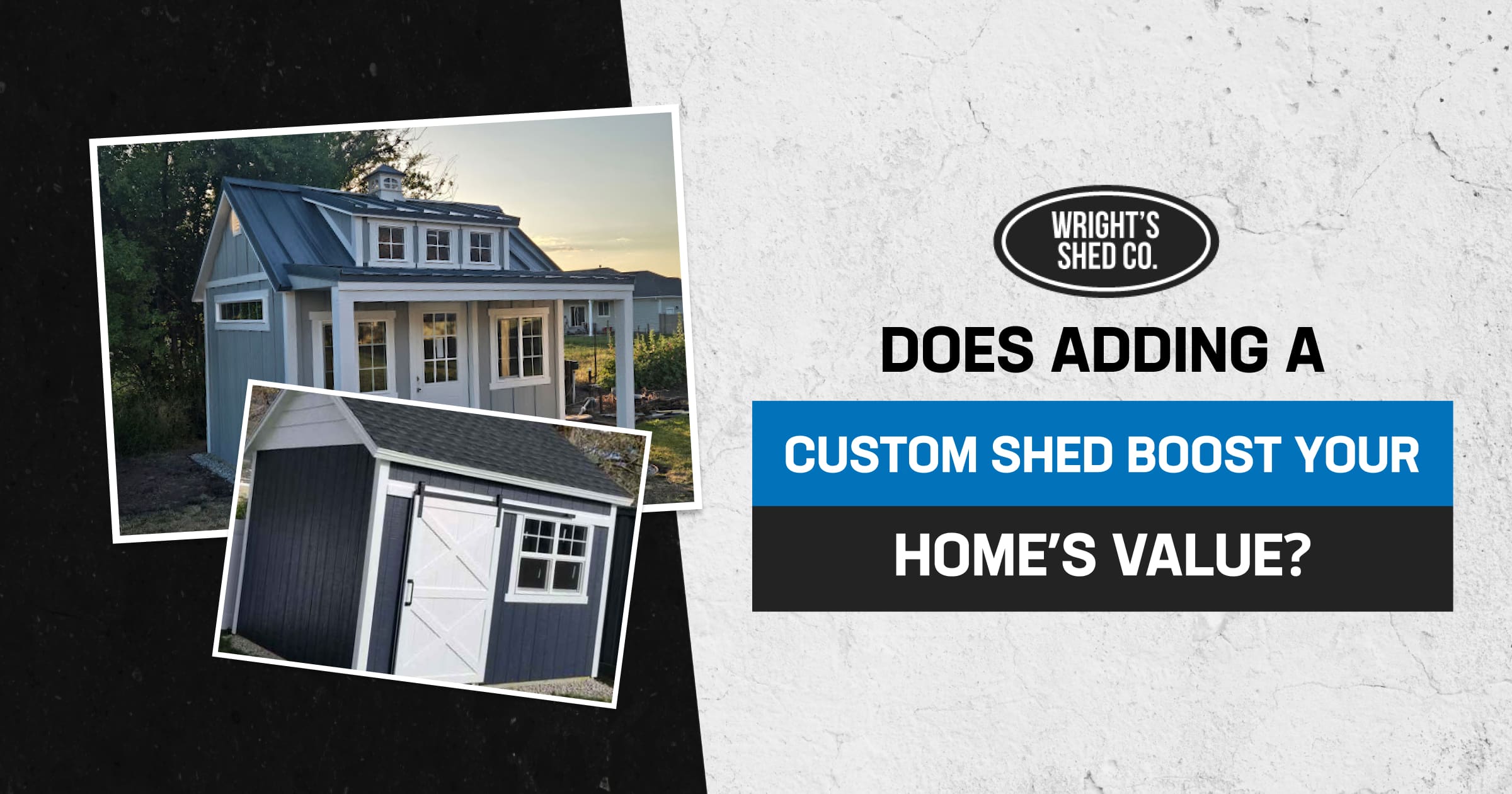
Does a Custom Shed Add Home Value? Real Data, ROI, and Buyer Insights
Does a custom shed add home value? Yes, but only when the shed is built right, permitted properly, and designed to complement your property.
Homeowners who skip quality or cut corners on permits often end up with a structure that works against them at resale. However, a well-built custom shed delivers three measurable benefits:
• Increases perceived value and buyer appeal
• Reduces clutter that suppresses offer prices
• Adds a functional asset that appraisers can recognize
Understanding how each factor works will help you make a smarter investment decision before you build.
What Home Appraisers Say About Outbuildings
Appraisers take a nuanced view of sheds. Most agree that a basic, movable shed adds little or no appraised value. However, a well-built structure installed on a proper foundation tells a different story.
Appraisers generally place more value on sheds that are permanently installed and built to local code requirements. Portable or temporary structures are often treated differently from permanent accessory buildings during property evaluation. As a general reference, the International Residential Code (IRC) provides baseline standards for accessory structures, though local requirements vary by municipality.
Furthermore, a custom shed built with quality materials and a permanent foundation gives appraisers something tangible to evaluate. In some markets, this type of structure may contribute measurable contributory value during an appraisal, depending on local market conditions, permit status, and overall build quality.
| Pro Tip: Before you build, ask your appraiser or real estate agent what foundation type and size threshold triggers permanent structure classification in your local market. That single detail can mean the difference between a zero-dollar appraisal contribution and a measurable value increase. |
Factors That Determine How Much Value a Shed Adds
Not all sheds are equal in the eyes of buyers or appraisers. These are the key factors that separate a shed adding value from one that subtracts it.
Build Quality and Materials
A shed built with LP SmartSide engineered wood siding signals permanence and care. It uses the same treated-wood technology found on well-built homes. In contrast, untreated pine siding warps and rots within a few years, which buyers notice immediately during a walkthrough.
Similarly, architectural shingles versus low-grade roofing communicate very different things about the overall property. Buyers form quick judgments about a home’s maintenance level based on what they see in the backyard.
Size and Proportionality
Larger sheds generally improve storage shed ROI because they offer more usable space per dollar invested. Additionally, a shed sized appropriately for the lot looks intentional rather than like an afterthought.
Some real estate professionals estimate that a quality shed may contribute to perceived market value in some cases, typically estimated at around 1% to 2%, depending on market conditions. On a $500,000 home, this may translate into thousands of dollars in perceived value depending on the property and market conditions.
Aesthetic Match to the Home
A shed that matches the home’s siding color, trim style, and roofline becomes a genuine selling point. One that clashes visually raises doubts about the homeowner’s attention to detail throughout the property.
Therefore, choosing shed colors and materials at the time of build produces the most cohesive result. Repainting after the fact rarely achieves the same seamless look buyers respond to.
| Pro Tip: Use the same exterior paint color family and roofing shingle line as your home. Wright’s custom sheds are finished with Sherwin-Williams A-100 exterior paint, which holds color through Utah’s harsh freeze-thaw cycles. Matching siding and trim to your house makes the shed look like a planned addition, not an afterthought. |
Custom Shed vs. Cheap Big-Box Shed: The Value Difference
Backyard shed resale value depends heavily on build quality. The infographic below shows exactly why the type of shed you choose matters when it comes time to sell.

A lower-quality prefab shed may show visible wear within five to seven years, depending on materials and maintenance. Additionally, buyers who see a deteriorating backyard structure mentally subtract that cost from their offer price.
In contrast, a custom shed built with LP SmartSide siding carries a Some materials include limited manufacturer warranty of up to 50 years for decay and pest resistance. That durability stays visible at resale, keeping the shed an asset rather than a liability.
How Storage Increases Buyer Appeal and Home Sale Prices
Storage is one of the most consistent buyer priorities in any market. According to FastExpert survey data, 75% of homebuyers consider extra storage space an important factor when choosing a home.
A properly sized custom shed gives buyers a dedicated place to store the garage overflow they carry from home to home. Consequently, homes with functional outdoor storage tend to generate stronger offers and shorter time on market.
Additionally, buyers are increasingly drawn to flexible-use backyard structures. A custom shed serves equally well as a workshop, garden studio, or home office without consuming the home’s internal square footage.
Permitted vs. Non-Permitted Sheds and Appraisal Impact
Permit status is an important factor in many transactions and can become a deal-breaker in some cases. A real estate agent cited by HomeLight described a sale where an unpermitted shed was excluded entirely from the appraisal because there was no legal basis to count it.
Furthermore, in some cases, unpermitted structures may be subject to compliance actions, including potential removal. That liability made buyers hesitant, and the seller gained nothing from having built the structure in the first place.
On the other hand, a shed built with all required permits in place becomes a legitimate part of the property record. This gives buyers confidence, supports the appraisal, and prevents complications during title searches.
For a deeper look at Utah permitting requirements, review the guide on permitted sheds and property value.
Real-World ROI Breakdown: A $10,000 Custom Shed
Consider a Utah homeowner who invests in a mid-range custom shed. An Orchard or Farm-style shed from Wright’s starts around $3,400 and can scale up to $11,000+ depending on size, materials, and customization. Here’s how that investment typically performs:
- Immediate functional value: can help reduce or eliminate the need for off-site storage, which may cost around $50/month in some cases
- Curb appeal improvement: A well-matched shed enhances buyer impression and can help reduce days on market
- Market value contribution: A 1% to 2% increase on a $500,000 Utah home adds approximately $5,000 to $10,000 in perceived buyer value
- Resale positioning: Buyers with storage needs often skip listings that lack a quality outdoor structure
As a result, a $10,000 custom shed investment can help recover part of its cost over time through storage savings and potential improvements in resale appeal. This is especially true when build quality holds up over years of Utah weather exposure.
For more details on planning your budget, see the custom shed investment cost guide.
Why Wright’s Shed Co. Is the Right Choice for Utah Homeowners
Wright’s Shed Co. has been building custom sheds across Utah, Idaho, Nebraska, and Iowa since 1997. That is more than 25 years of on-site builds and hard-won experience with every climate challenge Utah produces.
The standard of materials sets Wright’s apart. While other builders treat upgraded features as paid add-ons, Wright’s includes LP SmartSide siding, GAF Timberline architectural shingles, Sherwin-Williams A-100 exterior paint, and 2×4 framing at 16 inches on center as standard on every shed.
Additionally, Wright backs the Orchard, Lean-To, and Farm sheds with an 8-year personal warranty. Manufacturer material warranties extend up to 50 years. For homeowners who want a shed that qualifies as a genuine property asset, building standards matter.
For homeowners still comparing styles, the high-quality custom shed materials page walks through every standard component in detail.

Frequently Asked Questions: Does a Custom Shed Add Home Value?
How much does a custom shed increase home value?
A quality custom shed can add 1 to 2 percent to your home’s market value. On a $400,000 property, that equals $4,000 to $8,000 in added buyer appeal, depending on build quality, size, and permit status.
Will a shed increase my property taxes?
A permitted shed on a permanent foundation may modestly raise your assessed property value, which can affect taxes slightly. The increase is typically minor and offset by the functional and resale benefits.
Does a shed need a permit to add value?
Yes. An unpermitted shed cannot be counted in a formal appraisal and can become a liability at resale. Always pull the required permits before building to protect your investment and your sale.
What type of shed adds the most value to a home?
A custom-built shed on a permanent foundation, using quality materials that match the home’s exterior, adds the most measurable value. Functional-use sheds such as workshops and home offices attract the widest pool of buyers.
Does a cheap big-box shed hurt home value?
Yes, it can. A deteriorating or mismatched prefab shed creates a negative first impression. Buyers factor visible maintenance issues into their offers, even when the shed is not part of the formal price negotiation.
Does a Custom Shed Add Home Value? Build It Right and It Will
Does a custom shed add home value? Yes, when the shed is built with quality materials, set on a proper foundation, permitted according to local code, and designed to match your home’s exterior.
Conversely, a cheap, unpermitted, or neglected shed works against you at resale. The difference between these two outcomes comes down almost entirely to the builder and the build standard you choose.
Wright’s Shed Co. has spent more than 29 years building sheds that function as genuine property assets. Every build uses materials that hold up visually for years, backed by warranties that reflect real confidence in the product.
See Wright’s custom shed pricing and find the style that fits your property and your budget.
You can also explore backyard sheds for Utah homes to see current options built specifically for Utah’s climate.
Ready to get started? Talk to Wright’s Shed Co. today.