
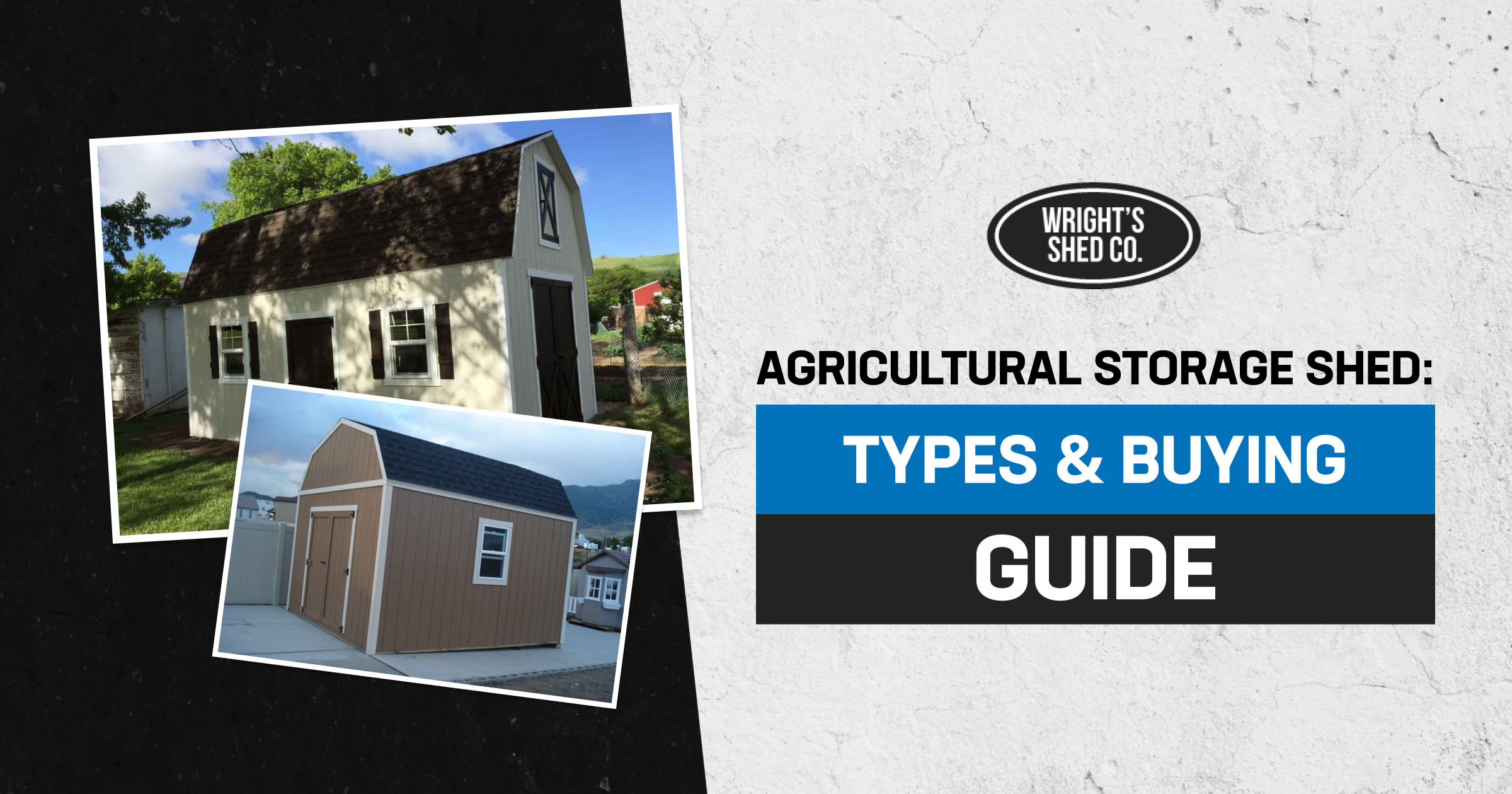
What Is an Agricultural Storage Shed and Which Type Do You Need?
An agricultural storage shed is a specialized structure designed to protect high-value farm assets like machinery, livestock, and harvested crops from environmental degradation. These buildings serve as the backbone of a productive farm, offering a controlled environment that prevents rust on equipment and spoilage of bulk materials. Whether you are managing a small hobby farm in Utah or a large-scale operation in Nebraska, selecting the right structure is a critical long-term investment that impacts operational overhead and asset depreciation.
From a technical perspective, these structures must be engineered to handle specific regional stresses. In the Intermountain West and the Midwest, this means accounting for heavy snow loads, high-velocity winds, and extreme temperature fluctuations. A well-designed shed does more than provide cover; it optimizes workflow by allowing for efficient equipment movement and safe material handling.
Key considerations for your farm building include:
- Asset Protection: Shielding combines, tractors, and hay from moisture and UV damage.
- Structural Integrity: Ensuring the building can withstand local snow loads and high winds.
- Operational Efficiency: Designing layouts that allow for easy traffic flow and vertical stacking.
- Material Longevity: Choosing skins and frames that resist corrosion and pests over decades.
This guide explores the technical specifications and design choices that ensure your building stands strong for generations, focusing on engineering standards and material science rather than mere aesthetics.

Choosing the Right Agricultural Storage Shed for Your Farm
Selecting an agricultural storage shed requires a deep understanding of regional climate challenges and structural engineering. In states like Idaho and Utah, where mountain snow loads can exceed 50 pounds per square foot, the building must be engineered for extreme pressure. Post-frame construction is the industry standard for these environments because it utilizes massive laminated columns that transfer loads directly to the ground, providing superior resistance to lateral wind forces.
These structures allow for clear-span designs, which provide wide-open interior spaces without the need for interior support poles. For a farmer, this means you can drive a tractor in one side and out the other without maneuvering around a forest of beams. There are important things to know about a good farm storage shed before you finalize your blueprints, particularly regarding the spacing of trusses and the depth of post-footings.
Comparison of Agricultural Storage Needs
| Feature | Machinery Storage | Livestock Housing | Crop/Hay Storage |
|---|---|---|---|
| Primary Goal | UV & Rust Protection | Ventilation & Health | Moisture Control |
| Clearance | High (14ft – 18ft+) | Moderate (10ft – 12ft) | High (16ft – 20ft) |
| Ventilation | Low to Moderate | Critical (High Flow) | Moderate (Passive) |
| Flooring | Reinforced Concrete | Dirt, Gravel, or Slotted | Vapor-sealed Concrete |
| Door Type | Wide Sliders/Overhead | Open-sided or Dutch | Open-front or Sliders |
Modern hybrid technology now allows for clear-span buildings up to 150 feet wide, accommodating even the largest air seeders. Whether you are storing bulk grass seed or heavy machinery, customization options like height modifications can increase your volumetric storage by up to 100 percent. This vertical expansion is often the most cost-effective way to grow your storage capacity without increasing the building’s footprint.
Essential Features of an Agricultural Storage Shed for Machinery
When it comes to machinery, the rule of thumb is that your doors should always be wider than your largest header. Modern combines require significant clearance, which is why we often recommend sliding doors that can span 36 feet or more. To truly utilize a farm equipment shed effectively, you must consider the turning radius of your largest implements and the placement of service bays.
Clear-span framing ensures that every square inch of the interior is usable for maneuvering. This is especially vital for cold storage buildings where you might be packing in multiple pieces of equipment for the winter. By increasing the wall height from a standard 8 feet to 14 or 16 feet, you significantly boost your storage capacity for vertical stacking. This protection extends the lifespan of your equipment by keeping it out of the harsh sun and moisture. UV rays degrade hydraulic seals and paint, while moisture leads to frame corrosion and electrical issues.
Specialized Agricultural Storage Shed Designs for Crops and Livestock

Storing living things or organic matter requires a completely different approach to ventilation and moisture control. For livestock, natural ventilation is the most critical factor for animal health. We use vented ridges, gable vents, and vented overhangs to ensure fresh air circulates constantly, preventing respiratory issues in cattle or horses. The goal is to achieve a “chimney effect” where warm, moist air rises and exits through the ridge, drawing fresh air in through the eaves.
For crop storage, such as hay or grain, moisture is the primary enemy. A well-designed agricultural storage shed for hay should have enough height, typically at least 3.5 meters, to allow for proper stacking and air gaps. This prevents the heat buildup that can lead to spontaneous combustion and mold growth.
Grain storage requires even more precision to maintain quality and market value. Large-scale grain sheds often utilize open-front configurations to allow for even aeration and efficient loading with augers. According to the Iowa State University Extension, proper storage management is key to preventing grain spoilage and maximizing profit margins.
Durability and Material Standards for Farm Buildings
Material selection is the most significant factor in the total cost of ownership. For many projects in Nebraska and Iowa, the use of LP SmartSide panels with SilverTech technology is recommended. These panels feature a radiant barrier that reflects the sun’s energy, keeping the interior cooler, which is a huge plus for livestock and temperature-sensitive equipment.
Steel is another powerhouse material for the modern farm. Engineers look for full-hard steel with an 80,000 PSI hardness rating and G-90 galvanization for superior corrosion resistance. This is the gold standard for resisting the dings and dents common in a working farm environment.
Longevity is backed by robust warranties that protect your investment. It is common to see 50-year warranties on column treatments and 40-year warranties on paint systems to prevent chipping. High-quality Southern Yellow Pine is preferred for structural columns to ensure the frame stays straight and strong for generations.
Site Preparation and Foundation Requirements
Proper site preparation starts with professional leveling and grading to ensure water drains away from the structure. A solid gravel base is often the first step, providing a stable platform for construction equipment and the building itself.
Technical Site Checklist:
- Soil Compaction: Ensure the site is compacted to prevent post-settling.
- Drainage: Grade the site at a 2% slope away from the building perimeter.
- Utility Mapping: Identify and mark all underground lines before excavation.
- Foundation: Use concrete piers reinforced with Rio cages for post-frame structures.
While the structure is built onsite, working with professional concrete contractors for the floor and footings is essential. Always consult with your local building department regarding permitting and utility planning before breaking ground. Running power and water to the site is much easier to do before the floor is poured or the posts are set. The USDA NRCS provides excellent resources on site selection and environmental considerations for agricultural buildings.
Maintenance and Future-Proofing Your Storage Investment
A proactive maintenance schedule will extend the life of your agricultural storage shed by decades. Annual roof inspections to check for loose fasteners and regular lubrication of door tracks are mandatory. Pest control is also vital; ensuring your trim is tight prevents unwanted guests from nesting in your insulation.
Future-proofing is about flexibility and modularity. Consider a design that allows for future expansion as your operation grows. Many farmers include provisions in their initial build, such as structural headers that allow for new bays to be added later.

Frequently Asked Questions about Agricultural Storage Shed
How much does an agricultural storage shed cost?
The cost varies based on size, materials, and local labor rates. Factors like clear-span width and specialized insulation packages are the primary drivers of the final investment. Generally, post-frame construction offers the best value per square foot for large agricultural applications.
What is the best material for a farm storage building?
For large machinery, steel-cladded post-frame buildings are excellent due to their durability. For livestock, wood-frame structures with LP SmartSide offer better natural insulation and ventilation properties, reducing animal stress.
Do I need a permit for an agricultural shed?
In most jurisdictions in Utah, Idaho, Iowa, and Nebraska, agricultural buildings require permits. Some rural areas have ag-exempt status for structures used strictly for farming operations, so check with your county office to confirm local zoning laws.
How do I prevent moisture in a grain storage shed?
Proper ventilation is the most effective solution. Using vapor barriers in the floor and ridge vents in the roof helps manage humidity and prevents condensation from dripping onto the stored crop.
Can I customize the height of my farm building?
Yes, customizing height is a cost-effective way to increase storage volume. Adding just a few feet of wall height can often double your hay stacking capacity without increasing the building’s footprint, providing a better return on investment.
Investing in a High-Quality Agricultural Storage Shed
An agricultural storage shed is more than just a roof over your equipment; it is a tool that improves your farm’s efficiency and protects your bottom line. By choosing a builder that prioritizes high-quality materials like LP SmartSide and reinforced steel, you are investing in a legacy. These structures are designed to withstand the unique climate challenges of the West and the Midwest, from heavy mountain snow to high plains winds.
When evaluating your options, focus on the engineering specifications and the long-term durability of the materials. A 50-year factory warranty on panel siding is a strong indicator of craftsmanship and material quality. If you are ready to protect your machinery, crops, or livestock with a building designed for your specific needs, you can review pricing for farm sheds to understand the investment required for a professional-grade agricultural storage shed.