
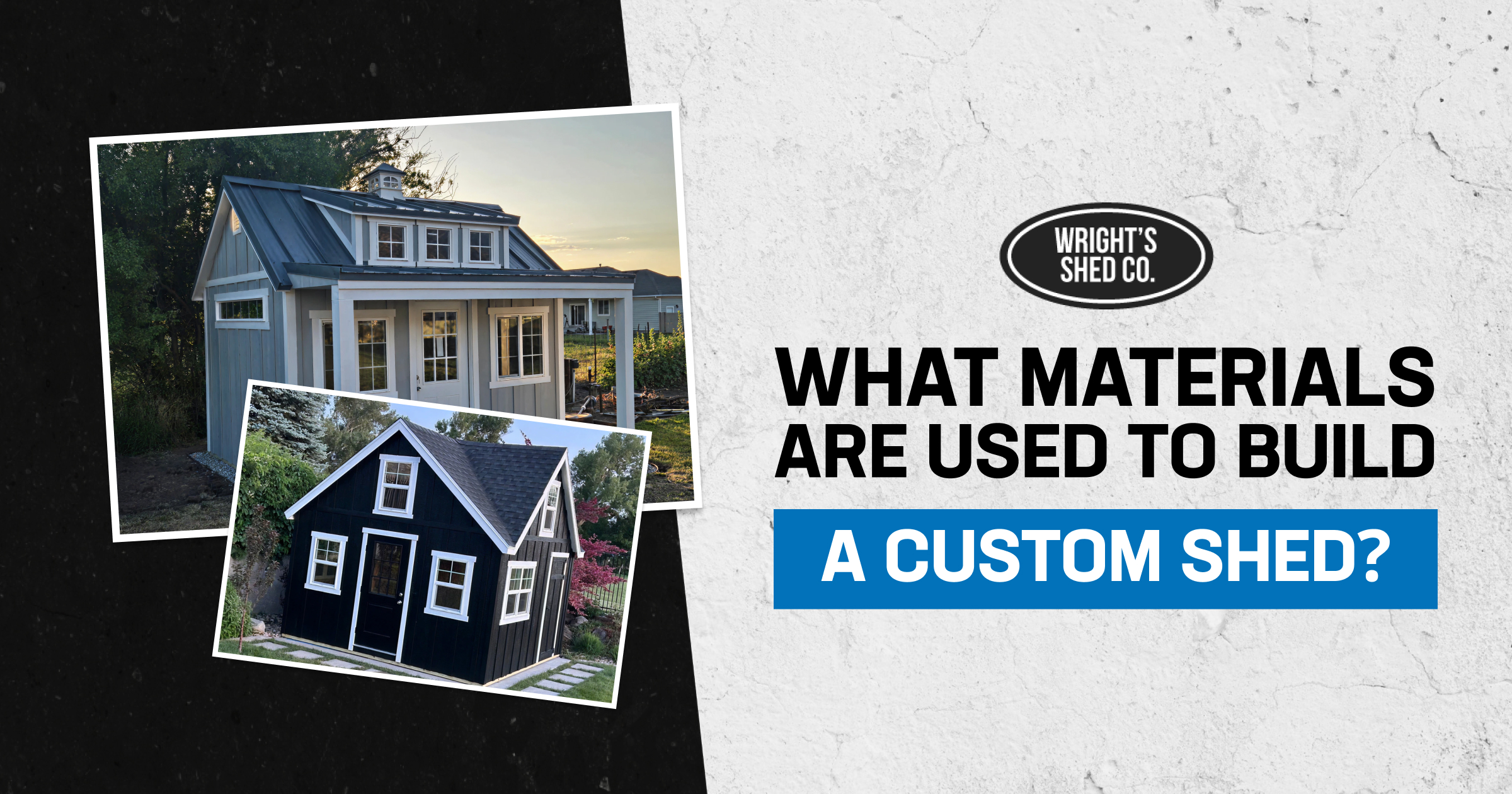
The custom shed materials you choose today decide whether your shed holds up for decades or starts warping and delaminating in year three. The same structure has to survive Utah winters, Nebraska humidity, and Iowa freeze-thaw cycles, so the frame, siding, roof, and floor all have to be right. Before you pick a size or style, you need to understand what a shed is actually made of.
A custom shed uses four material systems: framing, siding, roofing, and flooring. Each one has real options with real trade-offs. This guide breaks them down so you can compare builders and finishes with confidence, not guesswork.
Wright’s Shed Co. has built custom sheds on-site across Utah, Idaho, Nebraska, and Iowa since 1997. Understanding the materials behind our builds and why we chose them is part of how we earn a quote request rather than just ask for one. For a broader look at what separates a well-built shed from a cheap one, see our guide to the anatomy of a durable backyard shed.
What Custom Shed Materials Go Into a Shed?
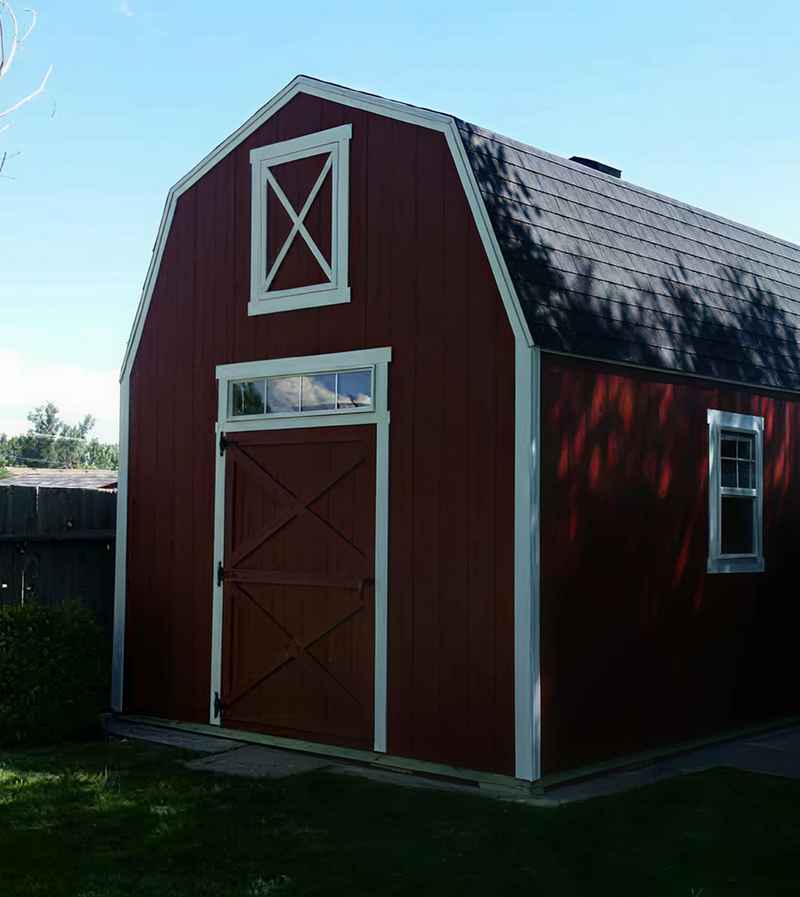
A custom shed is built from four systems: a structural frame, exterior siding, a roofing assembly, and a floor. Quality at each layer compounds. A strong frame under flimsy siding still fails early. Premium siding over undersized framing still racks and shifts. The best shed materials are engineered to work together, not selected piecemeal to hit a low price point. The sections below cover each system and the real options available at each level.
Framing: The Skeleton That Determines Everything Else
Framing is invisible once the shed is finished, but it governs how long the structure stands straight. Most quality custom sheds use one of two approaches: stud framing or post-frame construction. For a side-by-side breakdown of how they compare, see our framing method comparison.
Stud framing uses dimensional lumber, typically 2x4s, set at regular intervals, sheathed, and sided. It mirrors how homes are built. Done correctly, it produces a rigid, weather-tight shell that handles racking loads and ties directly into roof trusses.
Post-frame construction spaces larger posts further apart, relying on the posts and roof diaphragm for lateral strength. It suits wide-open interiors like garages and barns but is less common in residential storage sheds.
The spacing and grade of framing lumber matter as much as the method. Wider spacing, such as 24 inches on-center instead of 16, reduces material costs but creates a weaker, more flexible wall. Green or untreated lumber shrinks as it dries, opening gaps and loosening fasteners over time.
| Pro TipAsk any builder what their framing spacing is and whether they use double top plates. Single top plates are faster to build but flex under roof load over time. |
Siding Options: Wood, LP SmartSide, T1-11, Vinyl, and Metal Compared
Siding is the most consequential exterior material choice. It takes the full brunt of UV exposure, moisture, and temperature swings. It also sets the look and dictates paint maintenance schedules for the life of the shed.
| Siding Type | Durability | Maintenance | Mfr. Warranty | Aesthetics | Notes |
| LP SmartSide (engineered wood) | Excellent | Low | 5/50 Year Limited Factory | Wood look, holds paint well | SmartGuard borate treatment resists fungi and insects |
| Traditional wood boards | Good (species-dependent) | High | None from manufacturer | Natural, classic | Cedar/redwood perform best; untreated pine degrades fast |
| T1-11 plywood siding | Moderate | Moderate-High | None | Basic, functional | Prone to edge swelling without careful sealing |
| Vinyl siding | Good (no rot) | Very low | Varies by brand | Limited profiles | Can be painted only with specialty products, which may void the warranty |
| Metal (steel or aluminum) | Excellent | Very low | Varies | Industrial look | Can dent; condensation management required; limited paint options |
LP SmartSide is engineered wood composite, not solid wood. LP treats the strand core with a SmartGuard borate formula and resin binders during manufacturing, then bonds a protective overlay on top. The result resists fungal decay and insects from the inside out, and the surface takes and holds exterior paint the way solid wood does, without the rot risk of untreated wood. LP backs it with a 5/50 Year Limited Factory Warranty: 5 years of full coverage and 50 years of prorated materials coverage. Few common shed siding categories offer manufacturer warranties of comparable length.
Traditional wood is appealing but high-maintenance. Cedar and redwood have natural oils that resist rot, but they still require regular repainting or staining, and pine and fir siding without treatment fails quickly in wet climates or anywhere with ground moisture splash. If you want the look of real wood done right, see our wood shed options in Utah.
T1-11 is a grooved plywood panel common in economy sheds. Its edges are vulnerable. If the bottom course is not cut cleanly, sealed, and kept off the ground, moisture wicks up the grain and causes the layers to separate. Severe delamination may require repair or panel replacement before repainting.
Vinyl will not rot, but it is not inert. It expands and contracts with temperature, and in regions with hard freezes it becomes brittle enough to crack from a single impact. It is not practically repaintable for a routine color refresh, and painting it at all requires specialty products that can void the manufacturer’s warranty. Vinyl is often chosen for its low maintenance and ease of installation, though performance depends on climate and impact exposure.
Metal siding is genuinely durable and requires almost no maintenance, but it shows dents, condensation management inside the shed becomes important, and its aesthetic suits agricultural or industrial applications better than most residential yards.
Why Cheap Siding Costs More Over Time
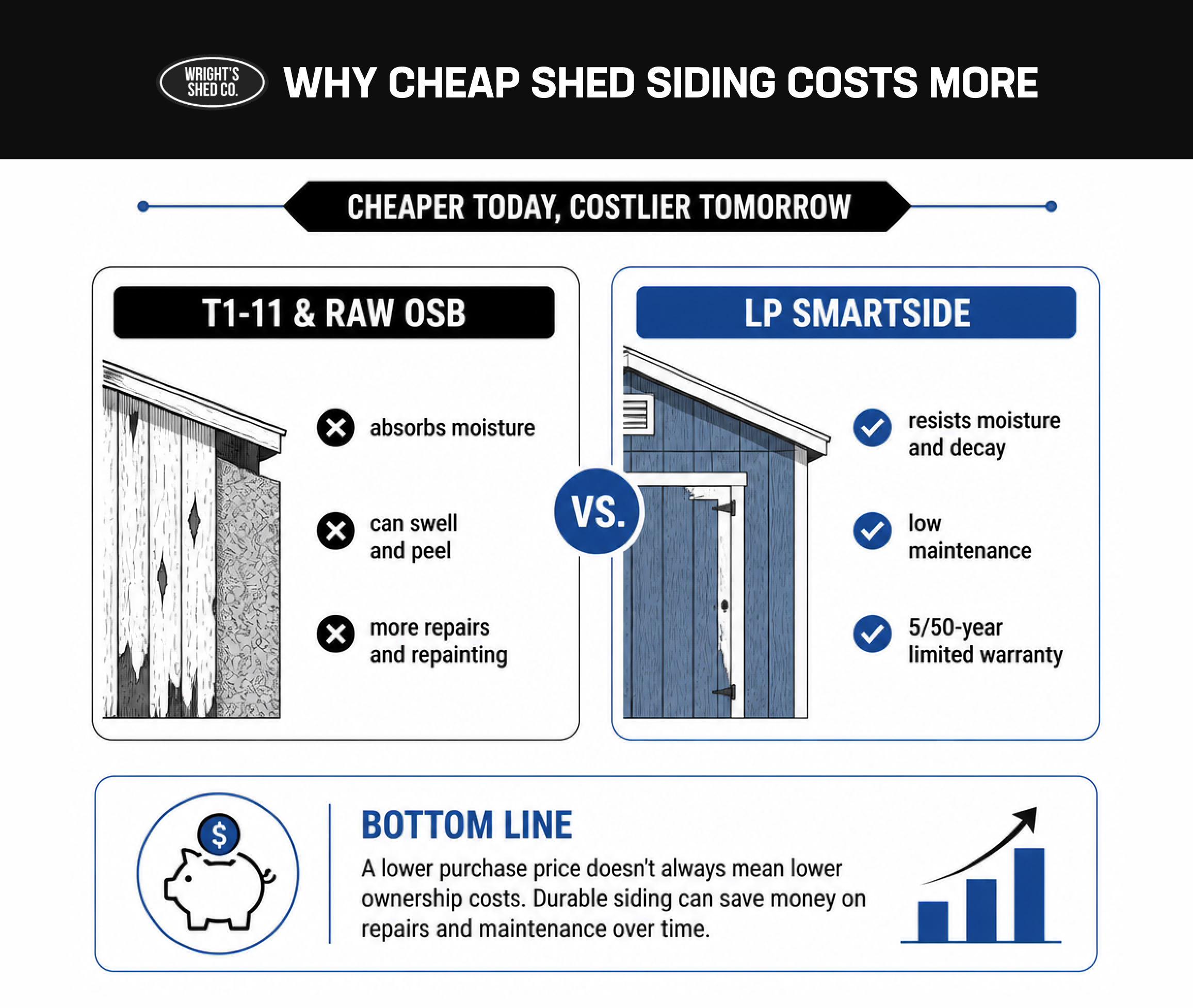
Cheap siding costs more over time because porous panels absorb moisture, delaminate in freeze-thaw climates, and eventually force a full strip-and-repaint that a sealed engineered panel never needs. This is the part most shed comparison guides skip. The upfront price difference between a T1-11 shed and an LP SmartSide shed can look significant, but over a decade of ownership it rarely is.
T1-11 and raw OSB panel siding are porous products. In climates with freeze-thaw cycles, moisture penetrates the panel face, expands when it freezes, and starts separating the laminate layers from the inside. The surface coat starts to peel. Utah, Idaho, Nebraska, and Iowa all qualify as freeze-thaw markets. The standard repair is stripping, priming, and repainting the entire exterior, a substantial project in materials and time on any size shed.
LP SmartSide is manufactured with resin binders and SmartGuard borate treatment that prevent moisture absorption at the strand level. The surface is factory-primed and finished, so it does not absorb water the same way raw wood or thin plywood does. That is why LP is willing to put a 50-year prorated warranty behind it. A manufacturer does not issue that kind of warranty on a product that fails in three years.
The shed that looks cheaper at purchase often costs more over the decade you own it. Knowing what makes an outdoor shed durable is how you avoid that outcome.
| Key TakeawayThe materials warranty is the single most honest signal of how confident a manufacturer is in their own product. LP SmartSide’s 5/50 Year Limited Factory Warranty is the benchmark in shed siding. Ask any builder what warranty their siding carries from the manufacturer, not just from them. |
Roofing: Architectural Shingles vs. Metal Panels
The two mainstream roofing choices for custom sheds are architectural asphalt shingles and standing-seam or corrugated metal panels. Each suits different applications.
| Roofing Type | Typical Lifespan | Wind Rating | Warranty | Aesthetics | Cost |
| Architectural asphalt shingles | 25-50 years | Up to 130 mph (varies by product) | Limited Lifetime (GAF Timberline) | Residential, matches homes | Moderate |
| 3-tab asphalt shingles | 15-25 years | Lower wind rating | Shorter | Basic | Lower |
| Metal (standing seam or corrugated) | 40-70 years | High | Varies by manufacturer | Modern or agricultural | Higher upfront |
Architectural shingles are laminated, thicker, and significantly more durable than the 3-tab shingles still used on cheap sheds. They have a dimensional shadow line that matches most residential rooflines.
GAF Timberline architectural shingles, the standard on every shed we build, carry a Limited Lifetime Factory Warranty and may qualify for wind coverage up to 130 mph when installed according to GAF’s specifications. That rating matters in states like Nebraska and Iowa where summer storms produce sustained high winds. A 3-tab shingle on an economy shed carries no comparable wind rating and a much shorter warranty.
Metal roofing is a legitimate upgrade in the right situation. It lasts longer, sheds snow efficiently, and is worth considering on large spans or agricultural-style buildings. The trade-off is upfront cost and noise during rain. For most residential storage sheds, architectural shingles perform comparably for the life of the structure, but if you are weighing the alternative, see our guide to metal roofing for Utah sheds.
The roofing assembly also includes 7/16 inch OSB roof sheathing, which provides the nailing base and diaphragm rigidity. Undersized or thinner sheathing flexes under foot traffic and can cause shingles to crack at fastener points over time.
Flooring: What’s Holding Everything Up
Shed flooring carries live loads: lawnmowers, tool chests, generator sets, storage racks. Thin or improperly supported flooring is one of the most common failure points in economy sheds, and one of the least visible at the point of purchase.
OSB (oriented strand board) is the most common shed flooring material. Its quality varies significantly with thickness and the base it sits on. Thin OSB on spaced floor joists flexes underfoot and telegraphs soft spots within a few years. Anything under 3/4 inch is not adequate for real storage use.
Tongue-and-groove OSB eliminates edge gaps between panels, which prevents moisture entry and maintains a consistent floor surface as the panels age. It also locks adjacent panels together so they behave as a single plane under load rather than as separate boards that rock independently.
Pressure-treated joists and bases are non-negotiable where the floor is close to grade. Untreated lumber in contact with or near soil absorbs ground moisture, supports fungal growth, and fails structurally within years. The base system, whether pressure-treated wood runners or a galvanized steel frame, determines how the floor performs over the full life of the shed.
What Wright’s Shed Co. Builds With, and Why
Every shed we build uses a documented standard build. This is not the upgrade package. It is the baseline.
Framing: 2×4 lumber at 16 inches on center with double top plates. The double top plate ties the wall frame into a single structural unit and distributes roof load evenly across the wall. It is standard in residential construction and less common in economy shed building because it adds material cost.
Siding: LP SmartSide engineered wood panel siding with SmartGuard borate treatment and a factory-primed surface, finished with Sherwin-Williams A-100 100% acrylic exterior latex paint in a satin sheen. The 4-inch Miratec composite trim at all corners and openings resists moisture and does not require the maintenance of wood trim.
Roofing: GAF Timberline architectural shingles over 7/16 inch OSB sheathing. Tar paper is standard on all sheds. Limited Lifetime Factory Warranty, up to 130 mph wind rating.
Flooring: 3/4 inch tongue-and-groove OSB on a pressure-treated wood or galvanized steel base.
Windows: AMSCO or Alpine double-paned windows with a 3/4 inch insulating glass unit where specified.
We back our own craftsmanship separately from the manufacturer warranties: up to 8 years on the Orchard, Farm, Lean-To, and Detached Garage models and 5 years on the Vineyard. The LP SmartSide factory warranty (5/50 Year Limited) and GAF Timberline factory warranty (limited lifetime) sit on top of that, from the manufacturers directly.
Every shed is built on the customer’s property. Not shipped in panels. Not assembled in a factory and delivered on a truck. The materials are cut and fitted to the actual ground, the actual slope, and the actual dimensions of your yard. That is how we have built on-site since 1997, and it is why a precise material fit is achievable in ways that pre-built delivery cannot replicate.
To see the full range of sizes, you can view our pricing for different material options; the pricing page has current Utah and Nebraska figures for every model.
Frequently Asked Questions
What is the best siding material for a shed?
LP SmartSide engineered wood is the top performer for residential sheds. It resists moisture, insects, and fungi through a factory borate treatment, holds paint well, and carries a 5/50 Year Limited Factory Warranty. Vinyl does not rot but is not practically repaintable and cracks in hard freezes.
Is OSB flooring strong enough for a shed?
At 3/4 inch thickness with tongue-and-groove edges on properly spaced pressure-treated joists, OSB flooring handles typical storage loads well. Thinner OSB or wider joist spacing creates soft spots over time. The base system matters as much as the panel itself.
Do shed shingles need to match my house?
Not structurally, but matching the profile and color helps visual cohesion. GAF Timberline architectural shingles come in a wide color range and match the dimensional profile of most residential roofs, making coordination straightforward.
What framing is best for a shed, 2×4 or 2×6?
2×4 at 16 inches on center with double top plates is the correct spec for most residential sheds and matches standard home framing. 2×6 framing adds cost and insulation cavity depth, which matters only if you are heating the shed. For unheated storage, 2×4 at 16 inches on center is the right call.
Does shed siding come with a manufacturer warranty?
It depends entirely on the siding product. LP SmartSide carries a 5/50 Year Limited Factory Warranty. T1-11 plywood, raw wood boards, and most vinyl products carry no comparable manufacturer warranty. Always ask for the specific warranty document, not a verbal summary.
Choose the Right Custom Shed Materials Before You Choose a Size
Size determines how much space you have, but material quality determines how long that space remains useful. The framing, siding, roofing, and flooring all play a role in your shed’s durability, and weaknesses in any one component can affect the performance of the entire structure over time. Understanding the differences between custom shed materials can help you make a more informed investment and avoid costly repairs down the road.
That’s why Wright’s Shed Co. has built with premium materials from the start. Features such as LP SmartSide siding, GAF Timberline shingles, and 3/4-inch tongue-and-groove flooring are standard because they have consistently proven their durability in real-world conditions. Backed by more than 25 years of on-site construction experience across Utah, Idaho, Nebraska, and Iowa, every material choice is made with long-term performance in mind.
When you’re ready to build, take the next step by designing your shed in 3D to explore sizes, styles, and features, or request a free quote to discuss your project with the Wright’s Shed team.