
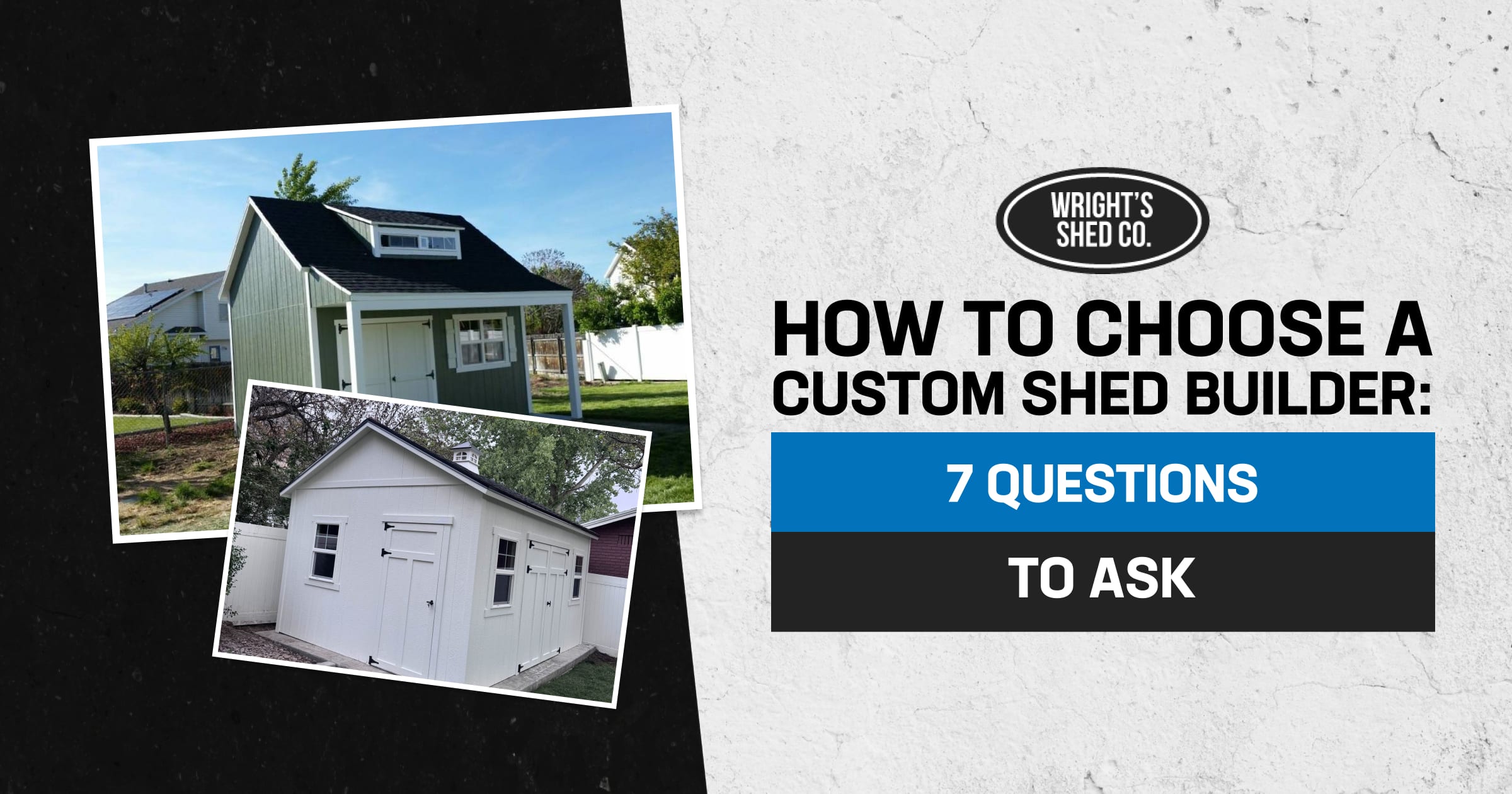
How Do I Choose a Custom Shed Builder?
Knowing how to choose a custom shed builder can be the difference between a structure that lasts decades and one that warps, leaks, or fails to meet local codes.
Most buyers focus almost entirely on price. However, price alone tells you nothing about material quality, build method, or how a builder handles problems after handoff. The right builder is an investment in permanence.
Before you request a single quote, ask every candidate these seven questions. They cut through sales talk and reveal what you are actually getting.
What these questions reveal:
• How many years the builder has worked specifically with custom sheds
• Whether the structure is built on your site or assembled from pre-cut panels
• Which materials carry manufacturer warranties, and for how long
• How much design flexibility do you actually have
• Whether they assist with local permit requirements
• The scope and duration of their craftsmanship warranty
• Whether they have verified completed projects near you
If you want to understand the broader landscape first, read our overview of the types of shed builders explained. Then come back to use this checklist.
Q1: How Long Have You Been Building Custom Sheds?
Experience is not just a number. It reflects how many material supply problems a builder has solved, how many weather conditions a structure has been tested against, and how many customer situations they have navigated.
Ask specifically about custom sheds, not general construction. According to the National Association of Home Builders, hiring a contractor with verifiable years of specialized experience is the single most reliable predictor of project quality.
Furthermore, longevity in business is itself a quality signal. Builders who cut corners rarely retain customers long enough to reach decade-plus tenure.
| Pro Tip: Ask for the year the company was founded, not just a vague range. A builder who says ‘over 20 years’ and cannot cite a founding year is worth following up on. |
See what professional shed builders offer when they bring years of focused expertise to the process.

Q2: Do You Build On-Site or Deliver Pre-Built Panels?
This question separates two fundamentally different business models. On-site builders arrive at your property, measure the space, and construct the shed from the ground up. Delivery-based builders assemble wall panels in a factory, then transport and bolt them together at your location.
Neither approach is automatically inferior. However, an on-site build allows the crew to account for uneven terrain, site-specific drainage, and access constraints that a factory build cannot anticipate. Consequently, on-site construction tends to produce a more precisely fitted result.
Ask how the build day works, who will be on the crew, and how long the process takes from start to finish. A builder with a clear, specific answer has done it many times.
| Pro Tip: If a builder says ‘we build it on-site’ but cannot describe their foundation preparation process, ask again. Proper site prep, including leveling and base material, is what prevents floor rot and structural shifting over time. |
Q3: What Materials Do You Use and Are They Warranted?
Materials are where the long-term cost of a shed is really determined. A structure built with untreated lumber in a climate with wet winters will deteriorate significantly faster than one built with pressure-treated wood or a galvanized steel base.
Ask specifically about the floor framing, wall sheathing, roofing material, and hardware. Then ask what warranties the manufacturers offer on those specific products. A builder using premium materials will know these details without hesitation.
Additionally, ask whether the builder itself offers any warranty separate from manufacturer coverage. Manufacturer warranties cover materials; a builder’s warranty covers installation and craftsmanship. You need both.
For a deeper look at what separates lasting structures from short-term ones, review durable shed materials and construction.
Q4: Can I Customize the Size, Style, and Color?
‘Custom shed’ means different things to different builders. Some offer a handful of preset sizes with a color picker. Others build to exact dimensions, accommodate unusual lot shapes, and produce structures that match the architectural style of the home.
Ask the builder to walk you through a real customization scenario: ‘I need a 12×20 with a loft, a side door, and a metal roof in a specific color. Can you do that?’ Their answer reveals how much flexibility actually exists versus how much is marketing language.
Similarly, ask to see examples of completed custom builds, not just their standard models. If every photo looks the same, customization may be limited in practice.
Q5: Do You Help With Permits?
Many jurisdictions require a building permit for any accessory structure above a certain square footage. The threshold varies by municipality and state. A builder who says ‘you probably don’t need one’ without checking is creating risk for you, not convenience.
Federal property standards establish that residential construction must comply with applicable state or local building codes, meaning permitting and zoning compliance are ultimately determined at the municipal level.
A full-service builder will either pull the permit on your behalf, provide you with the structural specifications needed to apply yourself, or, at a minimum, tell you precisely which local office to contact and what to request.
For a breakdown of when permits apply, read our guide on shed permit help. Knowing this in advance protects you from fines and forced removal.
| Pro Tip: Even if your project falls below the permit threshold, confirm this in writing. Verbal assurances are not protection if a neighbor files a complaint or you try to sell the property later. |
Q6: What Warranty Covers Craftsmanship and Materials?
This is the question that separates confident builders from cautious ones. A builder who stands behind their work will give you a specific warranty period, put it in writing, and explain exactly what it covers and what it excludes.
Watch for vague answers: ‘We stand behind everything we do’ is not a warranty. A legitimate warranty specifies duration, covered defects, the claims process, and what repair or replacement looks like.
Ask separately about the manufacturer’s warranty on materials and the builder’s own craftsmanship warranty. The best builders carry both, and the coverage periods are stated clearly before you sign anything.
Q7: Can I See Examples of Past Work in My Area?
Seeing a completed shed in person is categorically different from seeing a photo. You can check the joint quality, the door alignment, the roof seam, and the overall finish in conditions similar to your own property.
A builder with an established local presence will have customers willing to serve as references and completed structures you can visit. If a builder cannot point you to any nearby completed work, that is a meaningful data point.
Ask for two or three references and actually call them. Ask how the build day went, whether there were any issues, and how the builder responded. The quality of that response tells you more than any showroom visit.
Red Flags to Watch for in Shed Builders
Beyond the seven questions above, certain patterns consistently signal a builder who will underdeliver. Use this table as a quick reference when evaluating any contractor.
| Red Flag | Why It Matters |
| No physical address or showroom | Hard to hold accountable after payment |
| No written warranty offered | Craftsmanship corners cut, no recourse for you |
| Refuses to share material specs | Low-grade wood or hardware hidden in the details |
| Pressure to pay the full amount up front | Standard practice is a deposit only before build |
| No examples of local completed builds | No verifiable track record in your area |
| Vague about the build process | Pre-built panels may arrive instead of a site build |

Why Wright’s Shed Co. Passes Every One of These Questions
Wright’s Shed Co. has been building custom sheds since 1997. That is more than 28 years of focused experience in custom shed construction across Utah, Idaho, Nebraska, and Iowa.
Every shed Wright’s builds is constructed on-site by an experienced crew. Materials include pressure-treated wood framing and galvanized steel bases built to handle regional weather conditions. Manufacturer warranties on materials extend up to 50 years on select products.
Wright’s also carries its own craftsmanship warranty of up to 8 years on Orchard, Lean-To, and Farm style sheds. Customization is genuine: size, style, color, and add-ons are all adjustable before the build begins.
The team assists customers through local permit questions and builds on a transparent process. Completed examples are available across their service areas, and customer reviews consistently reflect a straightforward build experience.
Wright’s Shed Co. has been building sheds since 1997. That track record speaks for itself, and every completed project in their service area is available for you to inspect in person.

Frequently Asked Questions About How to Choose a Custom Shed Builder
What is the most important factor when choosing a custom shed builder?
Experience and warranty coverage. A builder with 10+ years and a written craftsmanship warranty has the most accountability on the line if something goes wrong.
Should I get multiple quotes before choosing a shed builder?
Yes, but compare the total scope, not just the price. Two quotes at different prices may include different materials, warranties, or site preparation standards. Evaluate those details first.
How do I know if a shed builder uses quality materials?
Ask for the specific product names and manufacturer warranty periods. Quality builders cite pressure-treated lumber grades, sheathing specs, and roofing material ratings without hesitation.
Can a shed builder help me figure out if I need a permit?
A reputable builder will tell you the permit threshold for your municipality and what steps to take. If they dismiss the question entirely, that is a red flag.
What should a shed builder’s warranty cover?
Look for two warranties: a manufacturer warranty on materials (10 to 50 years is common) and a builder warranty on craftsmanship (3 to 8 years). Both should be in writing with a clear claims process.
How to Choose a Custom Shed Builder: Final Checklist
Knowing how to choose a custom shed builder is the clearest advantage you have when planning any outdoor storage project. The seven questions in this guide give you a structured, repeatable method for evaluating any builder, regardless of how polished their website looks.
Price is always relevant. However, a lower quote that comes with no warranty, unknown materials, and vague process details is not a bargain. It is deferred risk.
The builders who answer every question clearly, provide references, and put warranties in writing are the ones worth hiring. Those are the builders who will still be accountable in year seven.
If you still have questions about choosing the right custom shed builder, Wright’s Shed can help. Our team can answer questions about design options, materials, pricing, and timelines, and help you decide what makes the most sense for your property and storage needs. Contact us today.