
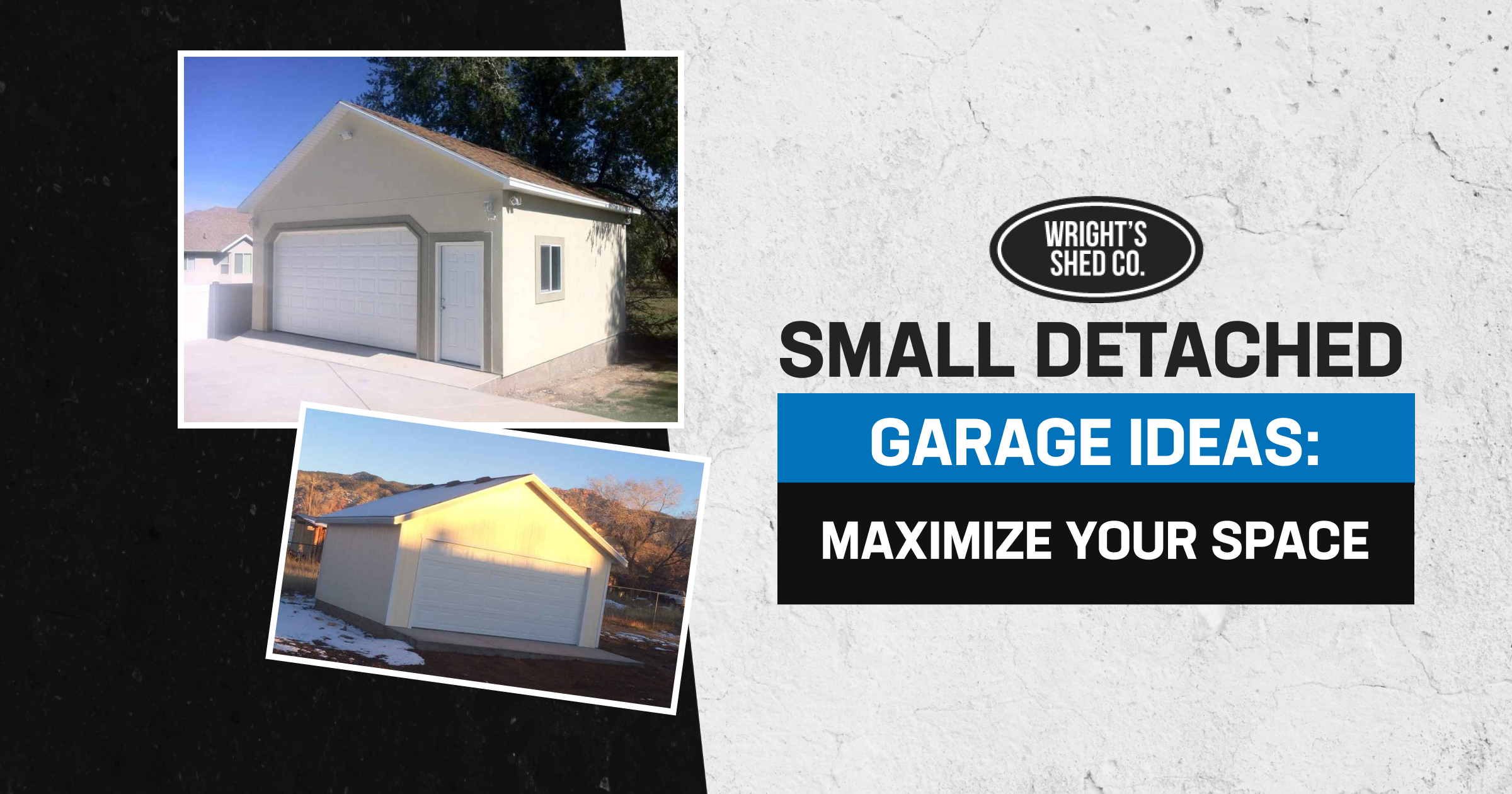
What Defines a Small Detached Garage?
A small detached garage is a standalone structure typically ranging from 192 to 640 square feet, designed primarily for vehicle storage but often serving multiple functions. Here’s what you need to know:
- Typical Dimensions: 12×16, 12×20, 12×24, or 16×24 feet
- Primary Use: Single-car storage, with space for tools and equipment
- Common Features: One overhead garage door, a side entry door, and optional windows
- Setback Requirements: Usually 5-10 feet from property lines and main structures
- Permit Threshold: Structures over 200 square feet typically require a building permit
These compact garages offer placement flexibility and add functional space to your property. Unlike attached garages, they provide separation from your home, which reduces noise and fumes. Many homeowners also convert them into workshops, home gyms, or studios.
With decades of experience in designing and building custom structures, experts know how to maximize every square foot of a small detached garage. Whether you’re protecting a vehicle, creating a workspace, or adding storage, understanding the core features and possibilities is the first step in making a small detached garage work for your property.
Designing a Small Detached Garage That Works for You
A small detached garage is more than just a place to park your car; it’s an opportunity to expand your home’s functionality and curb appeal. Even a compact footprint can offer immense versatility. Let’s explore how to make your compact garage both functional and attractive, from its main purpose to the finishing details.
Creative Uses for Your Small Detached Garage
The beauty of a small detached garage lies in its adaptability. While vehicle protection is common, many homeowners transform these spaces into dedicated areas for hobbies, work, or fitness.
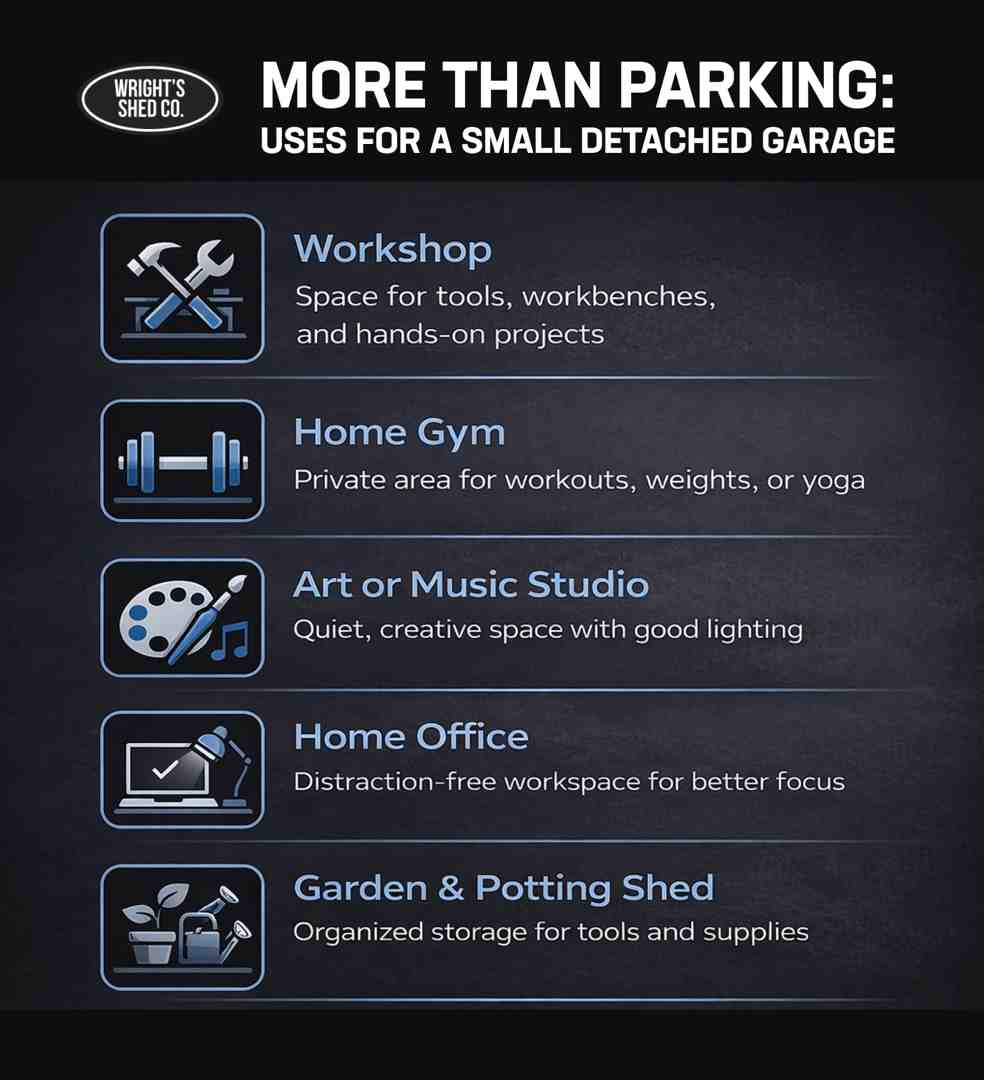
Beyond housing a single car, motorcycle, or ATV, your small detached garage can become:
- A Dedicated Workshop: Perfect for woodworking or crafts, with space for workbenches and tools away from the main house.
- A Home Gym: Create a private fitness sanctuary for weights, cardio equipment, or a yoga studio without sacrificing space inside your home.
- An Art or Music Studio: Enjoy peace and quiet to release your creativity. Good lighting and climate control can make this a comfortable retreat.
- A Home Office: Escape household distractions by creating a separate workspace to boost productivity.
- A Potting or Garden Shed: Store gardening tools, potting benches, and supplies, keeping your yard organized.
The possibilities are endless when it comes to these personalized spaces. For more inspiration, you can explore various Detached Garage Ideas.
Selecting the Right Style and Materials
When designing your small detached garage, integrating it with your existing home and landscape is key. The right style and materials improve aesthetics and contribute to the structure’s durability.
Common material choices include:
- Wood Panel Siding: A classic choice that offers a warm, traditional look and can be painted or stained to match your home.
- Metal Siding: Known for its durability and low maintenance, metal provides a modern aesthetic and excellent protection.
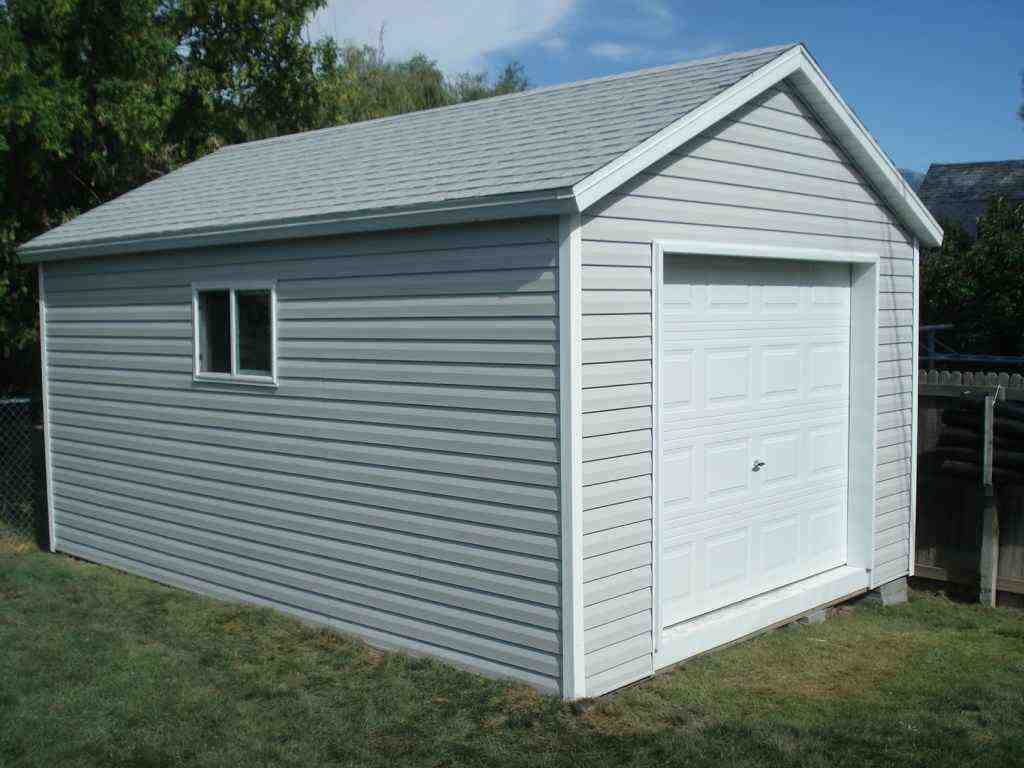
- Vinyl Siding: A cost-effective option that comes in various colors, offering good weather resistance and minimal upkeep.
Matching your home’s architectural style—whether modern, farmhouse, or traditional—is crucial for curb appeal. Consider the roof style, as a gambrel roof offers more overhead storage. The placement of windows and doors also affects both function and appearance. An experienced builder can help you make these choices to create a garage that looks like it was always meant to be there. Find more about design possibilities on our Detached Garage Designs page.
Smart Organization: Making the Most of Limited Space
In a small detached garage, maximizing storage is paramount. Clever organization prevents clutter and makes your space highly efficient. Effective designs incorporate smart storage solutions from the start.
To make the most of your compact garage, consider these organizational tips:
- Vertical Storage: Use the height of your garage with tall shelving units and cabinets to use wall space.
- Wall-Mounted Shelves and Pegboards: Keep frequently used tools and supplies within easy reach and reconfigure as needed.
- Overhead Racks: Ideal for seasonal items or lumber, these racks free up valuable floor space.
- Fold-Down Workbench: A workbench that folds flat against the wall provides a sturdy surface when needed and disappears when it’s not.
- Magnetic Strips: Perfect for organizing small metal tools like screwdrivers and wrenches.
- Lockable Cabinets: Secure valuable tools or chemicals, maintaining a tidy and safe environment.
By implementing these strategies, your small detached garage can feel surprisingly spacious. Custom Built Garage options often allow for these solutions to be integrated into your design from the start.
Planning Your Small Detached Garage Project: What to Know Before You Build
Starting a small detached garage project requires careful planning. Understanding the benefits, navigating local regulations, and knowing what to expect during construction are crucial steps to ensure a smooth and successful build.
Detached vs. Attached: The Benefits of a Standalone Garage
The decision between an attached or small detached garage impacts your property’s layout and functionality. While attached garages offer convenience, a detached structure provides unique advantages.
Here’s a comparison of key factors:
| Feature | Detached Garage | Attached Garage |
|---|---|---|
| Cost | Can sometimes be more cost-effective due to simpler foundation requirements | May require complex integration with home’s foundation and roofline |
| Placement Flexibility | Greater freedom in placement on your lot, optimizing yard space | Limited to locations adjacent to the main house |
| Security | Creates a physical barrier, potentially isolating noises and fumes from the home | Direct access to home, potential security vulnerability |
| Workshop Use | Ideal for noisy hobbies or projects involving fumes; keeps mess separate | Noise and fumes can easily transfer into the main living areas |
| Home Expansion | Easier to expand or modify without affecting the main house structure | Can limit future home expansion options |
A small detached garage offers great flexibility in design and placement, helping you optimize your yard. The separation from your home reduces noise and improves safety by keeping fumes away from living areas. This also makes future expansion simpler, as you will not need to alter your home’s main structure. For homeowners seeking versatility, a Detached Garage is Your Best Option.
For broader context on how detached garages are classified as accessory structures, you can review the general guidance in the U.S. building code overview. Local rules will still control your specific project.
Budgeting and Local Regulations for Small Detached Garages
Before construction begins, understanding the financial and regulatory landscape is essential. Building a small detached garage involves various costs and adherence to local zoning and building codes.
Key budgeting considerations include:
- Material Costs: Varies based on your chosen siding, roofing, and finishes.
- Labor: A significant factor, whether hiring a contractor for the full build or specific tasks.
- Site Preparation: Includes grading, excavation, and ensuring proper drainage.
- Foundation: Builders’ services can vary; some may not pour the foundation but can provide guidance on the necessary type (for example, concrete slab or piers). It’s important to clarify this with your contractor, as a solid, level foundation is crucial for your garage’s longevity.
- Permit Fees: Determined by your local municipality.
Navigating local regulations for a small detached garage is critical. These rules govern placement, size, and height to ensure safety and neighborhood aesthetics.
Common regulatory points include:
- Zoning: Your property’s zoning dictates what types of structures are allowed.
- Setbacks: Minimum distances required from property lines and other structures.
- Height Limits: Most localities have a maximum height for accessory structures, often around 14 feet.
- Size Limitations: Some regions have maximum square footage for accessory buildings.
For example, regulations in Des Moines, Iowa limit accessory structures to one story and 14 feet in height, with specific setback requirements. Since rules vary greatly by city and county, we always recommend checking with your local planning department. A small detached garage often requires a building permit if it exceeds a certain size, typically 200 square feet. Many cities publish these rules online, such as in this sample detached garage guideline from Larimer County. For more details on cost, visit our How Much to Build a Detached Garage page.
Building Your Small Detached Garage: Step-by-Step
The construction of a small detached garage follows a structured process to ensure a high-quality, durable result.
Here’s a general step-by-step guide:
- Define Your Needs: Outline how you will use your garage. What will it house? What tools or equipment do you need to store? This clarity helps in designing the perfect solution.
- Create a Plan: Work with a designer or builder to create a plan that meets your functional and aesthetic needs, from dimensions and doors to siding and windows.
- Permits and Site Preparation: The homeowner is typically responsible for securing building permits and preparing the site. The site must be level and ready for the foundation, and your builder should provide detailed guidance on the appropriate foundation type.
- Onsite Construction Process: Many builders construct the garage directly on your property. This approach can ensure a precise fit and finish, even in challenging locations, and allows for greater customization than a pre-fabricated kit.
- Quality Assurance and Final Inspection: Reputable builders maintain rigorous quality checks during construction. Upon completion, they should conduct a thorough review, and you will need to arrange for any required municipal inspections.
Look for builders who focus on durability and offer strong warranties on materials like siding. Decades of experience in the industry is a good indicator of reliability and expertise. You can explore detached garage options to see how a professional can bring your vision to life.

Frequently Asked Questions about Small Detached Garages
How do I choose the right size for my small detached garage?
Consider your vehicle size, storage needs, and available yard space. Most small detached garages range from 12×20 to 16×24 feet, offering ample room for a single car and additional storage or workspace.
How long does it take to build a small detached garage?
After obtaining permits and completing site preparation, the onsite construction process for most small detached garages typically takes 2–3days, depending on weather conditions and the complexity of your custom design.
Do I need a permit for a small detached garage?
Yes, most localities require a building permit for detached structures exceeding a certain size, typically 200 square feet. Always check with your specific city or county planning department for their unique regulations, as rules vary significantly.
Can I use my small detached garage as a workshop or office?
Absolutely! Many homeowners customize their small detached garage for various purposes, including workshops, home gyms, art studios, or quiet home offices, leveraging the separation from the main house.
Does the builder handle the foundation?
This depends on the builder. Some companies offer a full-service package that includes the foundation, while others specialize in the structure and require you to hire a separate concrete contractor. It is crucial to clarify this responsibility before signing a contract to ensure you have a proper, level foundation ready for your new small detached garage.
Opening up the Potential of Your Small Detached Garage
A small detached garage is a versatile and valuable addition to any property. It provides a dedicated space for hobbies, work, or storage while enhancing your home’s curb appeal. The benefits of a standalone structure, from design flexibility to improved safety, are clear.
By carefully planning your design, understanding local regulations, and working with a qualified builder, you can ensure your new garage is a durable and functional asset for years to come. Your next step is to envision the possibilities. Contact a professional for a custom quote today to design and build the perfect small detached garage for your home.