
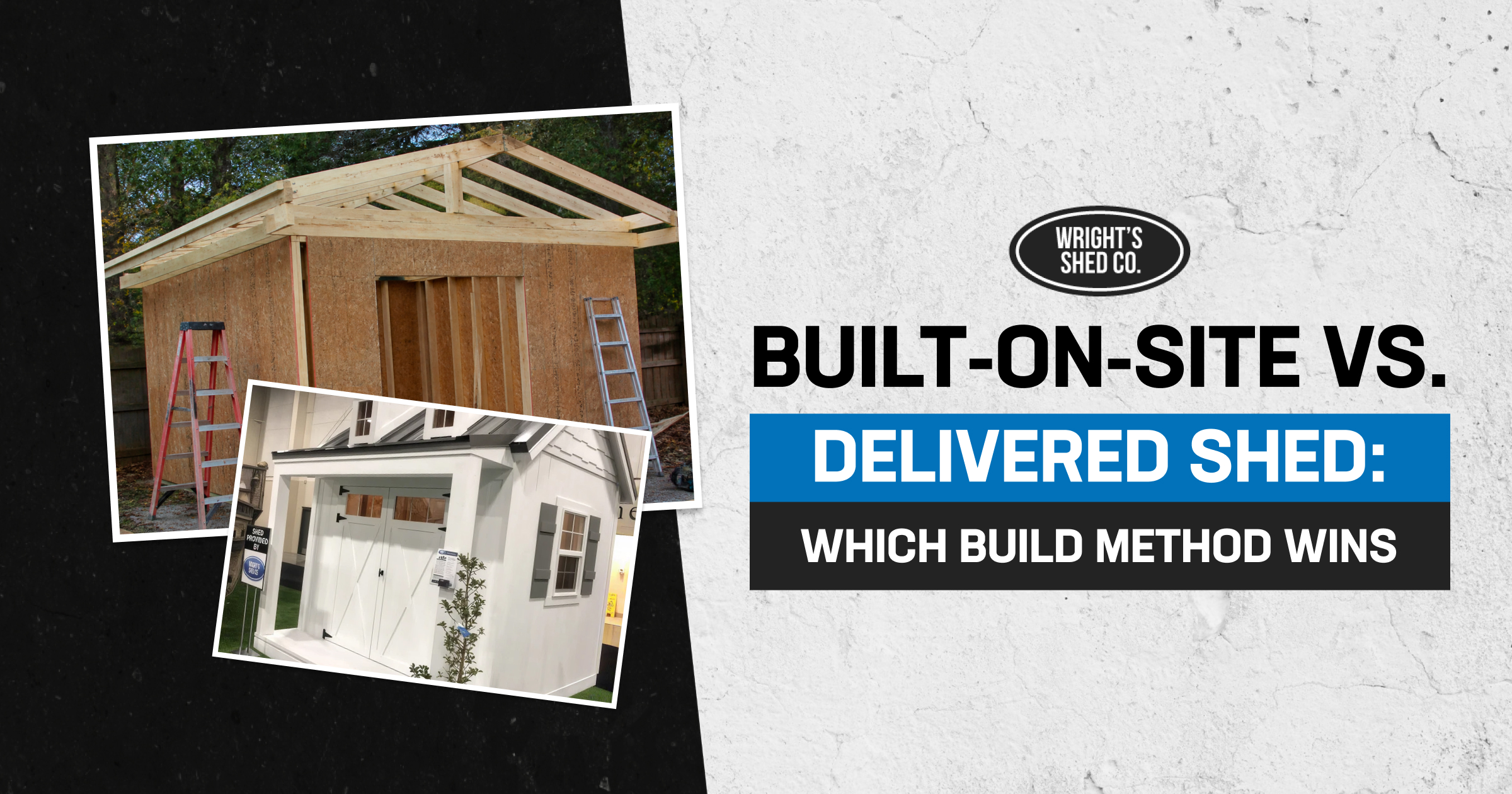
If you’re comparing a built-on-site vs delivered shed to your Utah or Nebraska property, the build method matters more than the price tag alone. Wright’s Shed Co. has built sheds this way since 1997, and on-site installation is standard on every one of our shed models, not an upsell. We build every structure on your lot, from the leveled base up, rather than assembling it in a factory and trucking a finished box down the highway. That difference shows up in how the shed sits on your ground, how the frame holds up over time, and what a warranty actually covers. This guide breaks down what changes when a shed is built in place instead of delivered whole, and where each approach makes the most sense for your yard.
Quick Answer: A shed built on-site is framed and finished on a leveled base at your property, so it settles into your yard instead of riding on a truck. A delivered shed is built off-site and hauled in, which can stress the frame during transport. On-site construction typically holds up better long-term and carries a stronger, model-specific craftsmanship warranty.
What “Built On-Site” Actually Means (vs. a Delivered Shed)
Built on-site means we frame, side, and roof your shed directly on your property, on a base leveled specifically for that spot, while a delivered shed arrives already built and is set or craned into place. At Wright’s Shed Co., every Vineyard, Orchard, Farm, and Lean-To is built this way, using our standard framing, siding, and roofing spec from day one on your ground. A delivered shed skips that step: it is assembled at a factory, loaded onto a trailer, and driven to your address, sometimes hundreds of miles away. The building never touches your yard until it is already a finished structure. That order of operations, build first or deliver first, is the real difference behind almost every other comparison in this guide.
Site Prep and Leveling: The Step Delivered Sheds Skip
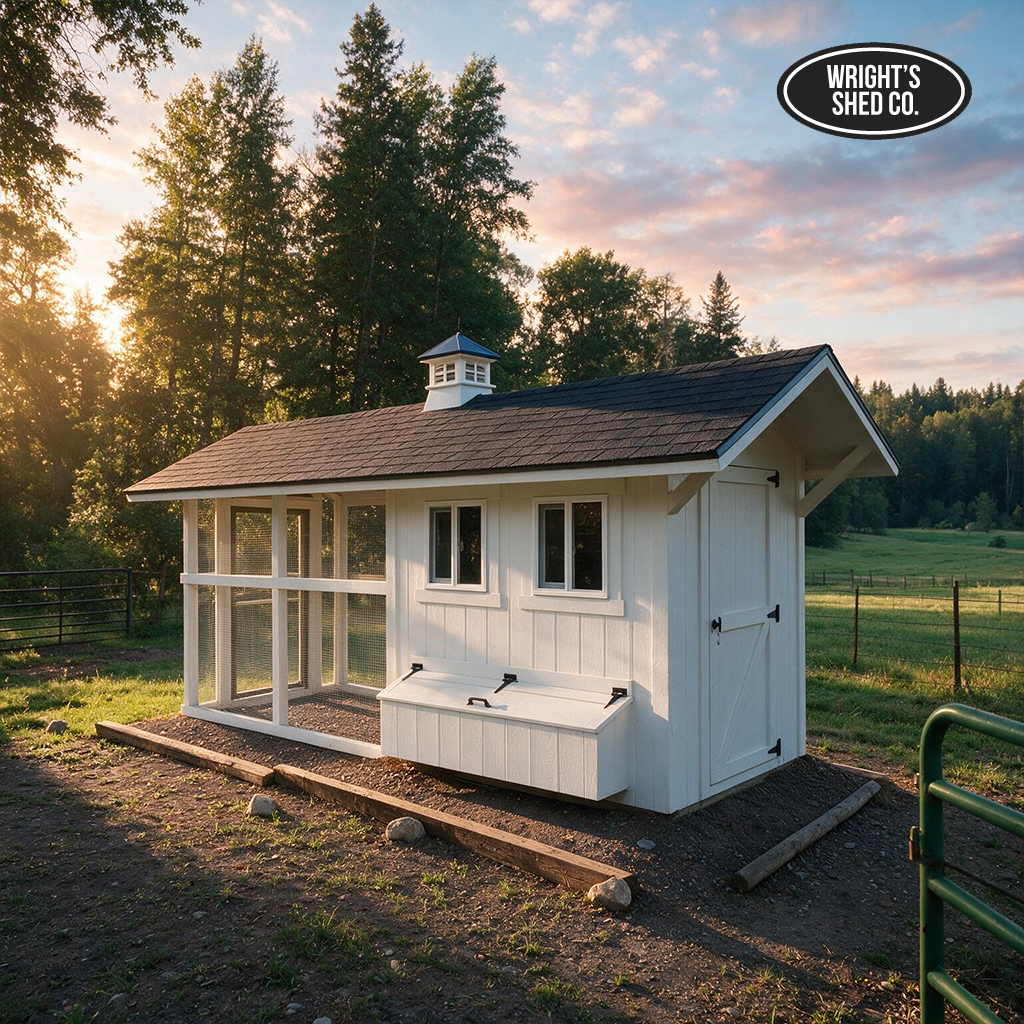
Every on-site build starts with leveling the exact spot the shed will sit on, whether the base is pressure-treated wood or a galvanized steel frame. Because the base goes down after the ground is prepared, the structure is matched to your yard’s actual grade, not to an average lot. A delivered shed is built on a factory floor that is perfectly flat, then it has to sit on whatever base condition it finds once it reaches your home. If that base isn’t the exact height and level the factory assumed, gaps and racking can show up at the corners within months. Tar paper comes standard under the roofing on every Wright’s shed, on-site or otherwise, but the leveling step underneath is what protects the framing above it. Skipping site prep is one of the most common reasons a delivered building settles unevenly in its first year.
This distinction also explains why two sheds that look identical in a photo can perform very differently in five years. A shed that was built where it stands has had its walls, roof, and doors square from day one, with no intermediate stop on a trailer bed. A delivered shed has already absorbed whatever stress a highway trip put on it before you ever open the door for the first time. Neither approach is automatically wrong for every buyer, but the trade-offs are different enough that they’re worth understanding before you compare two quotes side by side.
Built On-Site vs. Delivered: Side-by-Side Comparison
On-site construction and delivered sheds differ in more than how they arrive; they differ in fit, structural stress, and what a builder can stand behind afterward. The table below lines up the factors buyers ask about most.
| Factor | Built On-Site (Wright’s Shed Co.) | Delivered / Pre-Built Shed |
| Where it’s constructed | On your property, on a leveled base | Off-site factory, then trucked in |
| Foundation fit | Matched to your yard’s actual grade | Built flat; depends on site condition on arrival |
| Frame stress | None from transport | Racking and joint stress possible in transit |
| Customization | Full customization at build time | Limited to what fits on a trailer |
| Craftsmanship warranty | Up to 8 years, model-specific | Varies; often none on delivered kits |
| Site access needed | Standard yard access for materials | Wide gate or crane access for a finished shed |
| Typical timeline | Built in stages on your schedule | Delivered once, on the factory’s schedule |
Reading down that table, the biggest gap isn’t price; it’s what happens to the shed after it leaves the factory or the crew’s truck. Site access and craftsmanship warranty length are the two rows most buyers overlook until after they’ve already signed a contract, so it’s worth walking a site with your builder before assuming either build method will work for your specific yard.
Why Foundation and Site Fit Matter More Than the Brochure Price
A shed’s sticker price means little if the foundation underneath it doesn’t match your yard, because that mismatch is what drives cracking, racking, and early wear. Every yard has some slope, soft spots, or drainage pattern, and a base built to fit a factory floor can’t account for any of that ahead of time. When we build on-site, the base, whether pressure-treated wood or galvanized steel, gets set and checked for level on your actual ground before a single wall goes up. Permit and inspection thresholds also vary by city and county rather than following one national rule, so we advise on local requirements during quoting instead of quoting a blanket square-footage cutoff. Proper permitting, in turn, is part of what lets a shed count toward a home’s value in an appraisal. If you’re still weighing builders in general, our guide on how to choose a shed builder covers the questions worth asking beyond just build method.
How Delivery Trucking Can Stress a Prefab Shed’s Frame
Trucking a finished shed puts real stress on a frame that was never designed to move once it’s assembled. Every pothole, turn, and highway expansion joint transmits vibration and flex into the walls, roof, and corner joints, even when the load is strapped down correctly. A shed built on-site never goes through that stage; the frame goes up once, in the exact place it will stay.
Common Frame and Panel Stress Points in Transported Sheds
Standard 2×4 framing at 16 inches on center is plenty strong for a stationary structure, but the same framing under highway vibration can loosen fasteners at panel seams and corner posts over a long haul. Roof-to-wall connections are common failure points, since the roof structure flexes somewhat independently of the walls during transport. Door and window openings, already a natural weak point in any frame, can rack slightly out of square by the time a delivered shed reaches your property. Some builders reinforce these points at the factory before shipping, but that reinforcement adds cost and still can’t fully replace a frame that was never moved after it was assembled.
Materials That Hold Up Regardless of Build Method
Title: Built On Site vs Delivered Shed Comparison
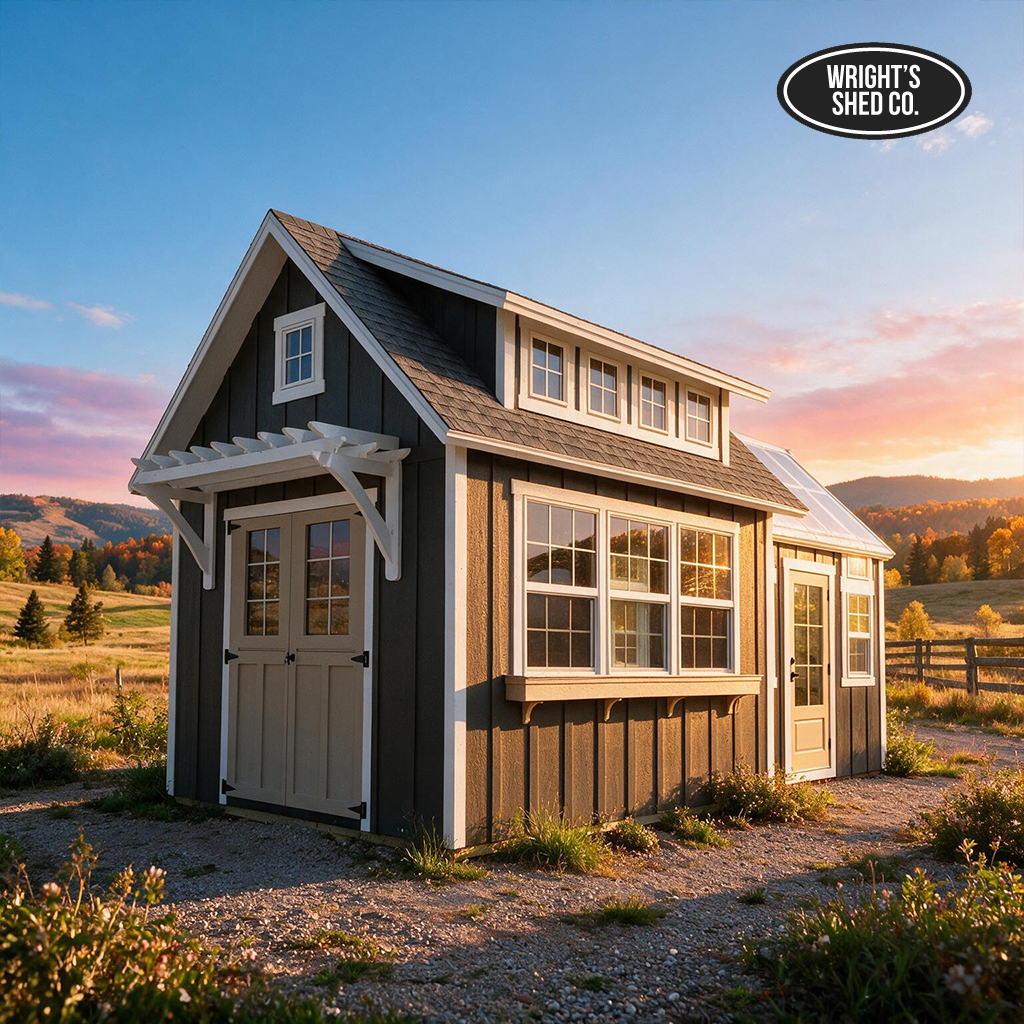
The materials on a shed matter as much as how it was built, and Wright’s Shed Co. uses the same standard spec across the line, whether you choose the Vineyard shed, the Orchard shed, our most popular model, the Farm shed with a Gambrel roof built for overhead storage, or the Lean-To shed with its sloped roofline. LP SmartSide engineered wood siding, treated with the SmartGuard process, and GAF Timberline architectural shingles come standard on every one of these, not as an upgrade. That standard spec is backed by real manufacturer coverage rather than a builder’s marketing claim.
LP SmartSide and GAF Timberline: Standard on Every On-Site Build
LP SmartSide siding on every Wright’s shed carries LP’s 5/50-Year Limited Factory Warranty, and the SmartGuard treatment is built in during manufacturing specifically to help resist termites and fungal decay, as detailed on LP Building Solutions’ warranty documentation. GAF Timberline architectural shingles carry a Limited Lifetime Factory Warranty from GAF, and GAF’s own Timberline shingle product page outlines the wind-resistance and algae-protection coverage that comes with a properly installed roof. Those two warranties cover materials, not workmanship, so they apply the same whether a shed was built on-site or delivered, as long as the materials installed actually match the standard spec.
Beyond siding and shingles, the rest of the standard spec is built to the same level regardless of build method: Sherwin-Williams A-100 exterior latex paint in a satin sheen, AMSCO or Alpine double-paned windows, and Miratec composite trim that resists the rot a solid-wood trim board can develop over time. Two-tone paint is available as an add-on at 10 percent of the shed’s cost, and every shed, on-site or delivered, includes tar paper under the roofing as standard rather than an extra line item. The point isn’t that one build method uses better materials than the other; it’s that the materials only perform to spec when the frame underneath them stays square, which is exactly where on-site construction has the advantage.
Warranty Differences Between On-Site Builders and Delivered Kits
Material warranties from LP and GAF are separate from the craftsmanship warranty a builder puts behind their own construction, and that second warranty is where on-site building shows its value. Wright’s Limited Warranty on craftsmanship runs 5 years on the Vineyard, 8 years on the Orchard, Farm, and Lean-To, and 8 years on detached garages; DIY shed kits carry no craftsmanship warranty since the buyer handles final assembly. Porch, deck, posts, railing, and OSB coop flooring are not covered under the craftsmanship warranty on any model. Full terms for every model live on our warranty coverage page. A delivered pre-built shed from another company may or may not offer a comparable craftsmanship warranty, and that’s worth asking about directly, since a 50-year material warranty on siding doesn’t mean the structure itself is covered for anywhere near that long.
It helps to keep these two coverage types mentally separate rather than blending them into one number. When someone advertises ‘up to 50 years’ of protection, that figure almost always refers to the siding manufacturer’s material warranty, not a promise that the builder will stand behind the structure itself for five decades. Craftsmanship coverage is shorter and tied to the specific model you choose, which is a more honest reflection of how long a builder is willing to warranty their own labor and assembly. Ask any builder, on-site or delivered, to state both numbers separately before you sign.
| Model | Craftsmanship Warranty | Wall Height / Roof |
| Vineyard | 5 years | 7′ wall, 4/12 roof |
| Orchard | 8 years | 8′ wall, 6/12 roof |
| Farm | 8 years | 8′ wall, Gambrel roof |
| Lean-To | 8 years | 9′ front / 7′ rear wall, sloped roof |
| Detached Garage | 8 years | Nebraska (Iowa customers served too), priced to quote |
| DIY Shed Kit | None | 8′ wall, 6/12 roof, self-install |
Which Option Fits Your Yard, Access, and Timeline
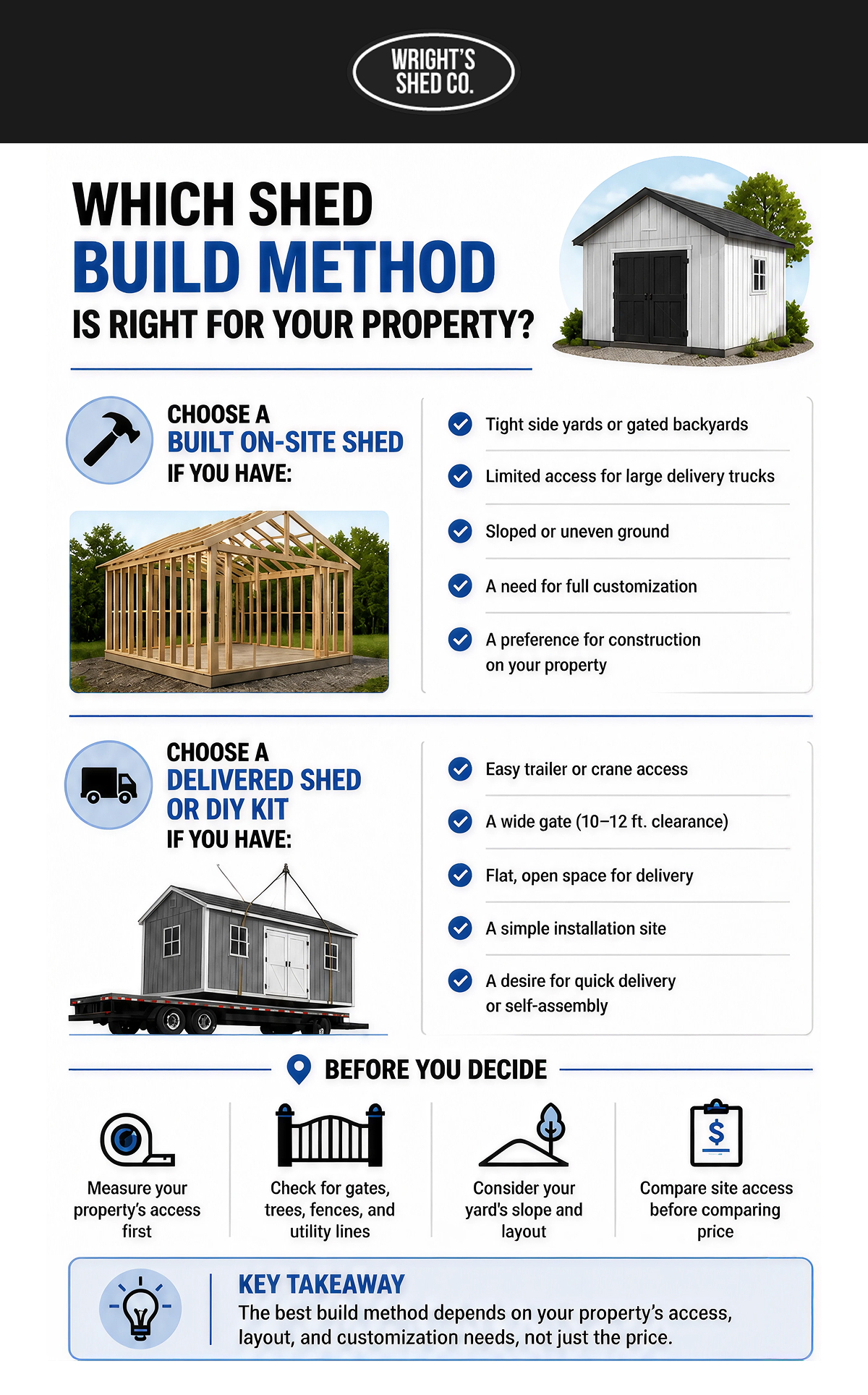
The right build method depends on how your yard is accessed and how much customization you actually want, not just on price. A delivered shed or one of our DIY shed kits can work well on a lot with easy trailer access and a buyer who wants to handle final assembly, since our kits ship with pre-cut framing, trusses, flooring, and trim ready to put together. An on-site build makes more sense for tight side yards, gated backyards, or any site a delivery trailer can’t reach without tearing up the lawn or a driveway. Timeline is different too: a delivered shed shows up finished in one trip, while an on-site build is staged over the time it takes to prep the site, frame the structure, and finish it in place, on Utah or Nebraska pricing depending on your region.
Access is worth measuring before you request quotes, not after. A delivery trailer or crane needs a clear path, often a gate at least ten to twelve feet wide with no overhead branches or utility lines in the way, and some yards simply can’t offer that without significant landscaping work first. An on-site crew, by contrast, brings materials in on foot or with smaller equipment and assembles the frame in place, which opens up yards that a full-size delivery truck could never reach. If your lot has a narrow side yard, a fence line close to the build site, or a slope near the house, that access question alone may settle which build method makes sense before price ever enters the conversation.
Getting Started: On-Site Build Process at Wright’s Shed Co.
Frequently Asked Questions
Is a shed built on-site stronger than a delivered shed?
An on-site build avoids the transport stress that can loosen fasteners and rack corners on a delivered shed, so the frame typically holds tighter tolerances over the long run.
Do delivered sheds cost less than on-site builds?
Pricing depends on size, model, and region; request a free quote for your Utah or Nebraska property rather than comparing headline prices alone.
Does a delivered shed kit come with a craftsmanship warranty?
DIY shed kits carry no craftsmanship warranty since the buyer handles assembly; the material warranties from LP and GAF may still apply to the components themselves.
Can I customize a shed that’s built on-site?
Yes. Because the shed is built in place, size, windows, doors, and finish options can be adjusted at build time rather than limited to what fits on a trailer.
Do I need a permit for an on-site shed build?
Permit thresholds vary by city and county, so we advise on local requirements during the quoting process rather than quoting a single national rule.
Choose the Right Built-On-Site vs Delivered Shed for Your Property
Choosing between a shed built on-site and one delivered pre-built comes down to how well the structure will fit your yard for the long haul, not which option looks cheaper on day one. On-site construction lets us level the base to your actual grade, frame with standard LP SmartSide siding and GAF Timberline shingles, and back the build with a craftsmanship warranty specific to your model. A delivered shed can work for the right yard and the right buyer, but it comes with transport stress and warranty gaps worth understanding first. If you’re ready to see what an on-site build looks like for your Utah or Nebraska property, get a free quote from us, with on-site installation included on every shed.