Insulated Custom Storage Sheds Year-Round Protection for Everything You Own

Why Standard Sheds Fail in Extreme Weather

A standard shed is a box with a roof. In January, it’s a freezer. In July, it’s an oven. Your power tools rust from condensation. Your paint cans freeze and split. Your stored furniture warps from the moisture cycling that never stops.

The Insulated Shed Difference

If you live anywhere with real weather, the heavy snow zones of Utah and Idaho, the humid summers of Iowa and Nebraska, an uninsulated shed is a slow-motion liability. It damages more than it protects.

Insulated custom storage sheds solve this. A proper thermal envelope stabilizes interior temperatures, eliminates condensation, and turns a basic outbuilding into a year-round asset. 


At Wright’s Shed Co., we’ve been building durable custom sheds across Utah, Idaho, Nebraska, and Iowa since 1997. We know exactly what it takes to keep your shed and everything inside it performing through every season.

Get Your Free Insulated Shed Quote

Tell us your climate, your use case, and your budget. We’ll spec the right insulation package for your build.

Why Insulation Matters in a Storage Shed

Insulation isn’t about comfort. It’s about protecting your investment. Without a thermal barrier, your shed’s interior is fully exposed to the outside temperature. That creates a cycle of heating and cooling that damages everything inside.

What Happens Inside an Uninsulated Shed

For property owners who plan to use their shed as a workshop, home office, hobby studio, or fitness room, insulation is not optional. It’s the difference between a space you can use 365 days a year and one that sits empty for four months.

Insulated Shed vs. Uninsulated Shed: Side-by-Side Comparison

If you’re weighing whether insulation is worth the added cost, this comparison puts the two options next to each other across the factors that matter most:

Factor Uninsulated Shed Insulated Custom Storage Shed
Interior Temp Range Matches outdoor temp can swing 80°F+ across seasons Stabilized within 15–25°F of set point with HVAC
Condensation Risk High metal tools, equipment, and surfaces collect moisture daily Minimal stable temps prevent dew point cycling
Usable Months Per Year 6–8 months in moderate climates; less in extremes 12 months fully functional year-round with climate control
Tool & Equipment Lifespan Shortened rust, corrosion, and freeze damage accelerate wear An extended, dry, stable environment preserves metal, wood, and electronics
Energy Cost (with HVAC) Very high heating/cooling fights constant thermal loss Low to moderate insulation retains conditioned air efficiently
Use as Home Office / Studio Impractical without a major retrofit Ready for year-round professional use
Resale Value Impact Adds basic storage value only Adds functional, climate-controlled square footage, higher buyer appeal

The Orchard Shed

an uninsulated shed protects your gear from rain. An insulated shed protects it from everything else: temperature swings, condensation, UV cycling, and the slow degradation that comes from storing valuable equipment in an uncontrolled environment.

For buyers who plan to use the space actively, not just store a lawnmower, insulation pays for itself by extending the life of your equipment and expanding the months you can use the building.

How Wright’s Sheds Are Built for Thermal Performance

Effective insulation starts long before the batt or spray foam goes in. It depends on the structural shell, the framing, siding, floor, and roof, all working together to create a tight, moisture-resistant envelope.

That’s where Wright’s Shed Co. separates from prefab competitors.

Every shed we build comes standard with materials engineered for thermal performance:

Component Wright’s Shed Co. Standard
Wall Framing Kiln-dried 2x4 studs at 16” on center, deep wall cavities ideal for insulation
Siding LP SmartSide engineered wood SmartGuard treated, 50-year limited warranty
Floor System 3/4” tongue & groove OSB on pressure-treated joists, seamless moisture barrier
Roof Sheathing 7/16” OSB topped with GAF Timberline architectural shingles rated to 130 mph
Trim 4” Miratec composite rot-proof, warp-proof, paint-ready
Door Steel-framed with a weatherstrip seal, decorative black hinges, keyed entry
Ventilation Ridge and soffit vents for passive airflow prevent heat buildup and condensation

This shell matters because insulation only performs as well as the structure around it. LP SmartSide resists moisture intrusion at the wall surface. The tongue and groove floor stops ground moisture from wicking upward. 16-inch on-center framing creates uniform, full-depth cavities that hold insulation properly without compression or gaps.

Other builders cut costs with 24-inch stud spacing and thin sheathing. That saves them money. It costs you thermal performance.

Insulation Options for Your Custom Shed

Every property owner has different thermal needs. The right insulation material depends on your climate, your use case, and how tightly you need to control interior conditions.

Insulation Type R-Value Range Best For Key Advantage
Spray Foam (Closed-Cell) R-6 to R-7 per inch Home offices, studios, and extreme cold Airtight seal expands into every crack and cavity. Highest thermal performance.
Batt Insulation (Fiberglass or Rockwool) R-13 to R-21 General storage, workshops, hobby rooms Cost-effective, easy to install between 16” OC studs. Rockwool adds sound-dampening.
Radiant / Reflective Barrier Reflects 90%+ radiant heat Hot climates, roof applications Installed under the roof decking to deflect solar heat gain. Best paired with batt insulation.

Which R-Value Do You Need?

Basic storage (protecting tools and gear from condensation)

R-13 in walls is typically sufficient

Workshop or hobby space (moderate temperature control)


R-13 walls + R-19 ceiling

Year-round home office or studio (full climate control)

R-21+ walls + R-30 ceiling + spray foam air sealing

Wright’s Shed Co.’s 16-inch on-center framing accommodates all three tiers without modification. The wall cavities are deep enough to hold R-21 batts or accept closed-cell spray foam at full depth. No furring strips or secondary framing needed.

How Much Does an Insulated Custom Storage Shed Cost?

The total cost of an insulated custom storage shed depends on two components: the shed itself and the insulation package. Here’s how to think about budgeting for both.

Base Shed Pricing

Your starting point is the base shed price, which covers the full structure framing, siding, roofing, flooring, doors, and on-site construction. Here are common sizes across Wright’s most insulation-friendly models:

Size Orchard Shed Farm Shed
10x12 $4,261 $4,993
10x16 $4,890 $5,878
12x16 $5,722 $6,372
12x20 $6,906 $7,728
12x24 $7,763 $8,800

Estimated Insulation Costs by Type

Insulation is priced separately from the base shed and varies by material, shed size, and the scope of coverage (walls only, walls + ceiling, or full envelope). The following ranges reflect typical industry pricing for residential outbuildings:

Insulation Type Estimated Cost Range Scope
Fiberglass Batt (R-13) $300 – $800 Walls only on a 10x12 to 12x16 shed. DIY-friendly installation.
Rockwool Batt (R-15) $500 – $1,200 Walls + ceiling. Better moisture and sound performance than fiberglass.
Closed-Cell Spray Foam $1,500 – $3,500+ Full envelope (walls + ceiling). Professional installation required. Highest R-value.
Radiant Barrier $200 – $600 Roof decking only. Best combined with batt insulation for full protection.

Contact our team to discuss insulation options and get a quote specific to your build.

The Cost Perspective That Matters

A 12x16 insulated custom storage shed with batt insulation might total $6,500–$7,000 all-in. That’s less than one year of renting a climate-controlled storage unit in most Utah and Nebraska markets, and you own the building outright. When you factor in the equipment protection, the usable months gained, and the property value added, insulation is one of the highest-ROI upgrades available for any custom shed.

The Best Shed Models for Insulation Upgrades

Almost every Wright’s Shed Co. model can be insulated, but certain styles are especially well-suited for climate-controlled use:

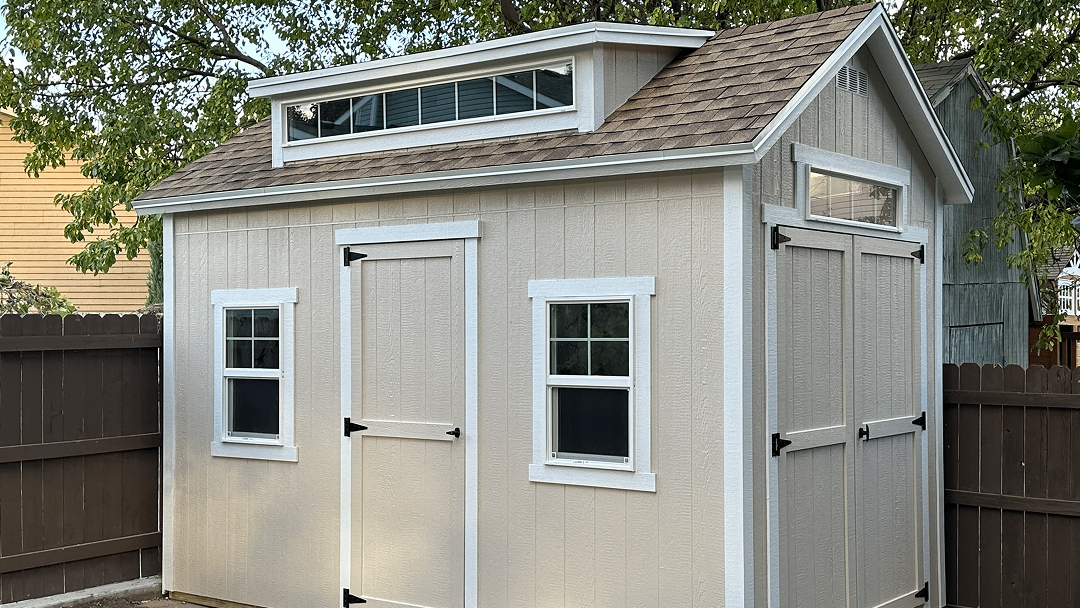
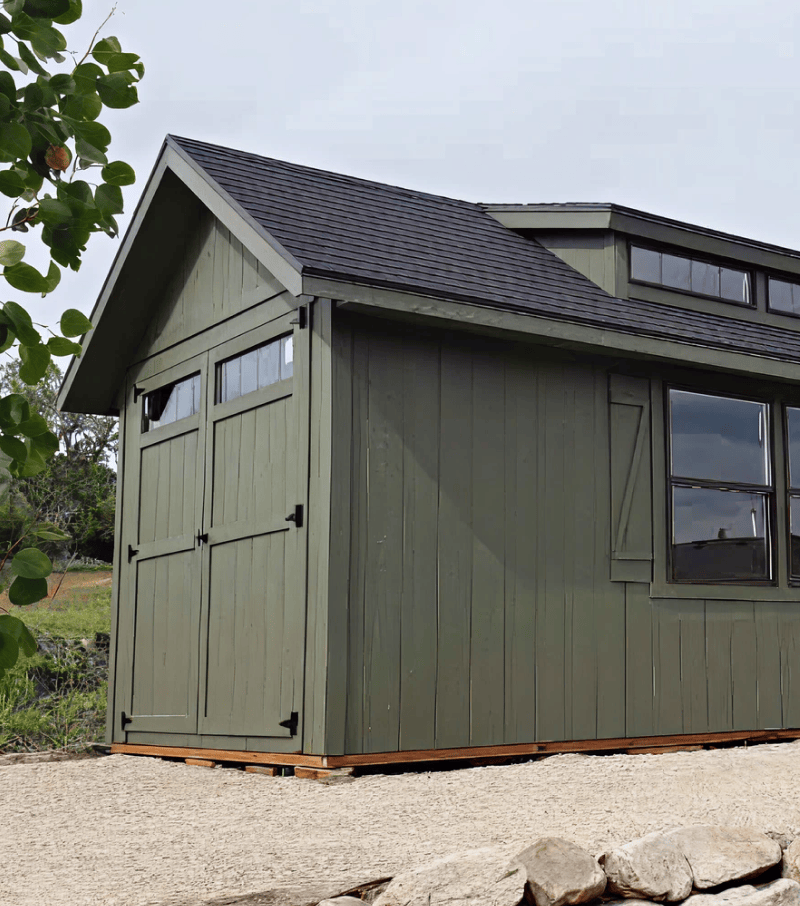
The Orchard’s classic gable roof with a 6/12 pitch creates strong attic ventilation and enough overhead depth for thick ceiling insulation. Its balanced proportions and pop-out transom windows make it the top choice for insulated home offices and creative studios in residential neighborhoods. Starting at $2,300.

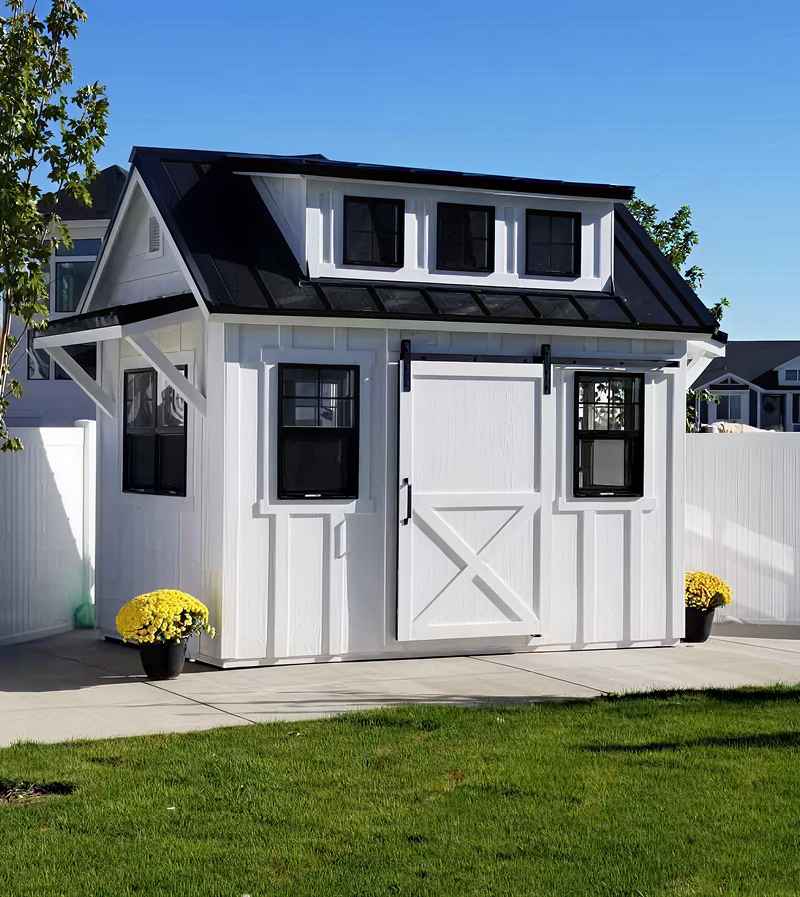
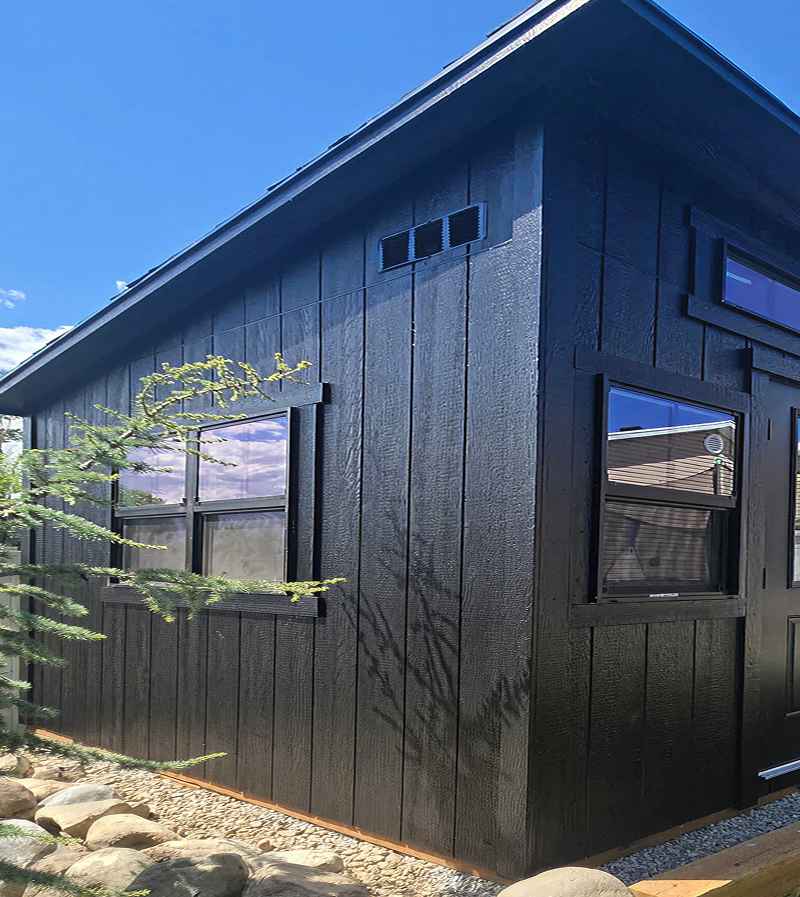
The mono-slope roofline simplifies water runoff and allows for higher ceilings on one side — ideal for clerestory windows that flood the interior with natural light. Insulated Lean-To sheds are popular as modern backyard offices and art studios. Starting at $2,327.

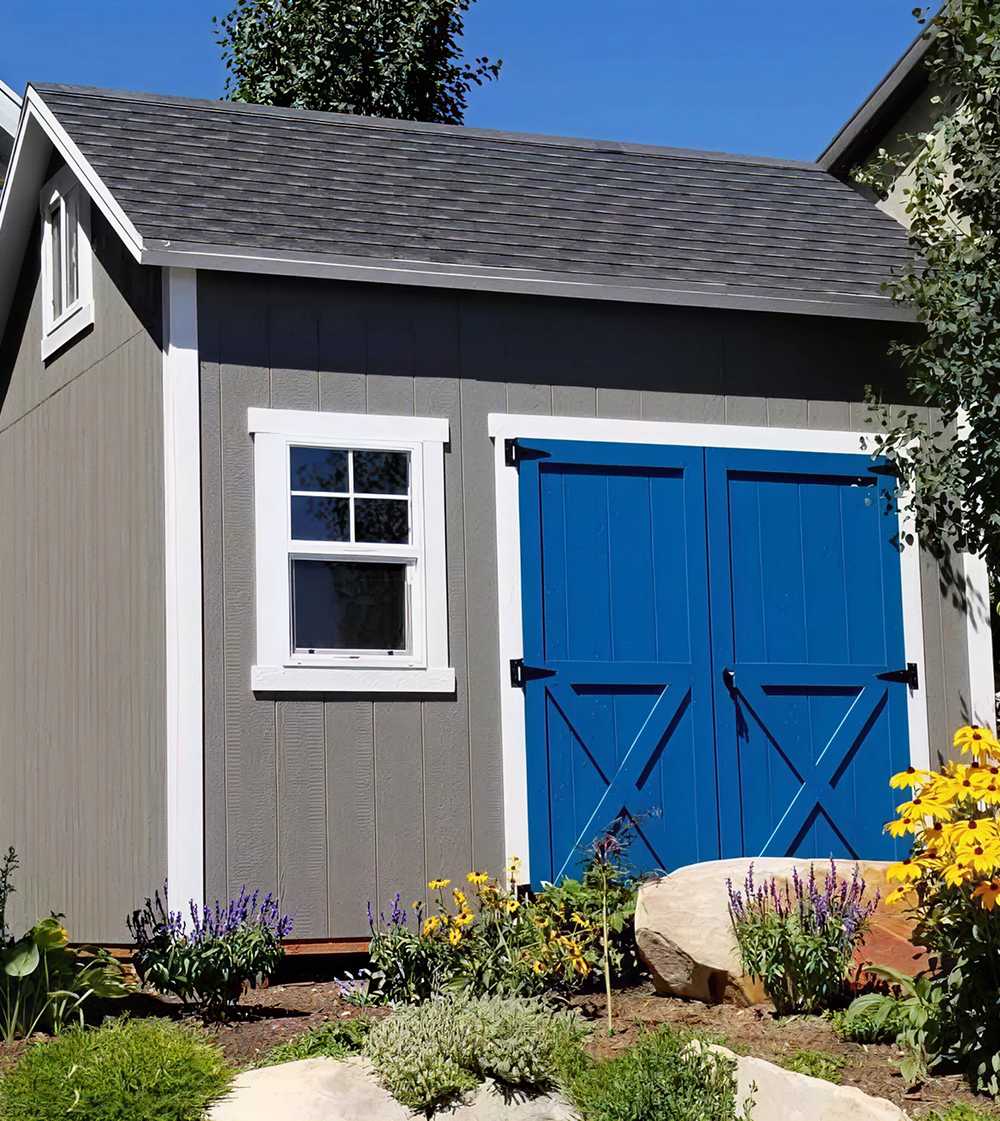
The Farm’s Gambrel roof and eight-foot sidewalls create the largest interior volume of any model. For property owners who need an insulated workshop with loft storage overhead, the Farm delivers maximum usable space. Its agricultural storage shed roots make it a natural fit for rural properties. Starting at $3,418.

For vehicles, heavy machinery, or large-scale workshops, our detached garages can be fully insulated with spray foam or batt packages. Insulating a garage protects engines, batteries, and hydraulic systems from the freeze-thaw damage that shortens equipment life.

Browse our Wright’s Shed Co.gallery to explore real customer builds and get design inspiration.

For those storing vehicles or heavy machinery, our large custom garages can also be fully insulated. Want to see which model fits your budget? Check out our pricing page for a full breakdown of our customizable options.

Try the 3D Shed Builder

Customize Your Insulated Shed

Choose your model, size, color, and features. See your build come to life before we cut a single board.

What Can You Do with an Insulated Custom Storage Shed?

An insulated shed stops being “just storage.” It becomes usable square footage that works year-round. Here are the most common configurations we build:

Tool and Equipment Storage

Eliminates condensation that rusts power tools, corrodes ATV batteries, and degrades stored machinery. Your equipment stays dry and ready to use.

Home Office

Pair insulation with a ductless mini-split system, and you get a quiet, climate-controlled workspace completely separated from the main house. No commute, no distractions.

Creative Workshop

Woodworking, painting, pottery. These crafts require stable temperatures. Glue sets properly. Paint doesn’t freeze. Clay doesn’t crack. Insulation makes the work possible.

Fitness Studio

obody wants to lift weights in a 15°F shed or run on a treadmill at 100°F. Insulation paired with climate control makes year-round training realistic.

She-Shed / He-Shed

A personal retreat space that’s comfortable in every season. Add windows, interior finishing, and your preferred layout for a backyard escape that actually gets used.

Climate-Specific Insulation Advice: Utah, Nebraska, Idaho, Iowa

We build on-site across four states, each with different climate challenges. The insulation strategy that works in Boise doesn’t necessarily work in Omaha. Here’s how we approach each region:

Region Primary Challenge Recommended Insulation Strategy
Utah High-altitude UV, heavy mountain snow loads Radiant barrier under roof decking + R-13 to R-21 batt in walls. High snow-load roof engineering standard.
Idaho Extreme winter cold, freezing wind exposure Closed-cell spray foam for airtight walls. Dual-pane windows if adding glass. R-30 ceiling insulation.
Nebraska High humidity, severe summer heat, and storm exposure Moisture-resistant rockwool batts + active ventilation. Architectural shingles rated for high winds.
Iowa Wide temperature swings — hot summers, cold winters Full thermal envelope: spray foam or thick batts in walls and ceiling. Mini-split HVAC for year-round control.

Every insulated custom storage shed we build is spec’d to the conditions it will face. A shed in Logan, Utah, sees different stressors than one in Lincoln, Nebraska, and our material choices reflect that.

Insulation vs. Ventilation

Getting Both Right

A common mistake is insulating a shed so tightly that it can’t breathe. Seal every crack and leave no airflow, and you’ll trap moisture inside the walls. That moisture leads to mold, mildew, and wood rot. The exact problems insulation is supposed to prevent.

The solution is balancing insulation with passive ventilation. Wright’s Shed Co. designs every shed with ridge vents and soffit vents that work together as a system:

This means your insulated shed stays dry inside the wall cavities even when the exterior temperature swings 60 degrees between morning and afternoon. The insulation controls temperature. The ventilation controls moisture. Both are required.

Why Wright’s Shed Co. for Your Insulated Shed?

An insulated shed is only as good as the structure holding the insulation. Thin studs, cheap sheathing, and loose-fitting siding create thermal bridges and air leaks that undermine even the best insulation material. That’s why the builder matters as much as the R-value. Here’s what every Wright’s Shed Co. build includes standard, no upgrades required:

LP SmartSide siding

with a 50-year limited warranty moisture-resistant exterior shell

Pop-Out Transom Windo2x4 framing at 16” on center ws

uniform cavities that hold insulation without gaps or compression

Double top plates on all walls

structural backbone for overhead loads and loft configurations

3/4” tongue & groove OSB flooring

seamless moisture barrier at the ground level

GAF Timberline architectural shingles

lifetime limited warranty, rated to 130 mph

Steel-framed doors


with weatherstrip seals — tight closure that reduces air infiltration

Sherwin-Williams exterior paint

any color, applied over LP SmartSide’s factory prime coat

The Numbers Behind the Build

When you’re investing in insulated custom storage sheds that need to perform for decades, cutting corners on the structure defeats the purpose. Wright’s Shed Co. builds the shell right so your insulation can do its job.

Start Your Insulated Shed Project Today

5,000+ sheds built • 536 five-star reviews • On-site construction across Utah, Idaho, Nebraska & Iowa

Frequently Asked Questions About Insulated Custom Storage Sheds

Do Wright’s sheds come pre-insulated?

Our standard models ship uninsulated to keep baseline pricing accessible. We offer full insulation upgrade packages, spray foam, batt, and reflective barrier that can be specified during the design phase or added later through our open-stud interior walls.

It depends on your climate and use. R-13 walls are sufficient for general storage. Workshops benefit from R-13 walls plus R-19 ceiling insulation. Year-round home offices in cold climates like Idaho need R-21+ walls and R-30 ceilings.

Yes. Our 16-inch on-center 2x4 framing creates uniform wall cavities that accept fiberglass batts or spray foam at any point after construction. Many customers start uninsulated and upgrade as their use case evolves.

Not necessarily. For most insulated residential sheds, a compacted gravel pad with our pressure-treated skids and 3/4” tongue & groove flooring provides excellent thermal performance. Concrete slabs work well for large workshops.

Permits are typically triggered by square footage (over 120–200 sq ft) or permanent electrical wiring for heating and cooling. Insulation alone usually doesn’t change permit requirements, but always confirm with your local building department.

A ductless mini-split system is the most efficient option. It provides both heating and cooling with minimal wall space and high energy efficiency. Dedicated electrical circuits are required and should be planned during the design phase.

Yes. Rockwool and spray foam both reduce sound transmission significantly. This makes insulated sheds excellent for recording studios, music practice rooms, workshops with loud tools, and quiet home offices.

A well-built, insulated custom storage shed adds functional, climate-controlled square footage to your property. Modern homebuyers actively seek flexible-use outbuildings, making it a smart improvement that pays back at resale.

Walls control lateral heat transfer. Ceiling insulation prevents heat loss in winter and solar heat gain in summer. It has the biggest impact. Floor insulation reduces ground-conducted cold. For full climate control, all three should be addressed.

You can, but ceiling insulation typically delivers the highest return. Hot air rises, so an uninsulated ceiling bleeds heat in winter and absorbs it in summer. For best performance, insulate both walls and ceiling at a minimum.

Build an Insulated Shed That Works as Hard as You Do

An uninsulated shed protects your gear from rain. An insulated custom storage shed protects it from everything, including condensation, temperature swings, UV degradation, and the slow damage that comes from storing valuable equipment in an uncontrolled environment.

Wright’s Shed Co. builds the structure right so the insulation performs right. Premium materials, residential-grade framing, and on-site construction tailored to your property and your climate. Whether you need a temperature-stable workshop, a year-round home office, or simply a shed that stops rusting your tools, we build it the Wright Way.

Utah

588 Boro Street
Kaysville, UT 84037

Nebraska

13015 238th St.
Greenwood, NE 68366