
Understanding the Cost of Building a Farm Shed
Whether you need a secure space for your tractor and implements, a sheltered barn for livestock, or a versatile workshop for repairs, a farm shed is a cornerstone of modern agriculture. But before breaking ground, it’s crucial to understand the financial commitment involved. The cost of building a farm shed is not a single number; it’s a spectrum that can range from under $10,000 for a basic, smaller structure to well over $50,000 for a large, highly customized agricultural building.
For example, a basic 30’x40′ farm-style shed or pole barn shell can start in the low five figures, while larger 40’x60′ agricultural buildings with upgrades such as concrete floors, insulation, or electrical rough-ins can exceed $30,000 depending on design and site conditions. The final price tag is a culmination of many choices you’ll make during the planning process.
A realistic budget must account for several key factors that we’ll explore in detail:
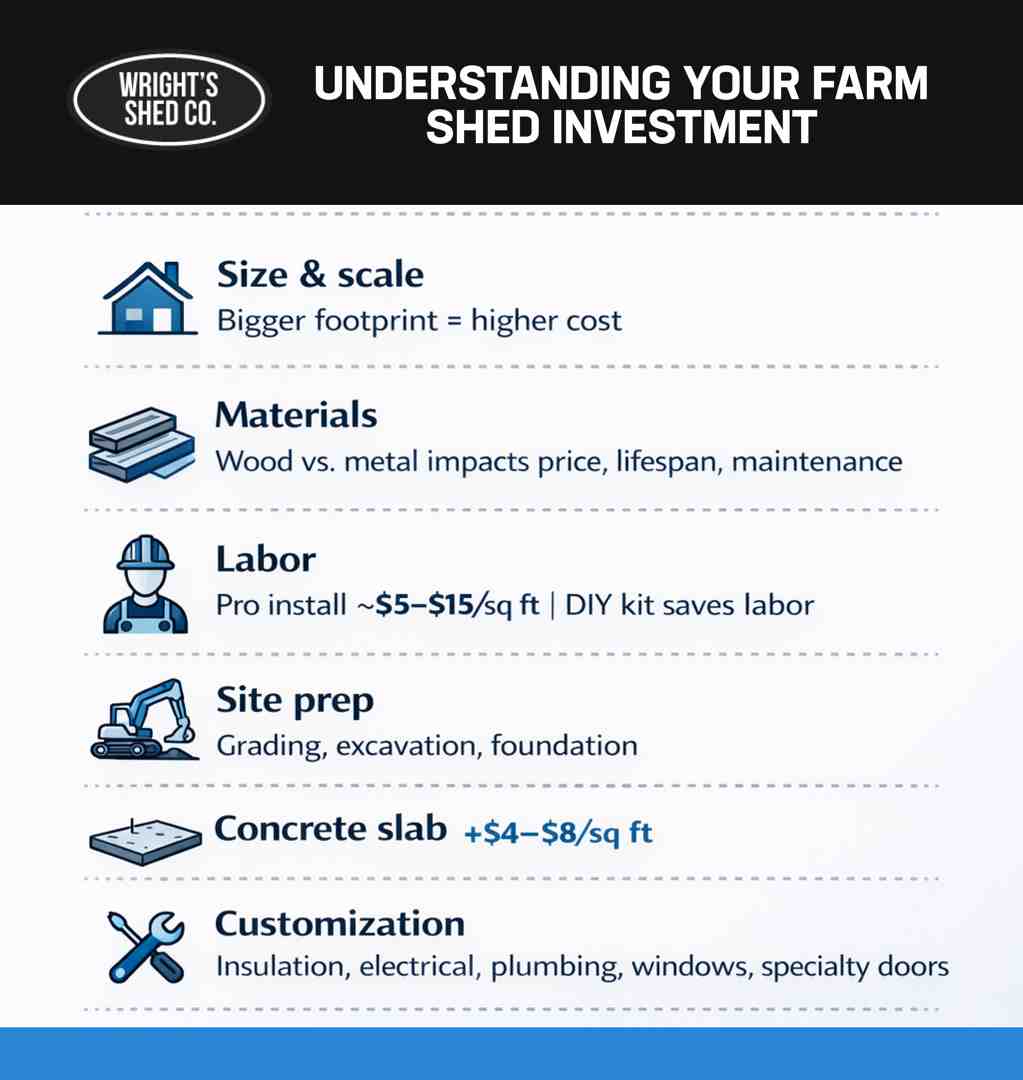
- Size and Scale: The overall footprint of the shed is the primary cost driver.
- Materials: The choice between wood and metal framing and siding affects upfront cost, longevity, and maintenance.
- Labor: Professional on-site construction costs vary by region, shed size, and complexity, while a DIY kit can eliminate this expense if you have the time and skills.
- Site Preparation: This essential step includes grading, excavation, and foundation work, with a concrete slab adding $4-$8 per square foot.
- Customization and Features: Add-ons like insulation, electrical wiring, plumbing, windows, and specialized doors will increase the total investment.
At Wright’s Shed Co., we’ve guided property owners in Utah, Idaho, Iowa, and Nebraska through this exact process. Our goal is to help you understand these costs upfront so you can build a functional, durable shed that fits your budget and serves your farm for decades to come.
Key Factors That Determine the Cost of Building a Farm Shed
To accurately budget the cost of building a farm shed, you must look beyond the sticker price of a kit or basic quote. The total investment is a complex equation shaped by core construction costs, essential site-specific expenses, and considerations for long-term value.
Core Construction Costs: Size, Materials, and Labor
The three biggest line items on any shed project are its size, the materials used for its construction, and the labor required to assemble it.
Size:
A larger shed requires a greater volume of materials and more labor hours, directly increasing the cost. This is due to economies of scale, the fixed costs of planning and delivery are spread over a larger area, and material suppliers often offer bulk discounts.
_compressed.jpg?alt=media&token=9b987f0b-a13e-4a97-9c78-9fcae7a38583 "Farm-Style Shed With Man Door and Shingle Roof")
Materials:
Your choice of materials is a critical decision that impacts cost, durability, aesthetics, and future maintenance.
- Wood Construction: Our Wood Storage Shed options provide a classic, timeless look. Wood offers natural insulation properties and is often easier to modify, repair, or add onto in the future. We use high-quality lumber to ensure a robust, long-lasting structure that stands up to the elements.
- Metal Construction: Steel farm buildings are renowned for their exceptional durability, low maintenance needs, and cost-effectiveness. Metal is unmatched in its resistance to fire, pests like termites, and rot. Furthermore, prefabricated steel components can significantly speed up construction time, reducing labor costs.
Labor:
The cost of labor is a significant variable. Professional installation typically adds $5 to $15 per square foot but provides peace of mind, ensures quality craftsmanship, and guarantees efficiency. For experienced individuals, our DIY Shed Kits offer a path to substantial savings. A basic 10’x12’ DIY kit might cost around $3,300 to $5,000, allowing you to invest your own time instead of money.
Additional Project Expenses: Site Prep, Permits, and Customization
Several other expenses are critical for a successful and legal project. Overlooking these common costs can lead to budget overruns and project delays.
Site Preparation:
The ground beneath your shed is just as important as the structure itself. Proper preparation is non-negotiable. This process can involve land clearing of trees and brush ($2,000-$10,000), professional grading to ensure proper water drainage ($1,000-$5,000), and creating a stable foundation.
While a concrete slab is a popular choice for its durability, adding $4 to $8 per square foot, other options exist. Our Shed Foundation Types guide explores alternatives like compacted gravel pads, which can be a more cost-effective solution for certain applications.
Permits and Regulations:
Building permits are a legal requirement in most jurisdictions and are essential for ensuring your structure meets local safety and zoning codes. The cost can range from a few hundred dollars to over $2,000, depending on your location and the project’s scope. Always check local regulations in Utah, Idaho, Iowa, or Nebraska. Our guide, Do You Need A Permit To Build A Shed, provides a starting point for this research.
Customization and Features:
This is where you tailor the shed to your specific needs, transforming it from a basic shell into a fully functional workspace. Consider the cost of insulation ($1-$2 per sq. ft.) for climate control, electrical wiring ($2,000-$8,000) for lighting and tools, plumbing ($1,500-$7,000) for sinks or livestock waterers, and upgraded doors or windows for better access and light.
Other popular customizations include ventilation systems (ridge vents or louvers), interior partitions, and aesthetic touches like wainscoting. Our article on Shed Customization Is It Worth The Extra Cost can help you prioritize features that provide the best return on investment.
Long-Term Value and Financing Your Shed
Thinking long-term helps you make a smarter investment. While metal sheds often require less maintenance, a well-built wood shed from Wright’s Shed Co. is designed for longevity with minimal upkeep. Our 50-year factory warranty on panel siding provides peace of mind and protects your investment for decades.
Pole Barns remain a popular, cost-effective option for many agricultural needs, offering versatility and strength.
Finalizing Your Budget and Getting Started
What is the average cost of building a farm shed?
Pinpointing an “average” cost of building a farm shed can be misleading, because pricing depends on size, layout, and optional upgrades. At Wright’s Shed Co., farm shed pricing is transparent and size-based, giving you clear starting numbers instead of broad industry guesses.
Most farm sheds fall within a mid-four-figure to low-five-figure range, depending on square footage and configuration. Smaller farm sheds typically start in the low thousands, while larger, multi-door or custom layouts increase accordingly. All pricing reflects wood-built farm sheds constructed on-site, not prefabricated metal buildings or pole barn kits.
As shed size increases, the cost per square foot often becomes more efficient, even though the total investment rises. Larger footprints spread labor and material costs across more usable space, making them a better value for equipment storage, livestock support, or multi-purpose farm use.
The table below reflects typical base pricing by size category, before optional upgrades such as concrete foundations, electrical packages, insulation, or custom door configurations.
| Size Category | Typical Farm Shed Price Range | Approx. Cost per Sq. Ft. |
|---|---|---|
| Small Farm Sheds | $3,000 – $6,000 | $28 – $35 |
| Medium Farm Sheds | $6,000 – $10,000 | $22 – $30 |
| Large Farm Sheds | $10,000+ | $18 – $26 |
Note: Pricing reflects the shed structure itself. Site preparation, concrete slabs, permits, and optional features are not included and vary by location and project needs. For exact pricing, a custom quote is required.
How to Budget for the Total Cost of Building a Farm Shed
A comprehensive budget is your best tool for preventing costly surprises. Follow these steps to create a realistic financial plan for the entire project:
- Get Detailed Quotes: Request a line-item quote that breaks down the costs for materials, labor, and all selected features. This is especially important for Custom Sheds. Don’t just look at the bottom line; understand what’s included, such as delivery and waste removal.
- Factor in Site Work: Budget separately for grading, land clearing, and your foundation. Since this work is typically handled by other contractors, obtain at least two to three independent quotes for excavation and concrete work.
- Include Permits and Inspections: Research the specific permit fees and inspection schedules in your county or municipality in Utah, Idaho, Iowa, or Nebraska. Add these administrative fees to your budget spreadsheet.
- Account for Customization: Ensure that the costs for every desired feature—insulation, electrical packages, plumbing rough-ins, or special doors—are itemized in your plan from the very beginning.
- Use Design Tools: Visualizing your shed before construction is key to controlling costs. Our article on Why 3d Design Is A Game Changer For Custom Sheds explains how this technology helps you make informed decisions and avoid expensive changes mid-project.
- Plan for Long-Term and Contingency Costs: Set aside a contingency fund of 10-15% of your total project cost to cover unexpected issues. Also, consider long-term expenses by contacting your insurance agent to understand how the new structure will affect your premiums.
Why Investing in a Quality-Built Shed Saves Money
At Wright’s Shed Co., we’ve built our reputation on the principle that investing in quality upfront saves you money and headaches in the long term. Since 1997, we’ve seen firsthand that the cheapest option often leads to costly repairs and premature replacement, while a well-built shed becomes a lasting asset.
Here’s how a quality shed pays for itself:
- Superior Materials: We don’t cut corners. We use high-quality lumber and durable siding built to withstand the harsh winters and hot summers of Utah, Idaho, Iowa, and Nebraska, reducing the need for future repairs.
- 50-Year Panel Siding Warranty: Our confidence in our materials is backed by a 50-year factory warranty on our panel siding. This promise of longevity protects your investment and provides invaluable peace of mind.
- Expert On-Site Construction: Most of our sheds are built on-site by skilled local teams. This ensures a perfect fit for your prepared site, adherence to the highest construction standards, and a finished product you can trust.
- Reduced Maintenance: A well-built shed with proper flashing, sealants, and finishing requires significantly less upkeep, saving you time and money year after year. Our guide on the 5 Signs Of A High Quality Shed explains what to look for.
- Increased Property Value: A durable, attractive, and functional farm shed is a valuable feature that can improve your property’s overall value and appeal, offering a strong return on your initial investment.
By choosing a high-quality, custom-built shed from Wright’s Shed Co., you’re not just buying a building; you’re investing in a reliable structure that will serve your farm for decades. Ready to get started? Start designing your shed and get a free quote today.
Frequently Asked Questions About Farm Shed Costs
What are the primary factors that influence the cost of building a farm shed?
The five primary factors are the shed’s size (square footage), the materials chosen (e.g., wood vs. metal), labor costs (professional installation vs. a DIY kit), the extent of site preparation required (grading, foundation), and the level of customization (insulation, electrical, plumbing, specialized doors, and windows).
How does the size of a farm shed impact its overall cost?
A larger farm shed will always have a higher total cost because it requires more materials and longer labor hours. However, the cost per square foot often decreases as the size increases. This is due to economies of scale, where fixed costs like delivery and design are spread over a larger area, and materials can be purchased in bulk at a lower rate.
Are metal farm buildings more cost-effective than wood structures?
Metal farm buildings can be more cost-effective, particularly in terms of upfront material costs and long-term maintenance. Steel is resistant to rot, pests, and fire, and its prefabricated nature can speed up construction. However, a high-quality wood structure may offer better natural insulation and can be easier to modify or repair. The most cost-effective choice depends on your specific priorities, climate, and long-term goals.
What hidden costs should I be aware of when budgeting for a farm shed?
Beyond the building itself, you must budget for “soft costs.” These include fees for building permits and inspections, the cost of land surveys if required, and utility hookups (trenching and connection for electrical, water, and septic), which can be substantial. Also, plan for potential increases in your property taxes and homeowner’s insurance premiums. It’s wise to have a contingency fund of 10-15% to cover any unforeseen expenses.
Planning Ahead for the Cost of Building a Farm Shed
The cost of building a farm shed is a multifaceted investment, influenced by everything from its size and materials to site preparation, permits, and personalized features. While the initial outlay can vary significantly from under $10,000 to over $50,000, a thorough understanding of these factors empowers you to make informed decisions that balance your operational needs with your budget.
A cheap shed can quickly become a liability, demanding constant repairs and failing to protect your valuable equipment and assets. In contrast, a quality-built structure is an investment that pays dividends through superior durability, low maintenance, and enhanced property value. At Wright’s Shed Co., we believe in providing transparent pricing and exceptional long-term value. With over 25 years of experience serving farmers and property owners across Utah, Idaho, Iowa, and Nebraska, we specialize in high-quality, durable farm sheds designed to last.
Our commitment to using superior materials, offering upgraded features as standard, and backing our products with a 50-year panel siding warranty means you’re investing in a reliable asset that will serve your operation for generations. Don’t let the complexities of pricing deter you from getting the farm shed you need. We’re here to guide you through every step, from initial design to final on-site construction, ensuring your investment is sound and your shed is perfectly suited for its purpose.
Ready to understand what the cost of building a farm shed looks like for your property? Explore your options or request a custom quote to get clear pricing tailored to your needs.