
Understanding the Role of a Vineyard Shed in Agricultural Operations
A vineyard shed is a specialized agricultural building that supports a vineyard’s operations. It primarily serves as either equipment storage for tools and machinery or as a climate-controlled space for aging wine. The two types have fundamentally different designs: equipment sheds prioritize durability and access, while wine storage sheds focus on insulation, humidity control, and light protection.
Key considerations for your vineyard shed include:
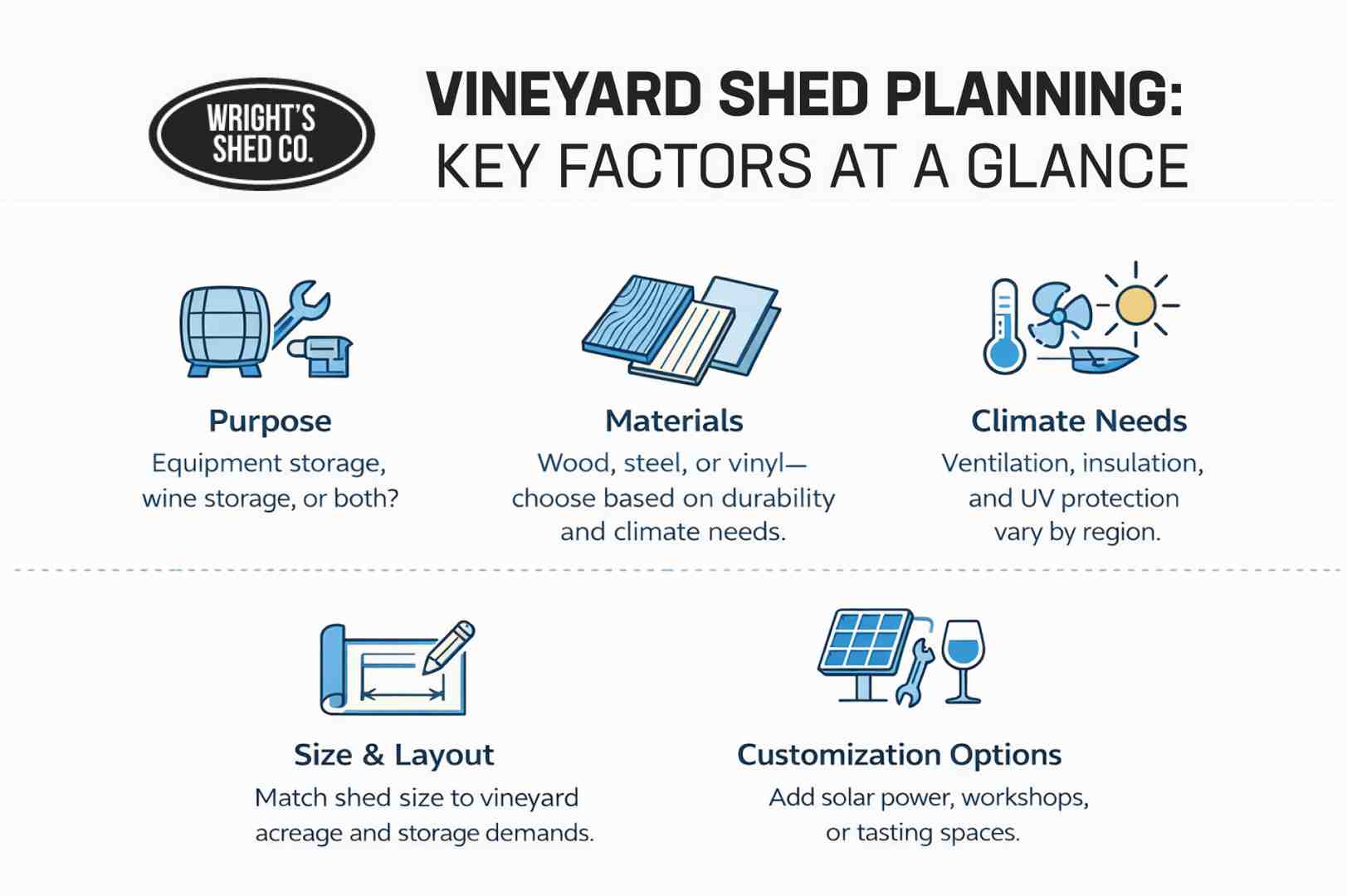
- Function: Will it store equipment, wine, or both?
- Materials: Wood, steel, and vinyl offer different benefits for durability and climate resistance.
- Climate: Your region’s weather will dictate needs for ventilation, insulation, and UV protection.
- Size: The shed’s footprint depends on your vineyard’s acreage and storage needs.
- Customization: Options can include solar panels, workshops, or even tasting areas.
A well-designed shed streamlines workflow, whether for a small hobby vineyard or a large commercial operation. The right materials and design protect your investment, from pruning shears and tractors to your finished wine.
Partnering with experienced builders who understand agricultural demands is crucial. They can help ensure your vineyard shed balances durability, function, and climate-specific features to meet the unique needs of grape growers and winemakers.
Core Functions and Foundational Design of a Vineyard Shed
A vineyard shed is a vital part of a successful vineyard, and its design must match its purpose. Custom-built structures are often necessary to meet the specific needs of a vineyard, whether for storing equipment or aging wine.
Equipment Storage vs. Wine Storage Sheds
The primary functions of a vineyard shed fall into two categories with distinct design needs.
Equipment storage sheds are built for durability and easy access. They protect vehicles, tools, and supplies from the elements, extending their lifespan. For a backyard vineyard, this means housing tools like pruning shears and sprayers.
For larger operations, it involves storing tractors and harvesting equipment. These sheds often feature large double doors, high ceilings, and reinforced floors.
Essential tools for a backyard vineyard shed include:
- Pruning Shears and Loppers: For vine maintenance.
- Sprayers: Backpack or ATV-mounted sprayers for applying fungicides.
- Hoes: For weed control.
- Harvest Buckets and Bins: For collecting grapes.
- Protective Gear and Maintenance Supplies: Gloves, safety glasses, and tool lubricants.
For a more detailed overview of small-vineyard tools and how to use them, resources such as this backyard vineyard tools guide can help you plan what to store in your shed.
In contrast, wine storage sheds are designed to create a perfect aging environment. This requires precise control over temperature, humidity, and light. These structures prioritize insulation and vapor barriers, often including specialized cooling systems.
They are built to minimize vibrations and feature sturdy wine racks to preserve the quality of your finished product.
Essential Materials for Durability and Function
The longevity of a vineyard shed depends on its materials, especially in regions with varied climates. It is best to use robust, low-maintenance materials built to last.
Wood Construction with Engineered Siding: High-quality wood construction with engineered siding like LP SmartSide is a popular choice. This type of material is exceptionally durable, resisting moisture, termites, and fungal decay. Look for sheds with robust framing and long-term warranties on siding, which indicate a quality build.
Steel Structures: For maximum security and durability, steel is an excellent choice, especially for housing heavy machinery. Hot-dipped galvanized steel is known for its strength and corrosion resistance, lasting over 50 years in rural environments.
Vinyl Sheds: Vinyl offers a low-maintenance, weather-resistant solution. It is durable, easy to clean, and does not require painting, making it a convenient and attractive option for many vineyard applications.
If you are exploring larger agricultural shed concepts, looking at resources on horticulture and viticulture sheds can provide helpful context on material performance in demanding rural environments.
Designing Your Vineyard Shed for Climate and Functionality

A thoughtful design ensures your vineyard shed is optimized for both climate and function.
Climate Adaptation:
For equipment sheds, proper ventilation through windows and vents is key to preventing rust. For wine storage, climate control is essential. Wine requires a stable temperature between 45-65°F and humidity around 60-70% to prevent spoilage. The space must also be dark and free from vibrations.
Functional Layout and Workflow Efficiency:
A well-designed layout improves workflow. Equipment sheds benefit from clear pathways, organized shelving, and wide doors. Wine storage layouts focus on maximizing bottle capacity with sturdy, horizontal racking while ensuring accessibility.
Here is a comparison of ideal versus poor wine storage conditions:
| Feature | Ideal Wine Storage | Poor Wine Storage |
|---|---|---|
| Temperature | Stable 45-65°F (7-18°C) | Fluctuating, too hot/cold |
| Humidity | Stable 60-70% | Too low or too high |
| Light | Dark, UV-protected | Direct sunlight, UV exposure |
| Vibration | Minimal to none | Constant movement |
| Bottle Position | Horizontal (cork wet) | Vertical (cork dries out) |
| Ventilation | Good air circulation | Stagnant, musty odors |
By considering these elements, you can ensure your shed becomes a high-performing asset for your viticultural endeavors.
Advanced Customization, Costs, and Modern Features
The modern vineyard shed can be a sophisticated structure, blending utility with advanced technology and personalized design to become an integral part of your vineyard’s success.
Sustainability and Energy-Efficient Sheds
Vineyard owners often prioritize sustainability, and their infrastructure can reflect this. A well-designed shed can reduce operational costs and environmental impact.
One of the most effective methods is solar power integration. A photovoltaic roof system can turn a shed into a self-sufficient energy hub, as seen in advanced agricultural barns that generate enough electricity to drastically cut energy costs.
Rainwater harvesting systems can also be integrated, using the large roof surface to collect water for irrigation. Using reclaimed or recycled materials further reduces waste and adds unique character to the structure. These elements transform a shed into a testament to sustainable viticulture.
Customization and Multi-Purpose Adaptations
A key advantage of a custom-built vineyard shed is the nearly limitless potential for customization. The structure should perfectly fit your vision and operational needs.
You can choose from various siding and roofing materials, add custom doors and windows, and include electrical packages. Beyond storage, a shed can be adapted for many uses:
- Tasting Rooms: An insulated shed can become an intimate space for guests to sample your wines.
- Workshops: A shed can be outfitted with workbenches and power for bottling, repairs, or winemaking experiments.
- Guesthouses: A cabin-style shed can be finished as a cozy retreat for visitors.
Many builders offer 3D design tools that allow you to visualize your custom vineyard shed before construction begins. This technology helps you experiment with layouts, materials, and features to ensure the final product meets your exact specifications.
Understanding Costs and Sizing for Your Project
Investing in a vineyard shed requires balancing cost and size to meet your needs and budget. The factors that influence the investment are important to understand.
Cost Considerations:
The cost is primarily influenced by size, materials, and customization. Larger sheds require more materials and labor. Upgraded materials and custom features like windows, electrical packages, or insulation also affect the final price. When evaluating builders, look for those who deliver high-quality, durable sheds. While initial costs are a factor, long-term value comes from superior materials and construction that minimize maintenance and protect your assets.
Sizing for Your Project:
The right size depends on the shed’s function and your vineyard’s scale.
- For equipment storage: Measure your largest piece of equipment and allow for maneuvering space, shelving, and a workbench.
- For wine storage: Calculate your current and future bottle capacity, leaving room for racks, aisles, and climate control systems.
A dedicated vineyard shed for wine storage offers optimal aging conditions, protects your investment, and keeps your collection organized. Working with builders who have expertise in agricultural structures ensures your shed will be robust, functional, and well-suited to your climate.
Frequently Asked Questions about Vineyard Shed
What is the best material for a vineyard shed?
The best material depends on the shed’s function. For equipment, durable options like wood with LP SmartSide siding or steel offer excellent weather resistance and longevity. For wine storage, wood construction with robust insulation is often preferred for its ability to maintain stable temperatures and humidity.
How big should a vineyard shed be?
The size of your vineyard shed should accommodate your specific needs. For equipment, measure your largest machinery and allow ample space for movement and shelving. For wine storage, calculate your current and projected bottle count, ensuring enough room for racks, aisles, and any climate control systems.
If you are unsure where to start, Wright’s Shed Co. offers vineyard shed size options, layouts, and pricing guidance to help you choose the right fit for your needs.
Can I use a regular garden shed for wine storage?
While a regular garden shed can provide basic shelter, it typically lacks the specialized insulation, climate control, and light protection necessary for optimal wine storage. A dedicated wine shed or a significantly upgraded garden shed is crucial to protect wine from temperature fluctuations, humidity issues, and light exposure.
What are the most important features for a wine storage shed?
For optimal wine storage, the most important features are excellent insulation to maintain a stable temperature (45-65°F), a system for consistent humidity (60-70%), complete darkness or UV protection, and construction that minimizes vibrations. Proper ventilation and sturdy, horizontal wine racks are also essential.
Final Thoughts on Choosing the Right Vineyard Shed
A well-planned vineyard shed plays a direct role in how smoothly your vineyard operates day to day. From protecting equipment and tools to creating the right conditions for wine storage, the right structure supports efficiency, organization, and long-term value. Size, materials, climate control, and layout all matter, and each decision should reflect how your vineyard operates now and how it may grow over time.
Investing in a purpose-built vineyard shed helps safeguard your equipment, preserve wine quality, and reduce future maintenance concerns. Whether you are managing a small backyard vineyard or a larger operation, working with experienced shed builders ensures your structure is built for durability, climate demands, and real-world use.
To explore real-world examples and design ideas, view completed vineyard shed projects from Wright’s Shed Co. and see how different layouts, materials, and features come together in finished builds. Browse the gallery here.